

Phytochemical Discovery CRO & CDMO Engineering

ODM Active Ingredients Screening Manufacturers & Supplier for the Australia Market

Accelerating TGA-compliant herbal therapeutic registration through bio-guided high-throughput fractionation, target metabolomic profiling, validated analytical methods, and Industry 4.0 pharmaceutical CDMO production.

Core Service Modules for Australian Sponsors

Precision Screening & Phytochemical Contract Services

Turnkey solutions tailored for Australian complementary medicine brands, pharmaceutical sponsors, and biomedical research institutions.

China Screening of the active ingredient(s) of plants Manufacturer, Manufacturers

TGA-Standard Botanical Active Ingredients Screening

High-throughput bio-guided fractionation and target isolation optimized for Australian ARTG Listed and Assessed therapeutic formulations.

Explore Service
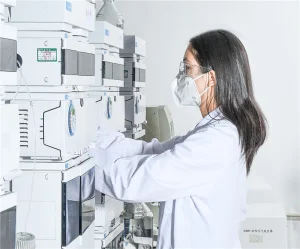
China Establishment of analysis methods of active ingredient(s) Supplier, Suppliers

Phytochemical Analytical Method Establishment

Fully validated HPTLC fingerprinting, HPLC-DAD, and GC-MS assay method development fulfilling TGO 92 and British Pharmacopoeia specifications.

Explore Service
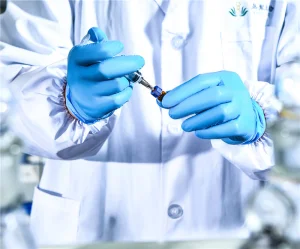
OEM In Vitro Test /Research Service Manufacturers, Suppliers

OEM In Vitro Bioassay & Mechanism Screening

Cellular metabolic assays, receptor binding affinity assays, and enzymatic pathway elucidations delivering verifiable MoA data for evidence dossiers.

Explore Service
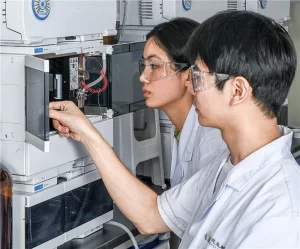
ODM Study and evaluation of the potency of the botanical active ingredient(s) from different seasons and different origins. Manufacturer, Suppliers

Phytochemical Potency & Origin Agronomic Evaluation

Quantitative seasonal and geographic chemotypic variation studies to de-risk Australian supply chains and secure reliable high-yield biomass sources.

Explore Service
Market Intelligence Whitepaper

Active Ingredients Screening in Australia: Commercial & Regulatory Reality

Navigating the rigorous scientific benchmarks of the Therapeutic Goods Administration (TGA) while capturing growing consumer demand across Australasia.

Australia represents one of the most sophisticated and stringently regulated complementary medicine markets globally. Valued at over AUD $5.6 billion, the Australian consumer landscape demands evidence-based formulations, clean-label transparency, and verifiable efficacy. Under the legislative framework of the Therapeutic Goods Act 1989, therapeutic goods—encompassing herbal substances, phytochemical complexes, and botanical extracts—must be entered in the Australian Register of Therapeutic Goods (ARTG) before commercial supply.

For Australian sponsors and brand manufacturers, the fundamental hurdle remains the scientific burden of proof: differentiating between Listed Medicines (AUST L), Assessed Listed Medicines (AUST L(A)), and Registered Medicines (AUST R). While low-risk pre-approved ingredients are permissible for AUST L, establishing higher-level indications requires comprehensive, high-tier clinical evidence, validated chromatographic assay dossiers, and toxicological clearance.

Critical Insight for Australian Sponsors: Standard generic botanical extracts frequently fail TGA pre-clearance due to solvent residue limits, uncontrolled seasonal chemotype variations, and missing bio-guided potency assays. Active ingredients screening provides the required molecular and pharmacological substantiation to bridge lab innovation directly to ARTG listing.

MedGence functions as an ODM/CDMO scientific engine, empowering Australian brand owners, contract packagers, and research institutions to discover, validate, and standardize botanical molecules with full compliance under Therapeutic Goods Order No. 92 (TGO 92), TGO 100, and PIC/S GMP standards.

Australian Regulatory Hurdles Solved by Our ODM Screening Engine

  • TGA Substance Monograph Alignment: Development of comparative chromatographic profiles against British Pharmacopoeia (BP) and European Pharmacopoeia (Ph. Eur.) monographs.
  • Contaminant Screening: Heavy metals (Pb, As, Cd, Hg), pesticide residues (over 450 compounds screened), aflatoxins, and Pyrrolizidine Alkaloids (PA) under PIC/S GMP limits.
  • Climatic Zone IVb Stability Substantiation: Accelerated and long-term stability validation designed specifically for Australia's demanding ambient humidity and temperature zones (30°C / 75% RH).
  • Mechanistic Substantiation: In vitro target enzyme inhibition data (e.g., COX-2, 5-LOX, DPP-4) for high-level therapeutic claim support under TGA evidence guidelines.
Request Australian Compliance Blueprint
Scientific Innovation Roadmap

Next-Generation Screening Technologies: High-Throughput Metabolomics

Combining AI molecular docking with multi-stage chromatographic fractionation to pinpoint novel therapeutic phytochemicals from complex botanical matrices.

AI-Assisted Target Prediction

Utilizing machine learning models trained on 400+ validated single-herb pharmacophores and 83 modernized classic formulations to forecast molecular receptor affinity prior to wet-lab extraction, slashing R&D lead time by over 60%.

UPLC-Q-TOF-MS/MS Metabolomics

Unbiased non-targeted metabolomics identification combined with targeted quantification. Dissects sub-fractions with sub-ppm mass accuracy to capture rare saponins, volatile terpenes, and conjugated polyphenols.

Bio-Guided Fractionation Protocol

Iterative screening process pairing automated preparatory chromatography directly with high-content phenotypic cellular assays, isolating only the pure bioactive moieties responsible for clinical outcomes.

Technology Maturation Horizon (2025–2030)

Phase 1: Precision Agronomy

Multi-spectral satellite chemotyping of wild-crafted & cultivated crops to map harvest timing to active concentration peaks.

Phase 2: High-Content In Vitro

Automated 3D organoid & microfluidic organ-on-chip screening to mimic human absorption kinetics before pilot animal studies.

Phase 3: Green Supercritical Isolation

Subcritical water and low-energy co-solvent supercritical CO2 separation systems for 100% zero-organic-solvent finished ingredients.

Phase 4: Digital CTD Dossiers

End-to-end blockchain verified Certificate of Analysis (CoA) tied directly to Australian TGA Common Technical Document (CTD) formats.

Validated Scientific Authority

Proven Global R&D Scale & Production Capabilities

Over a decade of rigorous pharmaceutical delivery trusted by university hospitals, multi-national brand conglomerates, and Australian sponsors.

14+
Years Dedicated Natural Medicine R&D
300+
In-House Scientists & Phytochemists
83
Classic Herbal Formulations Modernized
22
Innovative Natural Chemical Medicines Developed
56
Hospital Preparation Registrations Secured
~400
Single-Herb Quality Standards Established
100+
Pharma Manufacturers & Hospitals Served
100%
IP Non-Disclosure & Escrow Guarantee
Manufacturing Infrastructure

China Factory 4.0: Supply Chain Resilience & Scalability for Australian Brands

Seamlessly bridging laboratory active discovery into metric-ton commercial extraction without loss of phytochemical potency or batch fidelity.

Automated Continuous Counter-Current Extraction

Unlike traditional batch vats that degrade thermosensitive compounds, our continuous counter-current dynamic extraction lines control dwell time to the second, optimizing extraction efficiency by 34% while maintaining thermal integrity.

Closed-Loop Molecular Distillation & Membrane Filtration

Employing ceramic ultrafiltration and nano-membrane concentration modules to eliminate macromolecules, resins, and inorganic salts without harsh chemical precipitations, yielding crystal-clear reconstitution for oral liquid formulations.

Unlocking 30%–45% COGS Arbitrage for Australian Sponsors

By integrating raw botanical farm-gate procurement across China's geo-authentic producing regions (Daodi) with automated extraction and in-house CRO validation, we eliminate multiple intermediary margins for Australian partners.

Risk Mitigation: Dual-Track Supply Security

Global disruptions and geopolitical shifts demand agile manufacturing. MedGence maintains an audited buffer supply of primary reference botanicals and duplicate automated extraction lines. Every batch manufactured is backed by full analytical retention samples stored for 5 years, guaranteeing long-term batch-to-batch traceability for ARTG compliance audits.

ISO 9001:2015 PIC/S GMP Aligned HACCP & ISO 22000 HALAL & KOSHER Certified
Sourcing & Execution Framework

Structured ODM Screening & Sourcing Workflow for Enterprise Buyers

A transparent, stage-gated lifecycle eliminating development risk from target specification to commercial container clearance.

01

Target Indication Scoping & TGA Feasibility

We review your proposed claim (e.g., cognitive health, metabolic regulation, joint comfort), cross-reference permissible ingredient databases under ARTG, and select optimal botanical candidates.

02

Chemotypic Screening & Seasonal Extraction

Extracting raw material samples across divergent harvest seasons, soil profiles, and plant parts (roots, leaves, bark) to pinpoint maximal active molecule concentration.

03

Chromatographic Assay Standardization

Establishing reproducible HPLC/GC/HPTLC testing methodologies and generating validated fingerprint spectra for QC release testing in Australia.

04

Preclinical Bioassay & Toxicological Clearance

Execution of in vitro cell receptor assays, cytotoxicity screening, and GLP-compliant LD50/acute/genotoxicity evaluations confirming safety margins.

05

Pilot Scale-Up & Finished Dosage Prototyping

Transfer of extraction parameters to pilot reactors, followed by formulation into powders, softgels, two-piece hard capsules, or functional liquids.

06

Commercial CDMO Supply & CTD Dossier Delivery

Commercial batch production under strictly audited cleanrooms with full CTD module documentation ready for seamless submission to the TGA.

Comprehensive Service Catalog

End-to-End Contract Research & Commercial CDMO Services

Select individual phase studies or engage our complete discovery-to-finished-product contract manufacturing lifecycle.

China Screening of the active ingredient(s) of plants Manufacturer, Manufacturers

China Screening of Botanical Active Ingredients for Australia

Systematic screening and quantification of bioactive alkaloids, flavonoids, and glycosides tailored to Australian therapeutic categories.

View Service Details
China Establishment of analysis methods of active ingredient(s) Supplier, Suppliers

Establishment of Analysis Methods for Active Ingredients

Development and ICH-validation of HPLC, HPTLC, and LC-MS fingerprint standards for quality and identity verification.

View Service Details
OEM In Vitro Test /Research Service Manufacturers, Suppliers

OEM In Vitro Test & Cellular Bioassay Services

High-throughput bioassay screenings targeting inflammatory pathways, antioxidant potency, and metabolic enzymatic inhibition.

View Service Details
ODM Study and evaluation of the potency of the botanical active ingredient(s) from different seasons and different origins. Manufacturer, Suppliers

ODM Potency Study by Season & Geographic Origin

Comprehensive comparative botanical mapping isolating the highest yielding cultivars, harvest months, and regional origins.

View Service Details

OEM Animal study Supplier, Suppliers

OEM Animal Study & Preclinical Toxicological Testing

Animal efficacy models and systemic toxicological evaluations ensuring full pre-clinical safety prior to human administration.

View Service Details
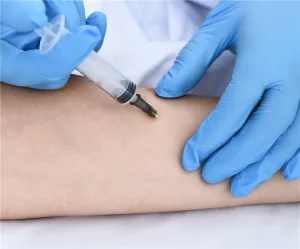
ODM Clinic study (Phase1 - Phase 4) Manufacturer, Suppliers

ODM Clinical Studies (Phase 1 – Phase 4) for Therapeutic Claims

GCP-compliant human clinical trial execution generating high-level scientific evidence to defend Assessed Listed claims.

View Service Details
China Screening of the active ingredient(s) of plants Manufacturer, Manufacturers

Plant Active Ingredient Pilot Isolation & Purification

Scalable resin column chromatography and crystallization delivering active phytochemical standards from lab grams to pilot drums.

View Service Details
China Establishment of analysis methods of active ingredient(s) Supplier, Suppliers

Phytochemical Fingerprint Mapping for Batch Consistency

Multi-wavelength chromatographic pattern comparison ensuring chemical equivalence between development trials and commercial production.

View Service Details
Expert Sourcing & Compliance FAQ

Frequently Asked Questions: Botanical CRO & CDMO for Australia

In-depth technical answers addressing regulatory dossier preparation, chromatographic method validation, intellectual property, and import logistics.

How do your active ingredient screening services support Australian TGA listing requirements?
Our screening programs are engineered to meet the scientific evidentiary standards set out in the TGA's Assessed Listed Medicines Evidence Guidelines and Therapeutic Goods Order No. 92 (TGO 92). We generate full phytochemical characterization reports, definitive identification testing protocols (HPTLC against European and British Pharmacopoeia reference standards), validated assay methods (HPLC-DAD, LC-MS), and comprehensive stability data across Climatic Zone IVb. If your product requires higher therapeutic claims, our in vitro enzymatic and cell-line assays provide the exact mechanistic rationale needed for your regulatory submission dossier.
Can MedGence screen and validate native Australian botanicals or exotic TCM ingredients?
Yes. We possess extensive experience working both with traditional Chinese medicinal herbs (modernizing 83 classic formulas and developing quality standards for ~400 single herbs) and global/native botanicals. For client-supplied raw materials, we conduct comprehensive phytochemical profiling, isolation of key markers, establishment of novel reference standards, and assay validation. For ingredients intended for Australia, we ensure that every target component is either already cross-referenced in the TGA Permissible Ingredients Determination or supported by a complete pre-market substance evaluation dossier.
How do you resolve seasonal and origin variations in active ingredient concentration?
Botanical active concentrations can fluctuate drastically based on altitude, rainfall, harvest season, and plant maturity. We address this through our proprietary Origin and Seasonal Evaluation methodology. By analyzing multi-batch samples from various geographical origins and harvest intervals via HPLC and fingerprint spectrometry, we determine the optimal harvest window and source region. Furthermore, our extraction process studies establish precise blending ratios and extraction parameters to guarantee batch-to-batch standardization within ±3% of target active potency.
What documentation is provided for Australian customs and quarantine (DAFF) biosecurity clearance?
Importing botanical derivatives into Australia requires compliance with both the Department of Agriculture, Fisheries and Forestry (DAFF) biosecurity import conditions (BICON) and TGA therapeutic import regulations. Every shipment of active ingredients or bulk intermediate manufactured at our facilities is accompanied by a full dossier including: Certified Certificate of Analysis (CoA) with batch-specific chromatographic test results, Manufacturer's Declaration confirming heat/solvent processing parameters to satisfy biosecurity criteria, BSE/TSE-free declaration, GMO-free statement, residual solvent clearance (ICH Q3C), pesticide residue clearance (over 450 compounds screened), and heavy metal compliance data.
How is intellectual property and proprietary formulation know-how safeguarded?
We operate under an entrusted research and manufacturing model governed by enforceable non-disclosure and intellectual property agreements. All screening findings, chromatographic fingerprints, optimized extraction parameters, and client-commissioned formulation matrices remain 100% the exclusive intellectual property of the commissioning sponsor. Research teams work within compartmentalized laboratories, and electronic raw data is secured with cryptographic role-based access.
What is the typical timeframe from initial active screening to commercial scale batch supply?
A targeted active screening and preliminary bio-guided assay package typically requires 4 to 8 weeks. Establishing and validating chromatographic assay methods takes approximately 4 weeks. Pilot-scale batch extraction and formulation process optimization require 6 to 10 weeks. For turnkey projects moving from early discovery to commercial CDMO production and release testing, typical timelines range from 4 to 6 months, dramatically faster than fragmented western CDMO networks.
Direct Access to Senior Phytochemists

Ready to Accelerate Your Australian Botanical Formulation?

Connect directly with our multidisciplinary scientific team in Changsha. Discuss target indications, request specialized chromatographic screening protocols, or commission custom OEM/CDMO active ingredient manufacturing.

Send Inquiry Now Direct Scientific Email: [email protected]