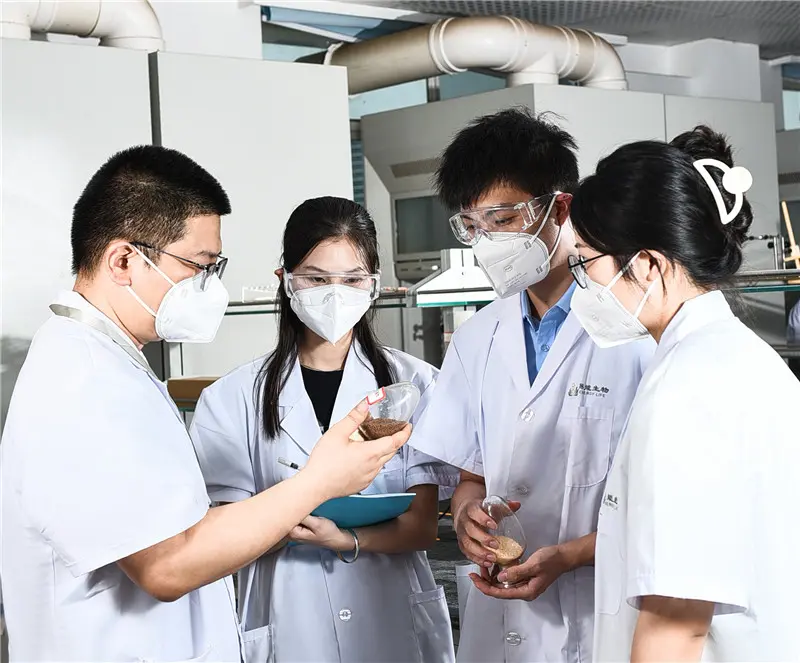
Accelerating drug development and high-potency nutraceutical commercialization with end-to-end analytical method validation, potency screening, and preclinical batch testing.






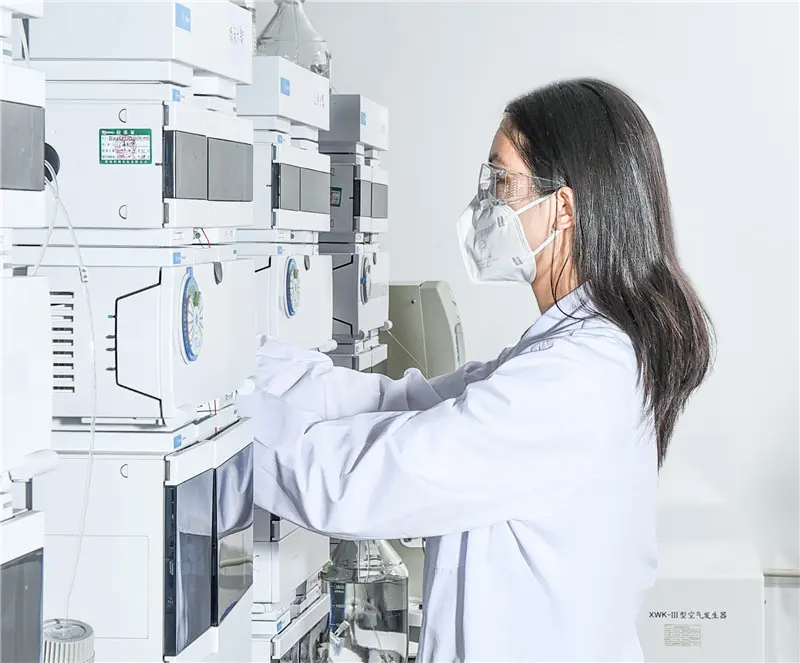
Why modern phytopharmaceutical discovery demands a transition from single-marker testing to multi-dimensional chromatographic profiling and QDa/Orbitrap mass identification.
In the global pharmaceutical, nutraceutical, and high-tier cosmeceutical sectors, establishing robust analytical methods for active botanical ingredients represents one of the most intellectually rigorous and regulatory-critical challenges. Unlike synthetic small molecules where purity profiles typically feature well-defined crystalline single-chemical entities with minor related substances, natural medicine matrices encompass intricate chemical multicomponent ecosystems. A single plant extract—derived from roots, barks, rhizomes, or aerial structures—often harbors hundreds of secondary metabolites including alkaloids, flavonoid glycosides, triterpenoid saponins, polysaccharides, and volatile terpenes exhibiting structural isomerism, widely divergent polarities, and thermal labilities.
The Global Regulatory Shift: The US FDA’s Guidance for Industry on Botanical Drug Products, European Pharmacopoeia (Ph. Eur.) Chapter 2.2.46, and Chinese Pharmacopoeia (ChP) 2020 editions have mutually raised the evidentiary threshold. Regulators no longer accept simple spectrophotometric (UV-Vis) total-phenolic assays or rudimentary non-specific TLC assays as proof of potency or identity. Global buyers and sponsors require fully validated, stability-indicating chromatographic fingerprints, chiral separations, and quantitative multi-component assays that correlate chemical abundance directly with in vitro bioactivity and in vivo efficacy.
As an industry-leading contract research and development organization (CRO & CDMO) based in Changsha, China, MedGence (Yineng Pharma) operates at the convergence of ancient ethnopharmacological heritage and 21st-century bioanalytical instrumentation. With over 14 years of specialized natural medicine R&D, a multidisciplinary scientific consortium of 300+ researchers, and a commercialized track record of establishing quality standards for nearly 400 single-herb medicines and modernizing 83 classic Traditional Chinese Medicine (TCM) formulas, we bridge the evidentiary void between raw herbal matrices and globally compliant therapeutics.
Years Natural API R&D
Scientific Personnel
Herb Standards Created
Classic Formulas Decoded
International supply chain vulnerabilities, adulteration by synthetic analogues, unapproved dyes, geographical chemo-type variations, and seasonal batch inconsistency introduce immense commercial liability for cross-border brand owners. Establishing a reproducible analytical method is not simply an exercise in running an HPLC column; it is an integrated life-cycle process demanding systematic solvent extraction kinetics, solid-phase matrix clean-up, stationary-phase screening, column temperature optimization, ionization suppression elimination in LC-MS/MS, and uncompromising validation against ICH Q2(R2) and ICH Q14 parameters.
Engineered systematically from initial chemical exploration to regulatory submission-ready validation documentation.
Sample preparation dictates 80% of chromatographic resolution. Our bioanalytical team optimizes solid-liquid extraction conditions, including pressurized liquid extraction (PLE), ultrasonic-assisted solvent disruption, enzymatic matrix release, and solid-phase extraction (SPE) cartridging.
Screening diverse stationary phases—Core-Shell C18, HILIC, PFP (Pentafluorophenyl), and Chiral stationary phases. We fine-tune multi-step gradient elution programs with mobile phase modifiers (formic acid, TFA, ammonium acetate) to achieve critical pair baseline resolution.
Assay transfer is impossible without exhaustive analytical validation. We execute systematic stress-testing, matrix-spike recoveries, forced degradation studies (acid, base, oxidation, photolysis, thermal stress), and intermediate precision across multiple analysts and instruments.
| ICH Q2(R2) Validation Parameter | Experimental Design & Methodology | Acceptance Criteria for Botanical Actives | MedGence Quality Assurance Level |
|---|---|---|---|
| Specificity / Selectivity | Injected blank matrix, active target spikes, and stressed degradation samples across DAD/PDA and ESI-MS channels. | Zero co-eluting peaks at analyte retention time; peak purity spectral match factor > 990. | High-Resolution Q-Exactive MS |
| Linearity & Working Range | Minimum of 6 concentration levels calibrated across 50% to 150% of nominal active working concentration. | Linear regression correlation coefficient R² ≥ 0.999; residual plots randomly distributed. | Multi-Analyte Calibrated |
| Accuracy / Method Recovery | Standard addition spikes into natural extract matrices at 3 distinct concentrations (80%, 100%, 120%), triplicates. | Mean recovery between 97.0% – 102.0% for purified isolates; 95.0% – 105.0% for raw herbal matrices. | Matrix-Corrected Spiking |
| Repeatability & Precision | 6 independent preparations of sample at 100% test level; intermediate precision evaluated over 3 days by 2 analysts. | Intra-day RSD ≤ 1.5%; Inter-day intermediate precision RSD ≤ 2.5%. | Dual-Analyst Inter-Instrument |
| Robustness & Ruggedness | Deliberate minor variations in column temp (±3°C), flow rate (±10%), organic modifier ratio (±2%), and column batch. | Retention time drift RSD ≤ 1.0%; Resolution factor (Rs) between critical peaks > 1.5. | Design of Experiments (DoE) |
Aligning Chinese CRO agility with US FDA 21 CFR Part 11, EU cGMP Annex 11, and ALCOA+ Data Integrity Standards.
Procuring analytical services from offshore suppliers presents serious regulatory scrutiny if laboratory data trails fail to satisfy rigorous data governance. At MedGence, our analytical operations function within an uncompromising quality management apparatus. Our computerized chromatographic workstations (including Waters Empower™ and Thermo Chromeleon™ Chromatography Data Systems) are implemented with complete 21 CFR Part 11 compliance, enforcing automated audit trails, tiered user access authorities, disabled manual peak re-integration without supervisor authorization, and encrypted electronic raw data archiving.
Whether your destination regulatory pathway is an Investigational New Drug (IND) filing via the US FDA Botanical Drug Development guidance, an EMA Traditional Herbal Medicinal Product (THMPD) dossier, or a high-tier Dietary Supplement New Dietary Ingredient (NDI) notification, our technical dossiers provide unassailable documentary defense:
Complete Chemistry, Manufacturing, and Controls (CMC) analytical method packages, including system suitability testing (SST) protocols, reference standard certificates of analysis (CoA), and chromatographic fingerprint similarity evaluation software outputs.
Establishing sensitive GC-MS/MS and ICP-MS testing methods for multi-residue pesticides (>500 compounds), heavy metal limits (Pb, Cd, As, Hg), mycotoxins (Aflatoxins B1, B2, G1, G2, Ochratoxin A), and residual extraction solvents (USP <467>).
Operating under strict, enforceable bilateral NDAs and entrusted contract research frameworks. Your botanical fraction source parameters, proprietary elution mobile phase ratios, and proprietary formula fingerprints remain exclusively client-owned intellectual property.
Tailoring analytical resolution to the distinct risk profiles and quality thresholds of your end-market.
For brands marketing milk thistle (silymarins), ginkgo biloba (flavonol glycosides & terpene lactones), or ginseng (ginsenosides), we establish HPLC-DAD methods capable of differentiating natural active balances from synthetic adulteration or spiked extracts, protecting label integrity on Amazon, iHerb, and retail shelves.
Transforming traditional botanical preparations into FDA/NMPA IND-ready candidates. We identify the pharmacokinetic bioactive markers, synthesize and certify primary chemical reference standards, and establish stability-indicating assays that monitor accelerated degradation.
Skin-barrier actives such as Centella Asiatica (madecassoside, asiaticoside) or Licorice root (glabridin) suffer severe matrix suppression when formulated into emulsions, creams, and lipid suspensions. We develop tailored extraction cleanups that isolate actives without interference.
How artificial intelligence, high-resolution metabolomics, and Process Analytical Technology (PAT) are transforming natural medicine QC.
Integration of ChP / ChemPattern similarity algorithmic processing to compare whole chromatographic profiles across hundreds of harvest batches, establishing authentic chemical baselines.
High-resolution accurate mass spectrometry profiling secondary metabolites across plant origins and harvest seasons, mapping chemical changes against seasonal climactic variations.
Machine-learning models that simulate chromatographic stationary phase interactions, predicting compound retention times, mobile-phase gradients, and peak overlaps prior to wet-lab injection.
Deploying Near-Infrared (NIR) and Raman spectroscopy probes integrated into pilot and commercial extractors for automated, continuous batch quality verification without manual offline sampling.
Direct bioanalytical insights for procurement executives, quality control directors, and regulatory affairs specialists.
We leverage a comprehensive suite of instrumentation matched to analyte volatility and molecular polarity. For primary quantification, we develop ultra-high performance liquid chromatography (UHPLC) and HPLC coupled to photodiode array (PDA/DAD), refractive index (RID), or charged aerosol detectors (CAD). For non-chromophoric saponins and polysaccharides, we use LC-MS/MS (triple quadrupole) and high-resolution Q-Exactive Orbitrap MS. Volatiles and fatty acids are assayed via GC-MS/FID, and high-performance thin-layer chromatography (HPTLC) is established for rapid pharmacopoeial visual identity verification.
When working with proprietary botanical actives where certified standards are unavailable from USP, EDQM, or European pharmacopoeias, our natural products chemistry team performs custom isolation and preparative chromatography (Flash & Prep-HPLC). We elucidate chemical structures via 1D/2D NMR (¹H, ¹³C, COSY, HMBC), HR-MS, UV, and IR spectroscopy. We determine absolute chromatographic purity and assign an assigned potency value, providing clients with a fully certified in-house working reference standard accompanied by a comprehensive CoA.
Yes. Seamless method transfer is an explicit goal of our development protocol. We design methods avoiding proprietary, obsolete, or highly volatile solvents. Every method transfer package includes an exhaustive Standard Operating Procedure (SOP), column chemistry specifications, exact gradient dwell volume corrections, system suitability thresholds, and a structured Method Transfer Protocol detailing inter-laboratory precision criteria under ICH Q2(R2) recommendations.
Unlike purely academic CRO analytical laboratories, MedGence owns pilot manufacturing facilities and partner factories under unified scientific management. The analytical methods developed at the bench are immediately utilized as in-process controls (IPC) during industrial extraction, resin column enrichment, vacuum concentration, and spray drying. This continuity eliminates assay discrepancy between R&D documentation and commercial cGMP release specifications.
Our analytical and CDMO processes support world-renowned healthcare manufacturers and top-tier university hospitals.
 Beijing Tongrentang Group
 CR Sanjiu Pharmaceutical
 Sunflower Pharmaceutical
 Livzon Pharma Group
 Yangtzi River Pharma
 Humanwell Healthcare
Explore specific testing modules, preclinical evaluations, and contract manufacturing options for your active ingredients.