Targeted assay suites engineered for immediate deployment in herbal drug development, functional food validation, and dermato-cosmetic efficacy protocols.
Navigating the shift toward non-animal testing models under Thailand’s Bio-Circular-Green (BCG) Economic Model and ASEAN harmonization treaties.
Thailand's National Herbal Development Plan mandates rigorous bio-potency and toxicological validation for domestic botanicals (such as Curcuma aromatica, Boesenbergia rotunda, and Andrographis paniculata). In vitro cell-based testing replaces empirical usage with reproducible mechanistic evidence demanded by modern clinical markets.
With international cosmetics and cosmeceutical regulations banning animal experimentation across Europe and tightening throughout Southeast Asia, Thai OEM manufacturers require OECD TG-validated in vitro ocular, cutaneous, and phototoxicity assays to retain access to global supply chains.
While domestic universities in Bangkok, Chiang Mai, and Khon Kaen provide fundamental biological research, commercial-scale high-throughput screening and rapid turnaround OECD-compliant GLP toxicological data packages remain bottlenecked, requiring robust overseas laboratory partnerships.
Precision-designed screening cascades addressing the high-value commercial sectors of the Kingdom.
Evaluation of Thai botanical skin-brightening extracts utilizing B16F10 melanoma cell lines, intracellular mushroom tyrosinase inhibition, and cellular melanin content quantification without resorting to in vivo mammalian models.
Nutraceutical screening for anti-diabetic herbal cocktails utilizing alpha-glucosidase & alpha-amylase inhibition assays, coupled with insulin-mimetic glucose uptake studies in differentiated 3T3-L1 adipocyte cell lines.
Quantification of inflammatory biomarker down-regulation (TNF-α, IL-6, COX-2, PGE2) in LPS-stimulated RAW 264.7 murine macrophage models to substantiate structural-function marketing claims for Thai dietary supplements.
High-throughput plaque-reduction assays, viral attachment inhibition assays, and cellular cytopathic effect (CPE) inhibition assays configured specifically to validate Thai traditional antiviral herbal preparations.
Reconstructed human epidermis (RhE) models meeting OECD TG 439 & 431 standards, delivering definitive non-animal skin irritation and corrosion classifications for export cosmetic submissions.
Comprehensive IC50 determinations across hepatic (HepG2), renal (HEK-293), and dermal (HaCaT) cell lines to pre-determine safe window formulations prior to industrial pilot-scale extraction.
Combining Hunan's central bio-pharmaceutical research clusters with rapid sea and air corridors to Bangkok, providing Thai businesses with world-class testing velocity at sustainable cost points.
Equipped with high-resolution UPLC-MS/MS, GC-MS, automated HPTLC systems, and confocal fluorescence microplate readers. We eliminate testing queues, offering Thai clients batch-to-batch turnaround times of 7–14 calendar days.
Unlike academic test centers that terminate at report delivery, our laboratory protocols seamlessly transition to pilot plants and industrial spray drying, CO2 supercritical extraction, and full formulation manufacturing.
Leveraging high-throughput automated pipetting suites and standardized consumable manufacturing clusters in China, we deliver high-depth bio-assay datasets at fractions of the pricing quoted by Western multinationals.
A structured, multi-tier testing pipeline built for international regulatory scrutiny.
Chemical standardization via HPLC/HPTLC fingerprinting followed by high-throughput cell viability mapping (CCK-8/MTT) across selective tissue lines.
Profiling pathway activation, enzyme inhibition, free-radical neutralization, and receptor modulation utilizing fluorometric microplate assays.
Conducting in vitro ocular irritation (BCOP/OECD 437), direct peptide reactivity (DPRA), and micronucleus genotoxicity tests for human safety dossiers.
Compilation of bilingual (English/Thai-ready) analytical certificates, validation chromatograms, and statistical bio-efficacy dossiers ready for Thai FDA submission.
Ensuring every analytical protocol maps precisely to Thai FDA (สำนักงานคณะกรรมการอาหารและยา) and ASEAN Cosmetic Directive guidelines.
| Regulatory Body / Standard | Target Objective | MedGence Testing Assurance |
|---|---|---|
| Thai FDA Herbal Division (Medicinal Plant Preparations) |
Substantiation of active chemical markers and batch biological potency reproducibility. | Integrated HPLC-DAD fingerprinting paired with cell-based functional assays to verify batch consistency across origins. |
| ASEAN Cosmetic Directive (ACD) | Total prohibition of finished product animal testing with validated alternative assays. | Validated in vitro RhE epidermal irritation, phototoxicity (3T3 NRU), and non-animal safety assessments. |
| OECD Principles of GLP | International cross-border mutual acceptance of safety evaluation data (MAD). | Audit-trailed raw data storage, calibrated automation equipment, and validated bio-statistical software. |
| Thai Halal Certification Support | Exclusion of animal-derived reagents and porcine biological components during processing. | Plant-derived, synthetic, or verified Halal-compliant cell culture reagents and dedicated cleanroom procedures. |
Critical considerations when commissioning cross-border in vitro laboratory services.
End-to-end preclinical, analytical, clinical, and industrial manufacturing solutions supporting global brand expansion.

OEM In Vitro Test /Research Service Manufacturers, Suppliers


China Establishment of analysis methods of active ingredient(s) Supplier, Suppliers

China Screening of the active ingredient(s) of plants Manufacturer, Manufacturers

ODM Study & Evaluation of Botanical Potency Across Origins & Seasons
Specialized OEM In Vitro Test High-Throughput Bioassay Service

OEM Animal study Supplier, Suppliers (Efficacy & Systemic Safety)
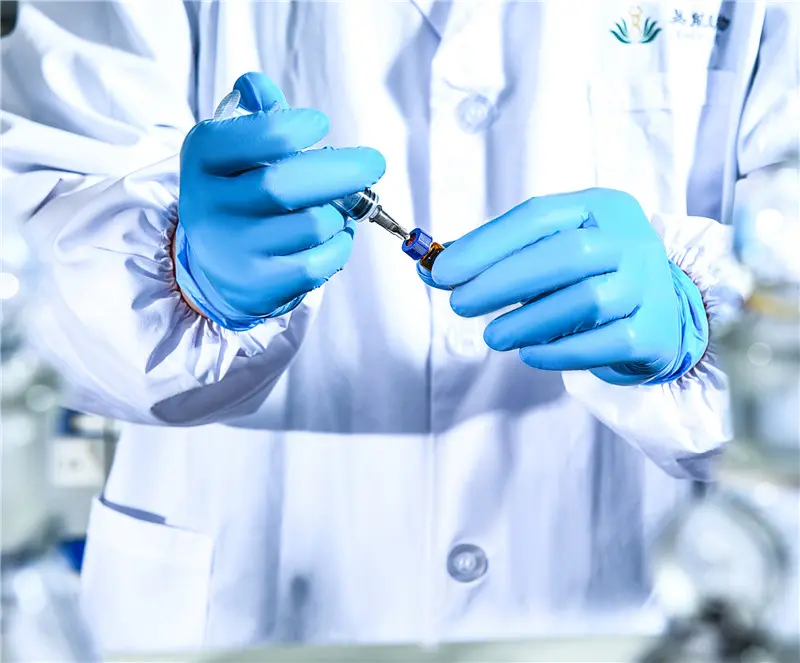
Initiate a study protocol, request assay panel pricing, or discuss turnkey botanical CRO/CDMO services with our senior technical consultants.
Send Inquiry Now