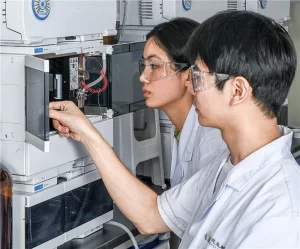
Direct contract research and testing capabilities designed to accelerate product development pipelines across Portugal's biopharmaceutical, dermo-cosmetics, and functional health sectors.
A comprehensive analysis of Portugal’s expanding life sciences matrix, transitioning from traditional animal models to advanced New Approach Methodologies (NAMs) in full compliance with INFARMED and European Union standards.
Portugal has rapidly established itself as a vibrant, agile bio-economy in Southwestern Europe. Driven by national initiatives under Health Cluster Portugal (HCP) and anchor scientific research institutions such as the Instituto de Medicina Molecular João Lobo Antunes (iMM) in Lisbon, the Instituto de Investigação e Inovação em Saúde (i3S) in Porto, and the biotechnology flagship cluster at Biocant Park (Cantanhede/Coimbra), Portuguese life sciences enterprises demand high-throughput, reproducible, and animal-free testing alternatives.
Historically reliant on localized vivarium testing, the Portuguese pharmaceutical, nutra-biotech, and cosmetics industries are facing strict legal and economic imperatives. Regulatory alignment with INFARMED (Autoridade Nacional do Medicamento e Produtos de Saúde, I.P.) and the European Medicines Agency (EMA) mandates rigorous preclinical pharmacological verification before investigational medicinal products (IMPs) proceed to Phase I clinical trials. Concurrently, European Council directives—notably Directive 2010/63/EU on the protection of animals used for scientific purposes and EU Regulation (EC) No 1223/2009 prohibiting animal testing on cosmetic finished products and ingredients—have made accredited in vitro testing an unavoidable operational requirement for any organization targeting the Iberian and European Union markets.
Navigating the stringent dossier requirements of the Portuguese health authority demands robust Good Laboratory Practice (GLP) standards, validated bioassays, and quantifiable multi-concentration phenotypic outputs that streamline New Drug Applications (NDA).
Replacement, Reduction, and Refinement (3Rs) are no longer theoretical guidelines in Portuguese universities and CROs; they are hard industrial benchmarks driven by ethical consensus, consumer awareness, and direct European chemical REACH enforcement.
Portugal’s unique marine biodiversity (algae, tunicates, deep-sea extremophiles) and Mediterranean flora (Olea europaea, Vitis vinifera residues) require specialized high-density cytotoxicity and metabolic stabilization profiling prior to commercialization.
Technological disruption across high-throughput cell biology, microfluidics, and predictive mechanistic modeling is transforming preclinical decision-making worldwide.
Preclinical drug attrition rates have plagued pharmaceutical economics for decades, with nearly 90% of prospective compounds failing in human clinical trials despite showing safety and efficacy in rodent models. This translational gap has catalyzed the international scientific community and leading regulatory authorities—including the US FDA (via the FDA Modernization Act 2.0) and European regulatory bodies—to invest heavily in New Approach Methodologies (NAMs).
Contemporary in vitro systems have advanced far beyond traditional two-dimensional (2D) monolayer cultures. The state-of-the-art global market is defined by three fundamental technological pillars:
By mimicking the extracellular matrix (ECM) and in vivo tissue topology, 3D organotypic models (such as intestinal, hepatic, and blood-brain barrier spheroids) faithfully recreate physiological drug permeability, gene expression patterns, and metabolic clearance pathways.
Dynamic fluid shear stress, continuous nutrient perfusion, and vascularized co-culture interfaces simulate multi-organ interactions, enabling clinical researchers to evaluate human hepatotoxicity and cardiotoxicity in a synthetic environment prior to human exposure.
Automated confocal fluorescent microscopy coupled with deep-learning image segmentation tracks cellular phenotypes, mitochondrial transmembrane potentials, DNA fragmentation, and reactive oxygen species (ROS) formation in real-time across thousands of compounds.
Deploying tailored in vitro assays to solve the specific formulation, regulatory, and validation roadblocks encountered by Portuguese industrial manufacturers and academic spinoffs.
The convergence of European regulatory stringency with Portugal's distinct commercial footprint has yielded four distinct application areas where external contract research partnerships provide substantial strategic leverage:
Portugal commands one of the largest Exclusive Economic Zones (EEZ) in Europe. Scientific centers in the Algarve, Peniche, and the Azores are isolating novel marine secondary metabolites from microalgae, brown kelp, and sponge-associated actinobacteria. Our in vitro platform delivers rapid cytoprotective, anti-inflammatory (e.g., inhibition of LPS-induced NO in RAW 264.7 macrophages), and anti-aging enzyme inhibition testing (elastase, collagenase, tyrosinase) that proves pharmacological value without ethical encumbrance.
Portuguese cosmetic laboratories and contract formulators targeting European retail must provide rigorous, completely non-animal safety assessments. We supply full OECD-validated toxicological safety dossiers:
• Skin Irritation (OECD TG 439) using reconstructed human epidermis (RhE) models.
• Skin Corrosion (OECD TG 431) evaluating electrical resistance and cell viability.
• Ocular Irritation (OECD TG 492 / TG 437) with Reconstructed human Cornea-like Epithelium (RhCE) or BCOP.
• Phototoxicity (OECD TG 432) through 3T3 Neutral Red Uptake phototoxicity testing under controlled UVA exposure.
The rich tradition of Iberian herbal medicine, combined with modern nutraceutical demands in Lisbon and Porto, requires chemical deconvolution. Raw botanical materials vary wildly depending on harvest terroir and climate. Utilizing high-performance thin-layer chromatography (HPTLC) fingerprinting coupled with multi-target cellular reporter assays, we determine the exact mechanistic potency of botanical matrices (e.g., polyphenolic vine extracts from the Douro, cork oak suberin fractions from the Alentejo) to guarantee batch-to-batch consistency.
Biomedical innovators in Lisbon and Coimbra driving synthetic chemistry or recombinant biological programs require rapid IC50/EC50 determination, cell cycle arrest analysis via flow cytometry, caspase-dependent apoptosis profiling, and multi-drug resistance (MDR1/P-gp) substrate assays to de-risk candidate molecules before committing capital to pilot-scale synthesis.
Mapping the trajectory of in vitro bioassays from standardized microplate cytotoxicity tests to autonomous, multi-organ micro-physiological simulation networks.
Consolidated 2D/3D human primary cell cultures, OECD-validated toxicological models, and automated plate-based fluorometric assays ensuring immediate dossier acceptance across all EU member states.
Coupling functional hepatic spheroids with cardiac, renal, and gut barriers on interconnected microfluidic cassettes to evaluate systemic metabolic biotransformation and secondary toxicities simultaneously.
Real-time synthesis of Quantitative Structure-Activity Relationships (QSAR), molecular docking simulations, and high-content phenotypic image data into generative toxicological prediction engines.
Induced pluripotent stem cell (iPSC)-derived organoid biobanks capturing Portuguese and Iberian patient cohort pharmacogenomics to test personalized botanical and pharmaceutical therapeutics at scale.
To capture sustained competitive advantage, sponsors cannot treat in vitro testing as an isolated milestone. True efficiency is unlocked when in vitro bioactivity data directly dictates upstream extraction engineering, analytical reference standards, formulation stabilization, and subsequent clinical study design. By partnering with our multidisciplinary facility, Portuguese enterprises bridge the gap between initial bioassay discovery and GMP-certified commercial batch release under one unified quality umbrella.
Explore our complete portfolio of contract research programs, from plant screening and analytical method development to in vitro bioassays, animal validation, and Phase I–IV clinical execution.
Expert insights addressing GLP compliance, EU/INFARMED regulatory dossier submissions, sample logistics, and proprietary formula safeguards.
Partner with an authoritative CRO and CDMO equipped with 14+ years of scientific rigor, OECD test guideline compliance, and comprehensive preclinical testing pipelines.
Send Inquiry Now