
Phytochemical Discovery
Direct transfer of validated methodologies from Chinese laboratory infrastructure to Kazakhstan's growing pharmaceutical, biocide, and functional nutraceutical sectors.
Under the comprehensive modernization policy of Kazakhstan's Ministry of Healthcare and national initiatives aiming for at least 50% domestic pharmaceutical production localization, the demand for verified, scalable, and scientifically substantiated botanical active ingredients (APIs and standardized extracts) has surged across Central Asia.
Kazakhstan's single distributor system, SK-Pharmacy (СК-Фармация), has heavily prioritized long-term off-take contracts with domestic pharmaceutical manufacturing clusters in Shymkent, Almaty, and Karaganda. Achieving compliance demands reliable active ingredient suppliers that can supply comprehensive technical dossiers (CTD format) and batch reproducibility that withstands state pharmacopoeial testing.
From the Altai mountains to the Tian Shan range and Caspian steppes, Kazakhstan harbors extraordinary endemic botanical diversity—including Glycyrrhiza glabra (Licorice), Ferula foetida, Artemisia cina, Rhodiola rosea, and sea buckthorn (Hippophae). However, regional domestic laboratories frequently lack high-resolution chromatographic screening tools required to isolate thermolabile trace actives.
As a cornerstone of the Eurasian Economic Union (EAEU), Kazakhstan enforces standardized regional pharmacopoeial rules alongside Technical Regulations (TR CU 021/2011 on Food Safety and TR CU 027/2012 for specialized dietetics). Sourcing botanical extracts demands zero pesticide residues, precise heavy metal limits (Pb, As, Cd, Hg), and quantified bioactive markers.
Transitioning botanical medicine from empirical knowledge to quantifiable, reproducible clinical pharmacology requires an integrated technical chain. Our Changsha R&D center bridges in silico machine learning with ultra-high-pressure chromatography and bio-functional validation.
Utilizing high-performance quantitative structure-activity relationship (QSAR) models and molecular docking engines, our facility conducts computational profiling across 15,000+ botanical compounds against clinical targets (such as metabolic enzymes, inflammatory cytokines IL-6/TNF-α, and neuro-receptors). This upfront predictive step narrows candidate plants from thousands to top lead candidates, saving Central Asian client partners up to 70% in exploratory screening capital.
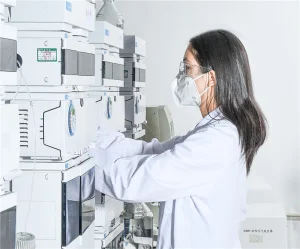
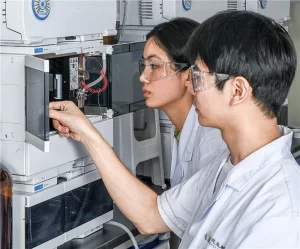
Once candidate botanical matrices are identified, automated chromatography units perform high-efficiency fractionation. We build standard operating procedures (SOPs) based on High-Performance Thin-Layer Chromatography (HPTLC), HPLC with DAD/ELSD, and Gas Chromatography with Mass Spectrometry (GC-MS) for volatile terpenes, establishing multi-wavelength fingerprint patterns that serve as international release criteria.
Comprehensive screening of raw botanicals across soil profiles, moisture levels, harvest timings, and altitude ranges.
Response surface methodology (RSM) optimizing temperature, pressure, solid-to-liquid ratios, and eco-friendly hydro-ethanolic solvents.
Cell viability, enzymatic inhibition assays, and targeted in vitro screening to verify biological potency prior to scale-up.
Engineering validation in 2,000-liter extraction vessels and spray dryers, generating commercial validation lots with CTD data.
Operating from Hunan province's botanical extraction innovation center, our facility deploys continuous automated processing lines, closed-loop solvent recovery, and strict digital documentation to mitigate supply risks for procurement teams across Kazakhstan.
State-of-the-art multi-stage counter-current extraction units ensure minimal thermal degradation of sensitive glycosides and polyphenols. Integrated SCADA sensors govern temperature gradients, flow rates, and density within 0.5% tolerance margins across multi-ton production cycles.
Positioned along the core Belt and Road logistics artery, shipments destined for Almaty, Astana, or Shymkent transition rapidly via the Khorgos Eastern Gate dry port. Temperature-controlled containerized rail transit completes in 5 to 7 days, eliminating maritime transit delays and extreme temperature spikes.
Central Asian drug enterprises and private label supplement brands retain uncompromised ownership over proprietary blends and isolated fractions. Operating strictly under legally binding CDMO escrow protocols, process parameters, chromatograms, and formulations are protected against cross-contamination.
Navigating regulatory submissions with the National Center for Expertise of Medicines and Medical Devices (НЦЭЛС) in Kazakhstan requires absolute analytical rigor. Our analytical methods, toxicity trials, and product release testing align comprehensively with EAEU supranational regulations.
| Target Regulatory Domain | Specific Standard / Directive | Our Laboratory Test & Validation Protocol | Status in Kazakhstan |
|---|---|---|---|
| Heavy Metal Limits | State Pharmacopoeia of RoK & TR CU 021/2011 | Inductively Coupled Plasma Mass Spectrometry (ICP-MS) checking Lead (<3.0 mg/kg), Cadmium (<1.0 mg/kg), Arsenic (<1.0 mg/kg), Mercury (<0.1 mg/kg). | Fully Certified |
| Pesticide Residue Screen | EAEU Supranational Norms (Regulation No. 166) | GC-MS/MS & LC-MS/MS multi-residue screen spanning over 240 organochlorine, organophosphorus, and synthetic pyrethroid compounds. | Fully Certified |
| Microbiological Cleanliness | EAEU TR CU 021/2011 Appendix 4 & Ph. Eur. 5.1.8 | Automated bioburden enumeration: TAMC (<10⁴ CFU/g), TYMC (<10² CFU/g), absence of Salmonella in 25g, Escherichia coli, and Staphylococcus aureus. | Fully Certified |
| Mycotoxin Safety | EAEU Technical Regulations on Food Safety | HPLC-FLD fluorescence testing for Aflatoxin B1 (<5 ppb), total Aflatoxins B1+B2+G1+G2 (<10 ppb), and Ochratoxin A. | Fully Certified |
| Halal Certification | SAMK (Spiritual Administration of Muslims of Kazakhstan) | 100% plant-origin raw materials, non-gelatin capsule shells (HPMC/pullulan options), solvent-free water/ethanol extraction processes. | Halal Compliant |
| CTD Registration Dossiers | Order No. KR DSM-10 of RoK Ministry of Healthcare | Provision of Complete CTD Module 3 (Quality: Manufacture, Characterization, Control of Drug Substance, Reference Standards, Stability Data). | Turnkey Support |
Whether your enterprise requires specialized isolated markers for analytical QC standards or commercial metric tons of standardized active dry extract, our end-to-end service models remove commercial friction.
Botanical collectors in Kazakhstan, Kyrgyzstan, and Uzbekistan can entrust harvested crude materials to our laboratory for exhaustive chemical potency mapping across seasonal harvests, identifying optimal geographical origins and yield variables.
Submit Crude SamplesIn accordance with OECD GLP principles, our laboratories execute acute toxicity (oral LD50 in rodents), 90-day subchronic toxicity, bacterial reverse mutation (Ames test), and targeted animal efficacy studies required for novel medical ingredient applications.
Request OECD Test ProtocolsTransform active plant compounds into shelf-stable, high-bioavailability finished goods ready for the pharmacy shelf: enteric-coated hard capsules, softgels, micro-granules for oral suspension, effervescent tablets, and concentrated botanical ampoules.
Explore Dosage CapabilitiesExplore our validated experimental services, customized chemical screening models, and contract research workflows developed specifically for global and Central Asian pharmaceutical enterprises.

Clear answers for scientific directors, procurement managers, and regulatory affairs executives evaluating botanical screening and manufacturing partnerships.
Collaborate directly with our senior phytochemical scientists and formulation engineers. Submit your target chemical indication, crude herb sample, or dosage concept for a comprehensive feasibility evaluation.