Pivotal Trial CMC & CDMO Solutions

OEM Phase 3 Clinical Trial Manufacturers & Supplier

Industrial-Scale Botanical CTM Manufacturing, Multi-Regional Clinical Trial (MRCT) Supply Chain Logistics, and Global FDA/EMA/NMPA GCP Regulatory Harmonization.

Primary Clinical Trial Assets

Featured Phase 3 Botanical & Preclinical Research Suites

Direct access to validated extraction processes, clinical protocol execution, animal pharmacodynamics, and chromatographic analytical method developments.


ODM Study and evaluation of the potency of the botanical active ingredient

ODM Study and evaluation of the potency of the botanical active ingredient(s) from different seasons and different origins. Manufacturer, Suppliers

Explore Specification
China Screening of the active ingredient(s) of plants Manufacturer

China Screening of the active ingredient(s) of plants Manufacturer, Manufacturers

Explore Specification
ODM Clinic study Phase1 Phase 4 Manufacturer Suppliers

ODM Clinic study (Phase1 - Phase 4) Manufacturer, Suppliers

Explore Specification
China Establishment of analysis methods of active ingredients Supplier

China Establishment of analysis methods of active ingredient(s) Supplier, Suppliers

Explore Specification
OEM Animal study Supplier Suppliers

OEM Animal study Supplier, Suppliers

Explore Specification
OEM In Vitro Test Research Service Manufacturers Suppliers

OEM In Vitro Test /Research Service Manufacturers, Suppliers

Explore Specification
Botanical Active Ingredient Screening for Phase 3 Trial

Comprehensive Botanical Active Ingredient Screening & Phytochemical Extraction CDMO

Explore Specification
Phase 1 to Phase 4 Clinical Study Management

Full-Lifecycle Clinical Trials Support: Phase 1 through Phase 4 Regulatory Execution

Explore Specification
Industry Strategic Whitepaper

Macro Solutions in Confirmatory Phase 3 Clinical Trial Manufacturing

De-risking pivotal multi-center clinical trials through strict Chemistry, Manufacturing, and Controls (CMC), chemical batch standardization, and intelligent supply chain architecture.

1. The Pivotal Paradox: Transitioning from Exploratory Proof-of-Concept to Confirmatory Scale

Phase 3 clinical trials represent the definitive inflection point in the therapeutic development pipeline, absorbing upwards of 60% of aggregate capitalized R&D investments. Within the modern biopharmaceutical and evidence-based natural medicine paradigm, advancing an Investigational New Drug (IND) candidate from exploratory Phase 2 dose-ranging studies to large-scale, multi-center, randomized double-blind Phase 3 trials introduces unprecedented logistical and chemical complexities. When evaluating OEM Phase 3 clinical trial manufacturers and suppliers, pharmaceutical sponsors are not merely seeking bulk material blending; they require an integrated Contract Development and Manufacturing Organization (CDMO) capable of resolving the "Pivotal Paradox"—maintaining exacting bioequivalence, batch-to-batch chromatographic fidelity, and strict GMP compliance while scaling production volumes by orders of magnitude.

"A failure in Phase 3 supply chain continuity or a 5% drift in phytochemical chromatographic fingerprint consistency can invalidate years of clinical investment, trigger complete clinical holds, and permanently close market authorization pathways."

In the domain of botanical therapeutics, complex phytochemical matrices, and synthetic-natural hybrid entities, Phase 3 manufacturing mandates complete mastery over natural variability. Factors such as geographical soil composition, seasonal harvesting shifts, and extraction kinetics induce significant variance in secondary metabolite concentrations. As a premier CDMO partner, MedGence (Yineng Pharma) implements comprehensive Good Agricultural and Collection Practices (GACP) coupled with automated inline multi-stage continuous extraction to standardize raw materials long before pilot-to-commercial scale-up begins.

2. The Global Commercial & Industrial Landscape

The global contract clinical trial manufacturing market is projected to eclipse $38 billion within the current decade, driven by stringent regulatory frameworks from the US Food and Drug Administration (FDA 21 CFR Part 312/211), the European Medicines Agency (EMA Directive 2001/20/EC & CTR Regulation EU No 536/2014), and China's National Medical Products Administration (NMPA Class 1 & Class 6 Innovations). Across this competitive landscape, sponsor organizations face chronic supply bottlenecks:

Traditional contract packaging organizations (CPOs) lack deep phytochemical and analytical chemistry competencies, whereas specialized discovery laboratories lack commercial GMP cleanroom capacity. MedGence bridges this historical industrial bifurcation. Operating over 14 years with 300+ research scientists and verified collaborative pharmaceutical manufacturing centers, MedGence provides end-to-end integration: from primary phytochemistry screening, HPTLC/HPLC fingerprint standardization, and acute/chronic GLP toxicology validation, to the automated manufacturing of double-blind Clinical Trial Material (CTM), blinded active placebos, and global patient kit distribution.

Validated Chromatographic Fingerprinting

High-resolution HPLC, HPTLC, and GC-MS multi-compound profiling ensuring chemical consistency across all Phase 3 confirmatory batches, satisfying FDA Botanical Drug Guidance requirements.

  • Quantitative assay of active marker metabolites
  • Multi-wavelength similarity evaluation (>0.98 index)
  • Ultra-trace heavy metal & pesticide dissipation kinetics

Identical Placebo Engineering

Advanced organoleptic matching techniques resolving double-blind integrity challenges in natural medicine and botanical drug trials where characteristic odor, taste, and color exist.

  • Spectrophotometric chromaticity alignment
  • Pharmacologically inert aroma/flavor encapsulation
  • Identical dissolution and disintegration profiles

Full-Chain ICH GCP/GMP Compliance

Audit-ready documentation systems encompassing Computerized System Validation (CSV 21 CFR Part 11), Master Batch Records (MBR), and robust multi-site chain-of-custody tracking.

  • Dual QA release protocols for investigational products
  • Real-time temperature-monitored distribution
  • Complete reconciliation and destruction auditing
Authoritative Track Record

Empirical Evidence & Industrial Scale Capacity

Over 14 years supporting leading multinational pharmaceutical conglomerates, top clinical trial hospitals, and pioneering botanical research institutes.

14+
Years Dedicated to Clinical CRO & CDMO Excellence
300+
Ph.D. Scientists, Toxicologists & Process Engineers
83
Classic Formula Modernizations Advanced to Clinical Stages
22
Innovative Phytopharmaceutical Drugs Successfully Developed
56
Hospital Preparation Registrations Formulated & Approved
~400
Single-Herb Quality Standards & Process Monographs Built
100+
Tier-1 Pharma Groups & University Research Hospitals Served
100%
Confidential Intellectual Property & Non-Disclosure Security
Global Regulatory Assurance

Localization Support, GCP Harmonization & Regulatory Defense

Navigating complex multi-regional clinical trial (MRCT) environments across FDA, EMA, NMPA, and PMDA jurisdictions with absolute compliance certainty.

US FDA Botanical Drug Guidance

Rigorous execution under FDA 21 CFR Part 312 IND and 21 CFR Part 211 cGMP standards. We provide raw material batch traceability, multi-batch consistency studies, dose-proportionality validation, and comprehensive Chemistry, Manufacturing, and Controls (CMC) dossier assembly ready for Center for Drug Evaluation and Research (CDER) review.

EMA Herbal Medicinal Products (HMPC)

Compliance with European Clinical Trials Regulation (EU No 536/2014) and EMA/HMPC monographs. Complete Qualified Person (QP) release support, stability testing under ICH Q1A-Q1F climatic zones, microbiological purity assays per European Pharmacopoeia (Ph. Eur.), and specialized import certification across European clinical sites.

China NMPA Class 1 & 6 Acceleration

Direct integration with China's rapid modernization frameworks for Traditional Chinese Medicine (TCM) and botanical innovations. Leveraging our database of hundreds of thousands of research batches, 56 hospital preparations, and relationships with top Chinese clinical trials centers for rapid IRB approvals and fast patient enrollment.

Localized Application Scenarios in Clinical Field Trial Execution

Phase 3 Clinical Trial execution is never a one-size-fits-all manufacturing process; it requires deep adaptation to clinical endpoints, geographic patient populations, and site administrative constraints:

Scenario A: Decentralized & Hybrid Clinical Trials (DCTs). With modern Phase 3 programs shifting towards decentralized architectures, MedGence manufactures patient-centric, tamper-evident, unit-dose blister packaging equipped with direct-to-patient (DTP) temperature monitors. Patient adherence is heightened through convenient, organoleptically optimized oral liquids, film-coated tablets, and micro-granule sachets that maintain chemical stability in diverse domestic environments without specialized cold-storage.

Scenario B: Oncology & Metabolic Adjunctive Multi-Center Studies. High-risk clinical indications demand acute analytical vigilance. Our team formulates specialized high-purity botanical actives (e.g., ginsenosides, astragalosides, polyphenolic fractions) as adjunctive therapies. We perform exhaustive cytochrome P450 (CYP450) and P-glycoprotein (P-gp) interaction screenings during the preclinical-to-Phase-3 transition, ensuring that investigational botanicals do not trigger hazardous drug-drug interactions (DDI) when co-administered with standard-of-care chemotherapeutics or anti-glycemic agents.

Scenario C: Multi-Origin Comparative Potency Sourcing. Sourcing raw materials from volatile agricultural markets represents a catastrophic clinical risk. Through our proprietary analytical evaluation across distinct regional terroirs and seasonal harvest windows, MedGence guarantees consistent chemical bioactivity. Sourcing monographs secure sufficient raw material from a single, verified GACP botanical lot to supply the entirety of Phase 3 testing as well as commercial launch inventory.

Future-Ready Innovation

Technology Roadmap: The Next Era of Clinical CDMO Manufacturing

Pioneering artificial intelligence formulation, Process Analytical Technology (PAT), and continuous manufacturing architectures through 2030 and beyond.

AI-Assisted Molecular Matching & Retrosynthetic Extraction Modeling

Phase I Roadmap (2025–2026)

Deploying deep learning transformer models trained on MedGence's proprietary historical database of over 400 single-herb extraction batches. This platform accurately predicts mass-transfer yields, optimizes ternary solvent extraction mixtures, and forecasts solvent-solute interactions, reducing preliminary process development cycles from months to days.

Real-Time Process Analytical Technology (PAT) & In-Line Spectroscopy

Phase II Roadmap (2027–2028)

Integration of real-time in-line Near-Infrared (NIR) and Raman spectroscopy sensors across commercial extraction columns and fluid-bed granulators. Closed-loop feedback algorithms autonomously adjust temperature, agitation rates, and feed rates, eliminating batch rejects and achieving near-zero variance in active ingredient concentration during Phase 3 campaign manufacturing.

Continuous Flow Phytochemical Synthesis & Supercritical Fluid Automation

Phase III Roadmap (2029–2030)

Transitioning from traditional large-volume batch reactors to continuous micro-channel reactors and automated supercritical CO2 counter-current fractionation. This green-chemistry approach drastically lowers solvent consumption, enhances environmental sustainability, and ensures ultra-pure botanical isolates free from residual organic solvents for the most demanding global clinical protocols.

Enterprise Ecosystem

Trusted by Leading Pharmaceutical Groups & Clinical Hospitals

Over 100 enterprise clients rely on our analytical facilities, GMP pilot lines, and clinical research capabilities for pipeline advancement.
Beijing Tongrentang Group
China Resources Sanjiu Medical
Sunflower Pharmaceutical Group
Livzon Pharmaceutical Group
Dihon Pharmaceutical Group
Golden Throat Holdings
Yangtzi River Pharmaceutical Group
Beihai Gofar Chuanshan Biological
Humanwell Healthcare Group
SCIMYTH Pharmaceutical Group
Shandong Hanfang Pharmaceutical
Luoxin Pharmaceutical Group
Authoritative FAQ

Technical & Operational Inquiries from Global Clinical Sponsors

Comprehensive scientific answers addressing blinding strategies, scale-up kinetics, regulatory auditing, and commercial transfer.

What specific manufacturing controls distinguish Phase 3 Clinical Trial supply from earlier Phase 1/2 material?
Phase 3 clinical trial materials (CTM) require production under full commercial-scale cGMP conditions (21 CFR Part 211 / EudraLex Volume 4 Annex 13), whereas Phase 1 and early Phase 2 exploratory materials often operate under flexible pilot-scale guidelines. Specifically, Phase 3 manufacturing mandates:

1. Validated Process Parameters: Critical Process Parameters (CPPs) such as extraction temperatures, solvent flow velocities, drying pressures, and micronization particle size distributions must be rigorously fixed and validated across at least three full-scale confirmation batches.
2. Commercial Stability Validation: Formal registration stability programs (ICH Q1A/Q1B) in final commercial packaging configurations must run concurrently with the trial to establish long-term shelf-life.
3. Complete Analytical Validation: Analytical methods (HPLC, HPTLC, LC-MS) must be fully validated for specificity, linearity, precision, repeatability, intermediate precision, and robustness per ICH Q2(R1) guidelines, establishing definitive batch release acceptance criteria.
How does MedGence resolve organoleptic matching for double-blind botanical trial placebos?
Botanical extracts present severe challenges for clinical double-blinding due to their distinct aromas, bitter/astringent flavor notes, and dark pigmentation. MedGence employs a multi-tiered organoleptic masking technology:

• Colorimetric Alignment: Using spectrophotometric tristimulus colorimetry (CIE L*a*b* coordinates), we match the exact color profile of active tablets, capsules, or oral liquids using inert pharmaceutical colorants (e.g., caramelized sugars, iron oxides, or riboflavins).
• Micro-Encapsulated Flavor Masking: For taste and odor identity, we use inert edible bittering agents (such as pharmaceutical-grade denatonium or micro-quantities of quassia) combined with microencapsulated aromatic oils to mimic the exact sensory footprint of the active natural product without pharmacodynamic interference.
• Weight and Density Harmonization: Placebo formulations utilize microcrystalline cellulose, dibasic calcium phosphate, and pregelatinized starch adjusted to match the exact density, hardness, disintegration time, and dissolution kinetics of the active CTM.
Can you support multi-center clinical trials across the US, Europe, and Asia simultaneously?
Yes. MedGence has established qualified clinical packaging and international logistics pipelines supporting Multi-Regional Clinical Trials (MRCTs). We provide multilingual clinical labeling compliant with local health authority mandates (including FDA 21 CFR 312.6, EU Annex 13 / CTR Regulation No 536/2014, and NMPA GCP requirements).

Furthermore, all clinical kits are dispatched under validated continuous temperature-monitoring cold-chain systems (ambient 15–25°C, refrigerated 2–8°C, or frozen -20°C/-80°C) equipped with real-time GPS and temperature dataloggers. Our clinical QA team coordinates directly with local depots and hospital research pharmacies to ensure uninterrupted supply reconciliation and QP certification.
How is sponsor Intellectual Property (IP) and proprietary formulation chemistry protected?
We operate exclusively on an entrusted research, development, and contract manufacturing model. Prior to receiving technical dossiers or starting project feasibility assessments, binding non-disclosure agreements (NDAs) are executed under chosen international legal jurisdictions.

All proprietary extraction parameters, chromatographic assay columns, formulation excipient ratios, and clinical findings remain the 100% exclusive property of the sponsor. Data integrity is enforced via air-gapped laboratory information management systems (LIMS) compliant with 21 CFR Part 11, restricted cleanroom access, and strict internal departmental firewalls between parallel client programs.
What dosage forms are available for Phase 3 clinical trial batch manufacturing?
MedGence provides comprehensive formulation development and cleanroom manufacturing for diverse clinical dosage configurations:

• Solid Oral Dosages: Film-coated tablets, bilayer tablets, hard gelatin/HPMC capsules, micro-tablet multi-particulates, and enteric-coated softgels.
• Liquid & Semi-Solid Forms: High-precision oral solutions, concentrated suspensions, drops, syrups, and topical dermatological hydrogels/creams.
• Powders & Granules: Unit-dose effervescent granules, soluble powders, and sachets produced in humidity-controlled Class D / ISO 8 cleanroom suites.
What is the typical lead time from final formulation lock to Phase 3 CTM site delivery?
Lead times typically range between 12 to 20 weeks depending on the complexity of the botanical matrix, sourcing geography, and dosage format. The standard timeline encompasses:

1. Weeks 1–4: GACP raw material qualification, pilot testing, and analytical assay method transfer.
2. Weeks 5–8: Active ingredient extraction scale-up, finished dosage pilot batch validation, and identical placebo sign-off.
3. Weeks 9–14: Full cGMP Phase 3 clinical batch production, randomized blinded blister/bottle packaging, serialization, and stability batch setup.
4. Weeks 15–18: Full analytical release testing (microbial, chemical, physical, impurity testing), Certificate of Analysis (CoA) QA sign-off, QP release, and shipping coordination.
Complete Pipeline Catalog

Integrated Clinical Solutions & Preclinical Study Services

Select your target research service below to request detailed technical whitepapers, pilot study protocols, and commercial manufacturing proposals.
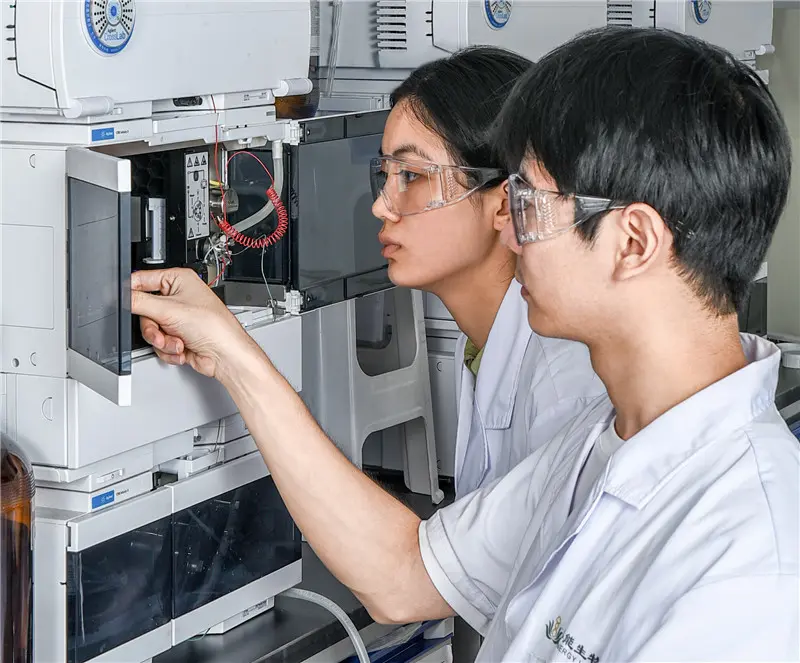
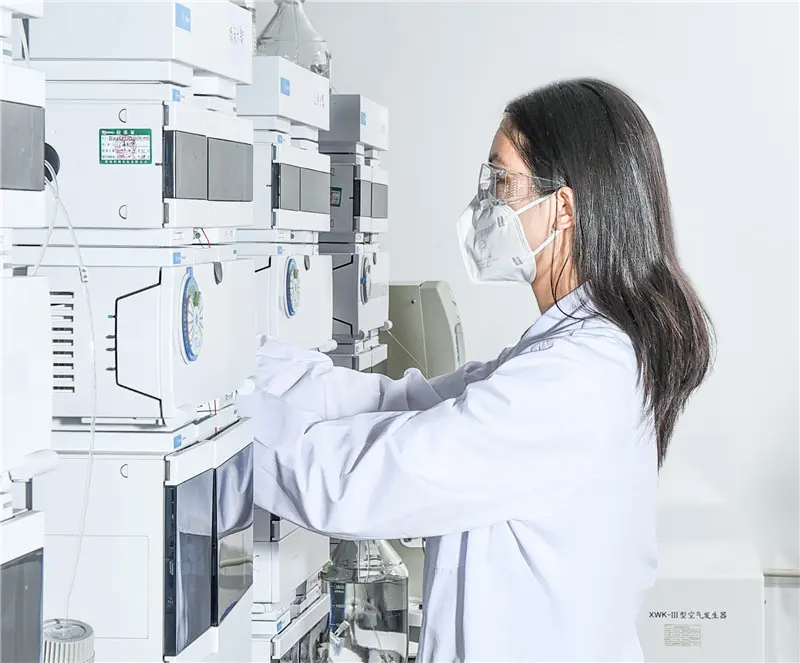
Potency evaluation of botanical active ingredients

ODM Study and evaluation of the potency of the botanical active ingredient(s) from different seasons and different origins. Manufacturer, Suppliers

Explore Specification
Screening of active plant ingredients

China Screening of the active ingredient(s) of plants Manufacturer, Manufacturers

Explore Specification
Phase 1 to Phase 4 Clinical study management

ODM Clinic study (Phase1 - Phase 4) Manufacturer, Suppliers

Explore Specification
Establishment of analysis methods for active ingredients

China Establishment of analysis methods of active ingredient(s) Supplier, Suppliers

Explore Specification
Animal studies for pharmaceutical research

OEM Animal study Supplier, Suppliers

Explore Specification
In vitro test research services

OEM In Vitro Test /Research Service Manufacturers, Suppliers

Explore Specification
Botanical Origin Sourcing and Evaluation

Botanical Origin & Harvest Season Potency Evaluation CDMO Service

Explore Specification
Analytical method development laboratory

High-Performance Analytical Method Establishment (HPLC, GC, HPTLC)

Explore Specification
Scientific Engagement Protocol

Initiate Your Phase 3 Clinical Manufacturing Program

Whether you are preparing an Investigational New Drug (IND) submission for FDA review, scaling up a complex multi-herb botanical extraction, or initiating a randomized multi-center double-blind clinical trial, our scientific leadership team is prepared to formulate your custom CMC roadmap and batch production timeline.