From botanical raw material identification to complete Phase I–IV clinical validation, explore our turnkey contract services engineered for regulatory compliance and batch reproducibility.







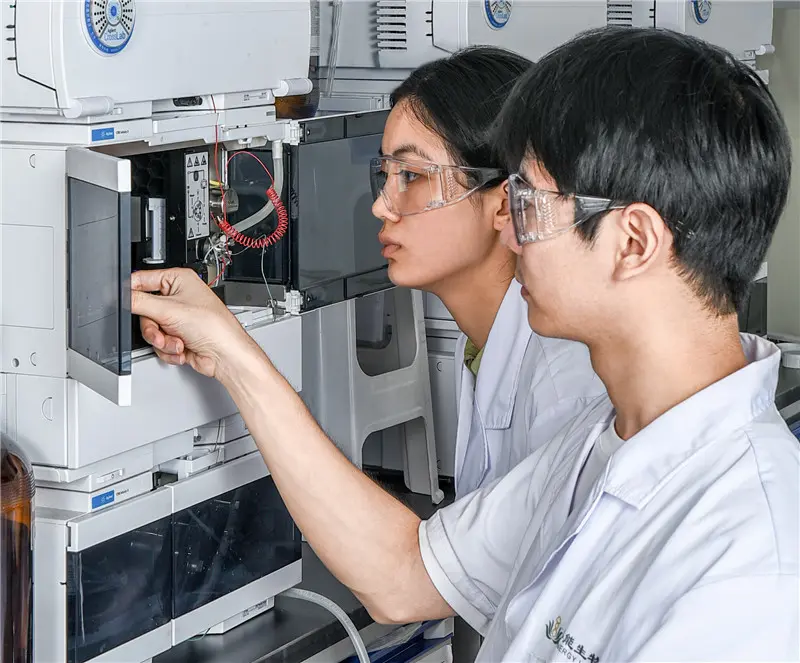
Global enterprise procurement is departing from simplistic gravimetric assays toward multi-dimensional chromatographic and mass-spectrometric authentication. Traditional medicine and plant extract supply chains require unambiguous taxonomic, chemical, and chiral verification to eliminate contamination, adulteration, and geo-origin volatility.
Backed by over 14 years of dedicated phytochemical R&D based in Changsha, Hunan, MedGence (Yineng Pharma) operates at the convergence of empirical herbal heritage and rigid biopharmaceutical validation. Our facilities handle client dossiers compliant with international compendia including USP, Ph. Eur., and ChP 2025.
Worldwide supply chains face severe challenges: economic adulteration using synthetic spikes, unregulated pesticide residues, heavy metal leaching, and geographical misrepresentation. OEM identification acts as the primary firewall protecting pharmaceutical brand equity and clinical trial reliability.
Phytochemical sourcing is no longer a transactional commodity purchase; it is a critical scientific audit. Pharmaceutical manufacturers, health brands, and medical cosmetic developers demand systematic de-risking throughout the procurement lifecycle.
Verification of species authenticity at the botanical farm level. Utilizing DNA barcoding (ITS2, psbA-trnH) alongside anatomical microscopic identification to guarantee the exact species (e.g., distinguishing Panax ginseng from Panax quinquefolius or adulterant weeds) before batch intake.
Development of high-performance thin-layer chromatography (HPTLC) track identification and HPLC-DAD fingerprint overlays. Every batch is evaluated against authenticated reference standards to calculate chromatographic similarity scores (≥ 0.95 vs. primary compendial reference).
Full spectrum quantification of elemental impurities (As, Cd, Pb, Hg) compliant with USP <232>/<233>, mycotoxins (Aflatoxins B1, B2, G1, G2, Ochratoxin A), and residual solvents (USP <467>) via headspace gas chromatography.
Comprehensive Certificate of Analysis (CoA) generation containing traceable spectral raw data, validated retention times, peak purity indices, and electronic batch records compliant with FDA 21 CFR Part 11 requirements.
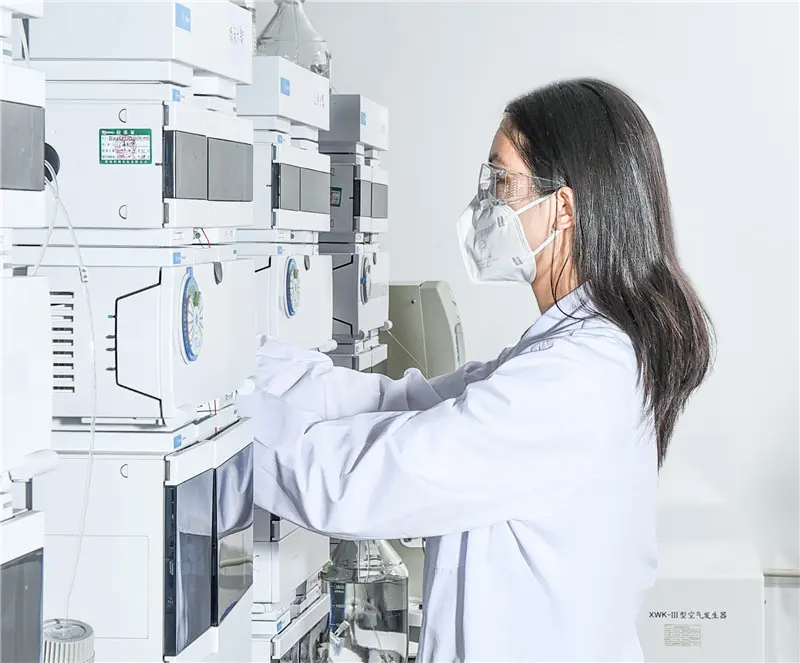
Our Changsha analytical laboratories utilize an integrated multi-platform testing suite, converting empirical natural medicines into verifiable, reproducible digital data assets.
| Analytical Technique | Target Identification Analyte | Validation Resolution / Limit | Applicable Pharmacopeial Standard | OEM Application Impact |
|---|---|---|---|---|
| HPTLC Digital Fingerprinting | Flavonoids, Polyphenols, Glycosides, Organic Acids | Visual & Fluorescent Rf tracking, ±0.02 Rf resolution | USP <203>, Ph. Eur. 2.8.25, ChP IV | Rapid qualitative screening of incoming raw plant batches |
| UPLC-DAD / UV-Vis Assays | Active marker compounds (e.g., Ginsenosides, Berberine) | Baseline peak separation, LOD < 0.05 μg/mL | USP <621>, ICH Q2(R1) | Accurate potency quantification and batch-to-batch content uniformity |
| GC-MS / GC-FID Headspace | Volatile terpenes, essential oils, residual solvents | Trace detection down to 0.01 ppm, retention index match | USP <467>, Ph. Eur. 2.4.24 | Authentication of aromatic herbal fractions and solvent safety clearance |
| LC-MS/MS Triple Quadrupole | Multi-pesticide screens, trace adulterants, microcystins | Sub-ppb limits of quantification (LOQ < 0.001 mg/kg) | USP <561>, EU 2021/808 | Strict regulatory border compliance for EU and North American entry |
| ICP-MS Spectrometry | Heavy metals: Lead (Pb), Arsenic (As), Cadmium (Cd), Mercury | Ultra-trace parts-per-billion (ppb) elemental detection | USP <232> / <233>, ICH Q3D | Absolute assurance for pediatric, geriatric, and clinical pharmaceutical applications |
| 2D-LC / Q-TOF High-Res MS | Untargeted metabolomics, novel compound structural elucidation | Accurate mass measurement < 2 ppm mass accuracy | ICH Q6B Guidelines | Deconvolution of co-eluting complexes in TCM multi-herb formulas |
Phytochemical biosynthesis is heavily influenced by soil minerology, altitude, latitude, and climatic stress. The same botanical taxon cultivated in differing geographic zones can demonstrate a ten-fold fluctuation in therapeutic potency. We systematically map geographical variance across China's geo-authentic (Daodi) cultivation regions.
Active compound accumulation follows circadian and phenological stages. Harvesting leaves, barks, rhizomes, or flowers days before or after peak vegetative accumulation drastically impairs clinical efficacy. MedGence conducts longitudinal potency evaluations across full seasonal cycles to lock optimal harvesting windows.
Identification without process engineering leaves value on the laboratory bench. Our scientists establish pilot extraction, macroporous resin column adsorption, membrane filtration, and vacuum low-temperature crystallization parameters to commercialize validated extracts without thermal degradation.
Accurate identification is the initial milestone. MedGence operates complete toxicology, pharmacological screening, and clinical infrastructure to validate safety and efficacy for worldwide regulatory dossiers.
Mechanism-of-action screening covering anti-inflammatory (COX-2, TNF-alpha), antioxidant (DPPH, ORAC), glucose uptake, neuroprotective, and enzymatic inhibition pathways using certified primary cell lines.
GLP-aligned metabolic absorption, tissue distribution, elimination, and efficacy models for metabolic disorders, cardiovascular integrity, and cognitive enhancement in validated rodent paradigms.
Rigorous Acute Oral Toxicity (LD50), 28-day and 90-day sub-chronic toxicity assays, Ames bacterial reverse mutation test, and chromosomal aberration profiles required by FDA NDI and EFSA Novel Foods.
Full clinical trial execution: institutional review board (IRB) approvals, GCP clinical monitoring, double-blind placebo-controlled design for dietary claims, and Phase I–IV trials advancing pharmaceutical NDAs.
The future of botanical identity lies in multidimensional big data, predictive artificial intelligence, and automated continuous processing.
Implementing deep neural networks to match high-resolution mass spectra against global botanical spectral libraries. Automated chemometrics detect trace-level synthetic spiking and classify multi-herb component synergy in real time, reducing testing cycles from days to minutes.
Transitioning conventional static batch maceration into automated continuous counter-current extraction (CCCE) pipelines. This technology enhances thermodynamic heat transfer, reduces organic solvent utilization by 40%, and prevents thermal denaturation of sensitive bioactives.
Creating immutable digital twins of every production batch. Chromatographic fingerprints, seasonal weather metrics, extraction yield records, and stability projections are compiled into accessible data dossiers for seamless FDA and EMA inspection audits.
Navigating complex international regulatory boundaries demands absolute alignment between analytical science and regulatory paperwork.
MedGence R&D laboratories and contracted pilot manufacturing plants follow strict Good Manufacturing Practices (cGMP) compliant with FDA 21 CFR Part 111 (Dietary Supplements) and Part 210/211 (Pharmaceutical APIs), maintaining full analytical equipment calibration records and automated change controls.
We provide complete Common Technical Document (CTD) Module 3 (Quality) documentation. From analytical method validation (ICH Q2) to accelerated stability study reporting (ICH Q1A), we supply the regulatory data packages required for successful IND, NDA, and monograph submissions.
All contract identification, formulation studies, and process optimization packages are executed under strict non-disclosure legal contracts. Proprietary extraction parameters and formulation recipes remain 100% client-owned intellectual property, ensuring market differentiation and IP security.
Our analytical methods and contract manufacturing support premier pharmaceutical groups and national clinical institutions across China and overseas markets.
Identification standards and fingerprint method optimization for classical heritage herbal formulas.
Active ingredient screening and industrial scale extraction parameter establishment.
HPTLC/HPLC impurity profiling and active ingredient quality standard establishment.
Toxicological assessment and preclinical animal pharmacokinetic studies for botanical drug candidates.
Potency evaluation by harvest season and commercial CDMO pilot formulation development.
Hospital preparation registrations and clinical validation for evidence-based TCM medicines.
Joint research into phytochemical active mechanisms and targeted cellular bioassays.
Single-herb chromatographic fingerprint development and multi-batch validation.
Connect directly with our analytical sciences division to schedule batch testing, method validation, or pilot-scale CDMO extraction.
Clear, evidence-backed answers to core technical, analytical, regulatory, and commercial inquiries raised by international procurement managers and lead scientists.
Routine identity testing often relies on non-specific colorimetric reactions or basic TLC that can easily be fooled by adulterants or related species. Our OEM botanical identification integrates microscopic morphological taxonomy, HPTLC digital fingerprinting, and high-resolution LC-MS/MS or GC-MS molecular weight confirmation. This multi-tiered analytical strategy ensures 100% species authentication, eliminates economic adulterants, and establishes a legally defensible baseline for regulatory submissions.
Natural botanicals vary naturally in chemical composition due to annual variations in rainfall, temperature, and soil conditions. We mitigate this through our phenological potency evaluation programs, tracking active marker concentrations across multiple harvest cycles and geographic microclimates. By creating multivariate chemometric fingerprint models, we blend harvests from certified origins to achieve uniform active concentrations, ensuring that the finished extract meets tight target specifications (e.g., ±2% active marker content) year over year.
Yes. We specialize in complex multi-herb formulas (such as classic TCM decoctions) where individual botanical peaks often co-elute and overlap. Our analytical scientists utilize two-dimensional liquid chromatography (2D-LC), gradient elution optimization, and specific diode-array detector (DAD) spectral library deconvolution to develop validated HPLC, UPLC, and GC methods complying fully with ICH Q2(R1) validation guidelines for specificity, linearity, precision, and robustness.
Every OEM delivery is accompanied by an audit-ready regulatory package. This includes a comprehensive Certificate of Analysis (CoA), full chromatographic raw data printouts, method validation protocols, heavy metal profiles (ICP-MS), residual pesticide screens (USP <561>), microbial enumeration tests (USP <2021>/<2022>), residual solvent declarations, and non-GMO/allergen declarations. We also provide CTD Module 3 documentation to support clients filing Drug Master Files (DMFs) or Investigational New Drug (IND) applications.
We operate strictly under an entrusted research and contract development model governed by internationally enforceable Non-Disclosure Agreements (NDAs). Proprietary extraction parameters, raw material sourcing coordinates, solvent ratios, and clinical formulation recipes are treated with strict confidentiality. Access to project databases is restricted via biometric authorization, and all IP generated under custom contract research belongs exclusively to the client.
Active ingredients can be provided as spray-dried standardized powders, micro-encapsulated granules, concentrated liquids, viscous pastes, or refined volatile oils. For finished contract manufacturing (CDMO), we support commercial high-speed production of hard gelatin and vegetarian HPMC capsules, softgels, multi-layer tablets, effervescent powders, oral solutions, and functional sachets packaged under cleanroom conditions.
Whether you require compendial identification method development, potency screening across regional harvest origins, or complete pilot-to-commercial OEM extraction, our team of 300+ scientists is ready to scope your project with precision.
