Directly integrated with MedGence’s pilot plants and chromatography laboratories. Select any capability below to initiate analytical method transfer, validation protocols, or contract OEM supply.
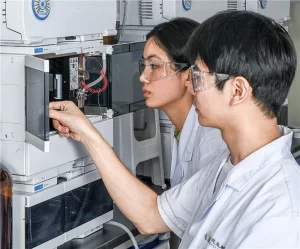
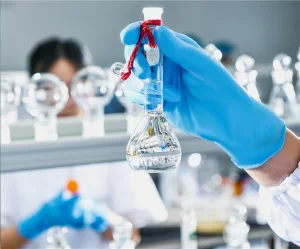
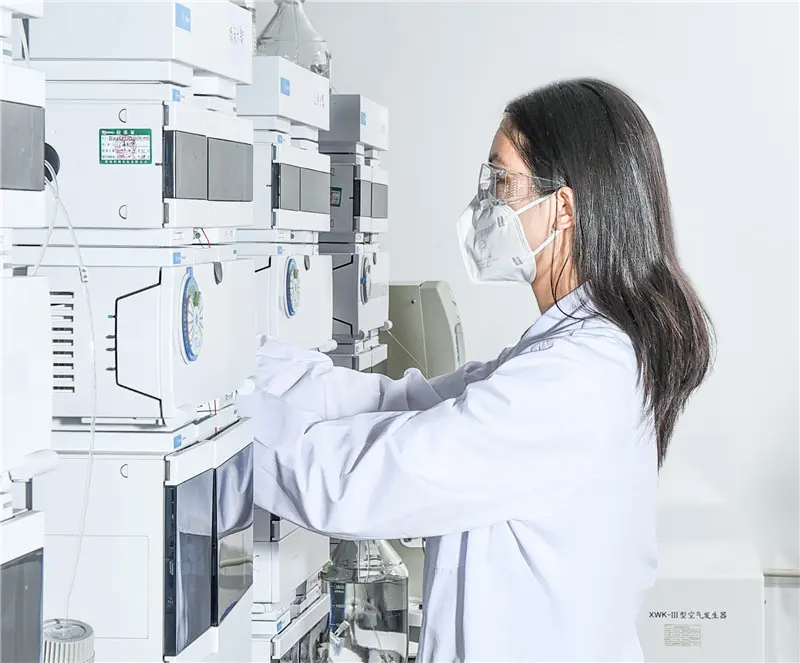
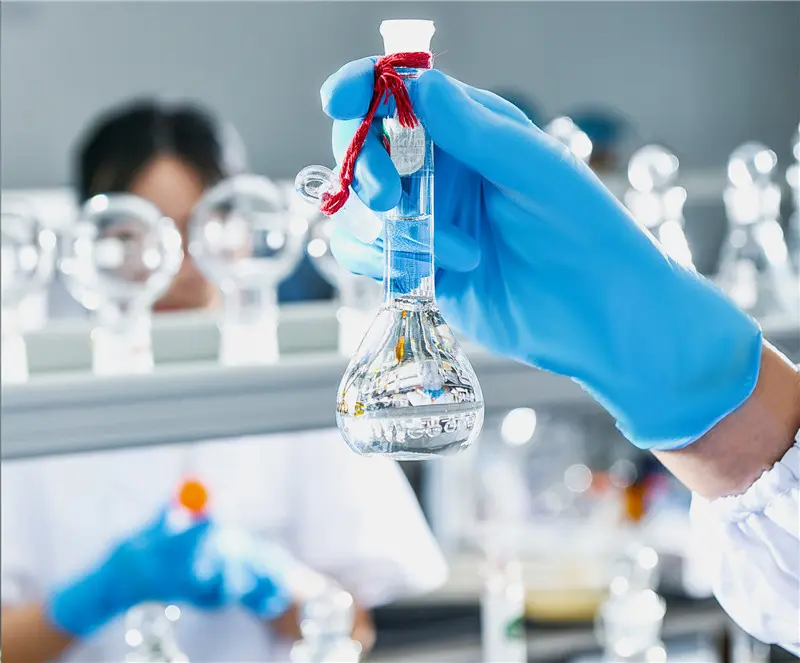
In an era where international regulatory bodies and global consumers demand unequivocal botanical verification, High-Performance Thin-Layer Chromatography (HPTLC) has emerged as the premier analytical methodology for qualitative identification and multi-compound fingerprinting.
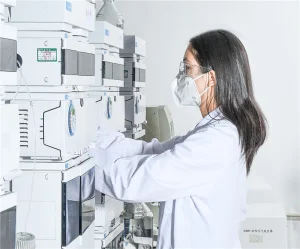
Traditional thin-layer chromatography (TLC) was long considered merely a semi-quantitative screening technique fraught with human subjectivity, variable plate saturation, and inconsistent migration distances ($R_f$). Modern Instrumental High-Performance Thin-Layer Chromatography (HPTLC) has fundamentally revolutionized this domain. By integrating automated sample micro-spraying, controlled relative humidity chamber development, standardized derivatization reagents, and digital densitometric scanning across UV/Vis and fluorescence spectra, HPTLC provides an immutable analytical fingerprint.
As an authorized OEM HPTLC supplier and CDMO contract laboratory, MedGence (Yineng Pharma) bridges empirical botanical wisdom with modern chemometrics. Operating from our central research facility in Changsha, Hunan, we execute pharmacopeial protocols aligned precisely with USP Chapter <203> (High-Performance Thin-Layer Chromatography Procedure for Identification of Articles of Botanical Origin) and European Pharmacopoeia (Ph. Eur.) Chapter 2.8.25.
Every contract assay and OEM batch supplied by MedGence satisfies international compendial specifications:
Years of Phytochemical CRO / CDMO Excellence
In-House Scientists, Ph.D.s & Analytical Technicians
Single-Herb HPTLC Identification Standards Built
Classic TCM Prescriptions Chemometrically Modernized
The worldwide plant extract, natural medicine, and nutraceutical raw ingredients market exceeded $38 billion in recent years, driving severe regulatory scrutiny across North America, the European Union, Australia, and Asia-Pacific.
Intentional adulteration has become exponentially sophisticated. From spiking *Ginkgo biloba* with pure rutin or quercetin to mimic high-performance assays, to substituting *Panax ginseng* with cheaper *Panax quinquefolius*, standard UV-Vis spectrophotometry or single-peak HPLC is easily deceived. HPTLC serves as the definitive analytical gatekeeper by visually resolving entire chemical arrays on silica matrices.
Under the US FDA dietary supplement regulations, finished product manufacturers must perform at least one 100% identity verification test on every incoming botanical container lot prior to release into manufacturing. HPTLC has officially become the default audit-proof methodology cited in FDA 483 inspection responses, preventing costly warning letters, import alerts, and class-action product recalls.
Modern therapeutic botanical drugs rarely rely on a single isolated compound; they harness complex botanical synergies (e.g., Traditional Chinese Medicine formulas or European Phytomedicines). HPTLC allows CDMO manufacturers to monitor the extraction and compounding kinetics of multi-herb matrices simultaneously without having to isolate dozens of individual markers.
Global pharmaceutical and nutraceutical organizations partner with Chinese analytical suppliers like MedGence not merely for pricing benefits, but for deep phytochemical specialization, certified botanical reference access, and unparalleled testing throughput.
China is home to over 11,000 medicinal plant species. Our Changsha analytical center maintains an authenticated repository of thousands of primary herb specimens and chemical reference substances (CRS), enabling instant comparison against authentic botanical vouchers without long international customs delays.
Where Western contract research organizations frequently require 4 to 8 weeks for method verification and lot release assays, our 300+ scientific team operates round-the-clock CAMAG® automated HPTLC systems. Routine lot release identification and multi-compound assay verification can be executed within 72 hours under full cGMP documentation.
Investing in automated sample applicators, horizontal developing chambers, immersion devices, TLC visualizers, and densitometric scanners requires upwards of $200,000 per analytical line. Outsourcing to an experienced Chinese OEM supplier amortizes these fixed capital costs across thousands of industrial batches, lowering testing expenditures by 50% to 70%.
Selecting the proper analytical tool is decisive for raw material acceptance, regulatory dossier submission, and quality control cost containment. The matrix below contrasts high-performance instrumental chromatography against standard alternatives.
| Analytical Technology | Botanical Identity Discrimination | Adulterant & Spike Detection | Analysis Speed (Sample/Plate) | Solvent & Matrix Consumption | Regulatory Harmonization |
|---|---|---|---|---|---|
| HPTLC Instrumental (MedGence) | Superior (Fingerprint) | High (Visual + Spectral) | Fast (Up to 30 tracks / 30 min) | Ultra-Low (~15-20 mL total) | USP <203>, Ph. Eur. 2.8.25, ChP 0502 |
| HPLC / UHPLC-UV | Moderate (Target marker only) | Poor (Spikes can mimic single peaks) | Slow (15-45 min per single sample) | High (Continuous solvent pumping) | USP <621>, Ph. Eur. 2.2.29 |
| Classical Manual TLC | Unreliable (Subjective visual) | Low (Variable Rf values) | Moderate (Manual spot application) | Moderate (Large glass tank) | Non-compliant with modern USP |
| DNA Barcoding / PCR | High (Only for raw unprocessed herbs) | Zero (Cannot detect extract adulterants) | Slow (DNA extraction & PCR amplification) | Low (Reagent enzymatic kits) | Supplemental only; fails for extracts |
| FT-NIR Spectroscopy | Moderate (Chemometric library dependent) | Low (Matrix interferences) | Ultra-Fast (< 2 minutes) | Zero (Reagent-free) | Secondary screening only |
Incoming bulk shipments of herbs (leaves, roots, seeds, barks) undergo swift HPTLC screening. We verify taxonomical identity against verified standard specimens, evaluating whether harvest season, geography, or post-harvest drying induced chemical degradation or missing marker bands.
During pilot-scale and OEM commercial extraction, our scientists utilize HPTLC to track the concentration and fractionation of target diterpenes, flavonoids, alkaloids, or saponins across resin columns, liquid-liquid partitions, and spray-drying towers.
HPTLC visualizes thermal and photo-chemical degradation kinetics in finished capsules, tablets, and oral liquids under ICH Q1A(R2) accelerated stability conditions, pinpointing decomposition spots before noticeable organoleptic decay occurs.
Chromatographic science is moving toward automated, multi-dimensional analytical hyphenation. As an advanced R&D contractor, MedGence actively incorporates progressive HPTLC technologies into daily CDMO workflows.
Direct surface elution interfaces allow specific chromatographic bands on the HPTLC plate to be extracted directly into a high-resolution electrospray ionization mass spectrometer (ESI-MS). This provides instantaneous molecular weight and fragmentation data for uncharacterized adulterants without laborious prep-HPLC isolation.
By dipping developed chromatographic plates directly into bio-indicator solutions (such as *Aliivibrio fischeri* bioluminescence, DPPH radical solutions, or bacterial cell suspensions for enzymatic inhibition like AChE or alpha-glucosidase), pharmacological potency is mapped directly onto physical chemical bands.
High-resolution digital images acquired under 254 nm, 366 nm, and white light are normalized via computerized chemometric algorithms. Principal Component Analysis (PCA) and Linear Discriminant Analysis (LDA) automatically classify botanical batches by exact geographic terroir and climatic harvest year.
When evaluating a Chinese CRO/CDMO partner for instrumental thin-layer chromatography, quality directors must inspect beyond price per sample. Rigorous data integrity and physical instrumentation determine regulatory audit survival.
Ensure your supplier utilizes automated glass plate spray-on applicators rather than contact capillary spotting. In compliance with USP <203>, developer tanks must feature automated chamber saturation control with regulated relative humidity sensors (typically 33% RH using magnesium chloride solutions) to prevent variations in solvent front migration.
For finished dosage exports intended for North American and European pharmaceutical jurisdictions, all digital imaging systems and spectrophotometric densitometers must record non-editable audit trails. Raw image TIFF files, profile densitograms, and track integration parameters must feature cryptographic timestamping and multi-tier user logins.
Every analytical HPTLC plate must carry a standardized System Suitability Test track (e.g., dual chemical markers with distinct $R_f$ values) alongside standard botanical reference tracks. A valid plate must satisfy precise $R_f$ difference parameters and band intensity thresholds prior to accepting any sample data.
MedGence operates under legally binding bilateral Non-Disclosure Agreements (NDAs). Proprietary botanical extraction ratios, solvent mixtures, formulation recipes, and chromatograms remain the client’s exclusive intellectual property, shielded by isolated cloud storage and secured physical laboratory access.
MedGence delivers accredited phytochemical R&D, method validation, and OEM contract manufacturing for major health institutions, state medical research centers, and pharmaceutical conglomerates.
 Tongrentang Group
 CR Sanjiu Pharma
 Sunflower Pharma
 Livzon Group
 Dihon Pharma
 Golden Throat Group
 Yangtzi River Pharma
 Beihai Gofar Biological
 Humanwell Healthcare
 SCIMYTH Pharma
 Shandong Hanfang
 Luoxin Pharma Group
Direct answers to the most common methodological, regulatory, and contract manufacturing inquiries submitted by procurement managers and analytical directors.
From raw herb screening and laboratory method creation to preclinical toxicology and commercial OEM batch production, MedGence provides end-to-end technical execution.
Submit your target botanical matrix, required pharmacopeia reference (USP, Ph. Eur., ChP), or OEM finished dosage specification. Our scientific team will provide a comprehensive study protocol and transparent quotation within 24 hours.