From single plant screening to full Phase I–IV Good Clinical Practice (GCP) implementation, explore our standard trial methodologies and analytical architectures.






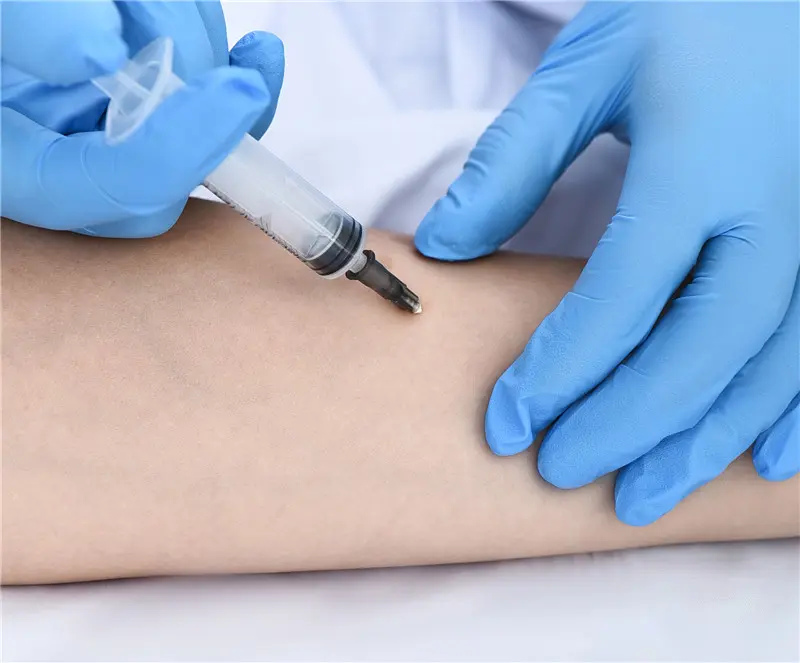

The worldwide transition from experiential traditional medicine toward rigorous, data-driven botanical therapeutics demands enterprise CRO/CDMO integration governed by International Council for Harmonisation (ICH) and Good Clinical Practice (GCP) benchmarks.
Global pharmaceutical sponsors, dietary supplement innovators, and clinical-stage dermato-cosmetic brands are phasing out transactional trial contractors. Corporate procurement protocols now mandate unified entities capable of running high-throughput phytochemical identification, analytical standardisation (HPTLC, HPLC-MS), followed seamlessly by in vitro, in vivo toxicity (GLP-aligned), and randomized, double-blind, placebo-controlled human trials.
Traditional herbal extractions suffer from natural batch variability caused by altitude, soil geography, harvest timing, and desiccation mechanics. If early-stage extraction is disconnected from the clinical study design, clinical phase trials inevitably fail due to lack of reproducible pharmacokinetics. An integrated OEM clinical research framework guarantees active compound stability before a single subject is dosed.
Global regulatory bodies including the US FDA (Botanical Drug Guidance), EMA (Committee on Herbal Medicinal Products - HMPC), and China NMPA require immutable analytical integrity. Our unified OEM clinical infrastructure generates fully defensible electronic Common Technical Documents (eCTD) with complete cross-referencing between agricultural raw material profiles, chemistry/manufacturing/controls (CMC), and human cohort statistics.
Our standardized OEM/ODM clinical protocol mitigates biological uncertainty across preclinical assays, translational toxicity testing, and human multi-center evaluation.
Execution of High-Performance Thin-Layer Chromatography (HPTLC) identification, HPLC-PDA, and GC-MS profiling. We isolate specific glycosides, flavonoids, polysaccharides, or terpenes across regional botanical batches, quantifying exact concentration thresholds prior to biological evaluation.
Target-specific assays assessing anti-inflammatory, antioxidant, pathway-modulating, and enzymatic inhibitory capabilities. Rapid cellular assays pinpoint molecular mechanisms (e.g., AMPK activation, NF-κB inhibition) informing go/no-go developmental decisions.
Full animal models establishing Median Lethal Dose (LD50), Maximum Tolerated Dose (MTD), sub-acute toxicity, 90-day repeated-dose oral toxicity, and Ames test genotoxicity. Guarantees complete pharmacodynamic baseline safety for ethics committee approvals.
Conducted in accredited clinical sites with single ascending dose (SAD) and multiple ascending dose (MAD) cohorts. Evaluates human gastrointestinal absorption, metabolic rate, clearance half-life, systemic bioavailability, and early biomarker response.
Double-blind, randomized, placebo-controlled multi-site protocols. Rigorous statistical power evaluation verifying clinical efficacy against measurable primary endpoints (e.g., HbA1c moderation, immune markers, sleep quality architecture, lipid profiles).
Post-market clinical surveillance, real-world evidence (RWE) accumulation, and immediate transfer of verified clinical formulation to industrial GMP scale-up (oral liquids, softgels, micro-tablets, functional powders, and volatile oils).
Translating botanical clinical data across jurisdictions requires direct harmonization with domestic market regulations, safety thresholds, and health claim substantiation frameworks.
For US market clients, human study protocols are structured to satisfy FTC substantiation standards for dietary supplement structure/function claims, or tailored to FDA IND (Investigational New Drug) botanical guidance. In Canada, clinical reports conform directly to NNHPD (Natural and Non-prescription Health Products Directorate) evidence guidelines.
European clinical positioning requires adherence to either the Traditional Herbal Medicinal Products Directive (THMPD) or full EFSA Article 13/14 health claim requirements. MedGence trial dossiers feature multi-analyte chromatographic fingerprints to prove compositional equivalence and physiological impact in cohort panels.
Full readiness for China NMPA Hospital Preparation registrations and New Botanical Drug approval pipelines. In Australia, our clinical documentation and validated assay methodologies align directly with TGA Listed/Assessed Medicine parameters and Japanese PMDA Foods with Function Claims (FFC) substantiation.
Our clinical validation research and CRO contracts actively power leading pharmaceutical conglomerates, academic clinical centers, and tertiary TCM teaching hospitals.
 Tongrentang Group
 CR Sanjiu Pharma
 Sunflower Pharma
 Livzon Pharma Group
 Dihon Pharmaceutical
 Golden Throat Group
 Yangtzi River Pharma
 Beihai Gofar Biological
 Humanwell Healthcare
 SCIMYTH Pharma
 Shandong Hanfang
 Luoxin Pharma Group
 Zhongsheng Pharma
 Apeloa Pharmaceutical
 Shuguang Hospital TCM
 Second Xiangya Hospital
Detailed answers regarding project timelines, protocol confidentiality, regulatory deliverables, and CRO/CDMO integration.
Traditional CROs are pure service bureaus that test whatever compound you deliver without addressing chemical instability or production scalability. MedGence acts as a hybrid natural medicine CRO & CDMO. We engineer the botanical extraction parameters, develop robust fingerprint assays (HPLC, GC, HPTLC), execute animal safety and human clinical trials, and possess pilot facilities directly managed by our scientists to seamlessly transfer the validated formula into commercial dosage manufacturing.
Yes. Dietary supplements do not always require multi-year Phase III IND trials. We structure agile, GCP-compliant, randomized double-blind placebo-controlled (RDBPC) trials on specific functional endpoints (e.g., glycemic management, sleep architecture, anti-inflammatory markers). These clinical studies provide rock-solid legal substantiation for product packaging claims under US FTC/FDA, European EFSA, and Australian TGA standards.
We work strictly under rigid non-disclosure agreements (NDAs) and an entrusted contract research framework. All intellectual property, process parameters, extraction specifics, and clinical datasets generated during the project remain the 100% exclusive property of the client. MedGence never commercializes or shares proprietary customer formulations.
Deliverables include full raw datasets, audited clinical study reports (CSR), eCTD-ready clinical summaries, bioanalytical method validation dossiers, certificates of analysis (COA) for all clinical trial supplies, and statistical analysis plans (SAP) with independent third-party biostatistical sign-offs.
Our pilot plants and CDMO operations produce bulk active ingredients (concentrated liquids, standardized extract powders, pastes, volatile oils) as well as finished consumer-ready dosage formats including softgels, two-piece hard capsules, tablets, functional oral liquids, and effervescent or soluble granules.
Select a validated study module below to initiate a structured protocol consultation with our clinical investigators.
