Explore our end-to-end laboratory testing suites, phytochemical active screening platforms, and bioequivalence pipelines developed under strict ISO/IEC 17025 and cGMP frameworks.
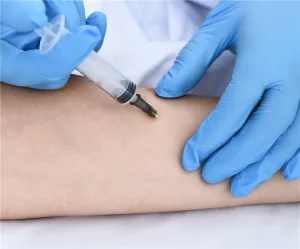

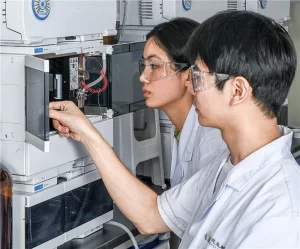

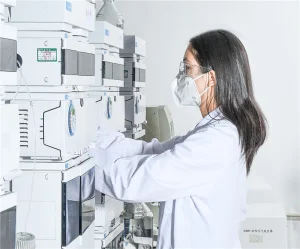

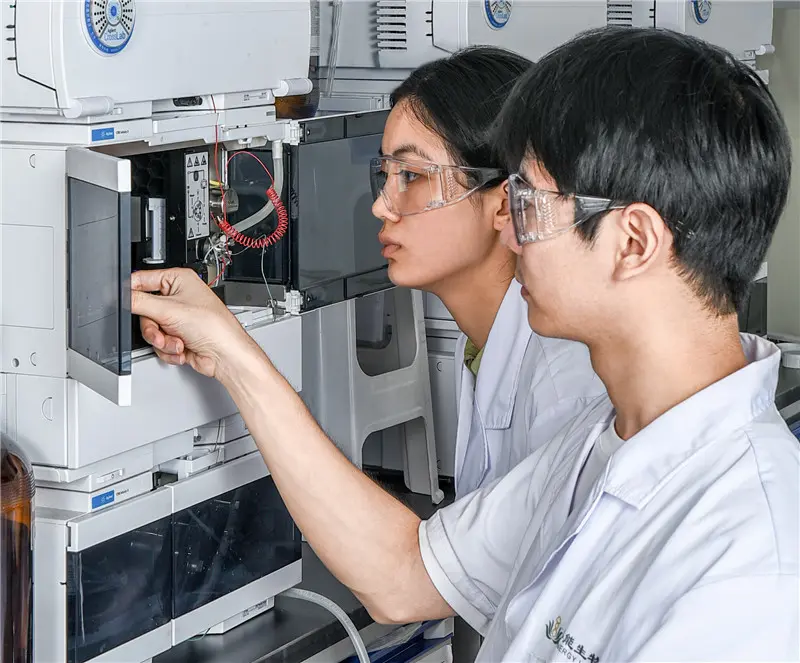
Modern natural medicine and dietary supplement manufacturing demands strict transitions from empirical botanical identification to reproducible, quantitatively verified molecular profiling.
Adulteration in commercial herbal materials has evolved beyond inert organic fillers into chemically masked synthetic analogs and exhausted biomass fortified with dyes or target marker spikes. Routine photometric or non-specific UV-Vis methods fail. Our OEM analytical methods employ orthogonal HPTLC, chiral HPLC, and LC-MS/MS fragment libraries to detect adulterants down to parts-per-billion (ppb) thresholds.
Botanical raw ingredients suffer inherent biochemical variance driven by microclimatic fluctuations, harvest timing, and geographic chemotypes. MedGence solves supply-chain instability via multi-marker quantitative analysis (QAMS) and HPLC fingerprint similarity evaluation (cosine similarity > 0.98), ensuring finished OEM extracts replicate clinical trial bioactivity consistently.
Herbal brands exporting across the United States, European Union, Australia, and Asia face conflicting regulatory monographs across USP, Ph. Eur., and ChP. Our analytical development protocols provide cross-validated assay packages that satisfy concurrent regulatory criteria, reducing re-testing costs, customs rejections, and regulatory compliance delays.
Plant secondary metabolites encompass highly diverse structural classes—from hydrophobic triterpenes to polar polysaccharides. Our analytical methods apply tailored chromatographic instrumentation to resolve challenging matrices.
High-Performance Thin-Layer Chromatography equipped with automated sample applicators, controlled relative humidity development chambers, and dual-wavelength densitometry (254nm, 366nm, white light). Provides definitive species identification and botanical differentiation across raw biomass.
Reversed-phase, HILIC, and core-shell column chromatography paired with Photodiode Array Detectors. Optimized for simultaneous multi-component quantitation, baseline separation of critical pairs (resolution Rs > 1.5), and rapid run cycles supporting high-throughput commercial batch release.
Triple quadrupole and Quadrupole Time-of-Flight mass spectrometers with electrospray ionization (ESI+/-). Designed for ultra-trace impurity identification, pesticide residue quantitation, mycotoxin screening, and structural elucidation of novel active phytochemicals.
Headspace Gas Chromatography coupled to mass spectrometry for volatile terpene profiling, residual solvent detection (USP <467>), and Inductively Coupled Plasma Mass Spectrometry (ICP-MS) evaluating elemental contaminants (Pb, Cd, As, Hg) under USP <2232>.
Every OEM analytical method established at our Changsha R&D center undergoes rigorous parameter validation before transfer into commercial manufacturing SOPs and technical dossiers.
| Validation Parameter | Technical Criterion & Statistical Benchmark | Botanical Matrix Challenge & Solution |
|---|---|---|
| Specificity & Selectivity | Zero co-elution; peak purity index > 995 via DAD/MS; complete baseline separation from adjacent tannins and polyphenols. | High matrix complexity; resolved using multi-step solid-phase extraction (SPE) and gradient mobile phase optimization. |
| Linearity & Range | Correlation coefficient r² > 0.999 across 50% to 150% of nominal target test concentrations (minimum 6 calibration levels). | Dynamic range saturation in high-potency extracts; avoided using high-linearity photodiode detectors and verified weighting models. |
| Precision (Repeatability & Intermediate) | Repeatability RSD < 1.5% (n=6); Intermediate precision RSD < 2.0% across 2 analysts, 2 instruments, and 3 distinct test days. | Sample degradation during long auto-sampler sequences; controlled using thermostatted sample trays (4°C) and stability tracking. |
| Accuracy / Recovery | Mean recovery between 97.0% and 103.0% calculated across three spiked concentration levels (80%, 100%, 120%) in triplicate. | Irreversible binding to excipients or particulate tannins; overcome with tailored enzymatic hydrolysis or ultrasonic bath extraction. |
| LOD & LOQ Sensitivity | Limit of Detection: S/N > 3:1; Limit of Quantitation: S/N > 10:1 with RSD < 5.0% for trace active biomarkers and harmful impurities. | High baseline chemical noise in raw extracts; mitigated through narrow-bandwidth UV or selective reaction monitoring (SRM) LC-MS. |
| Robustness & Solution Stability | RSD < 2.0% under minor deliberately induced variations (flow rate ±0.1 mL/min, column temp ±2°C, organic modifier ±2%). | Method failure during international laboratory transfer; addressed by establishing explicit system suitability criteria (SST). |
Integrating computational chemometrics, artificial intelligence, and non-destructive optical spectroscopy into commercial herbal CDMO operations.
Routine HPLC-DAD and LC-MS/MS quantitation targeting 1 to 5 active pharmacological markers per botanical species, backed by standard pharmacopeial identification.
Application of Principal Component Analysis (PCA) and Partial Least Squares (PLS-DA) on high-resolution mass spectra to classify botanical origins and detect atypical batches automatically.
Process Analytical Technology (PAT) incorporating in-line Near-Infrared (NIR) and Raman fiber-optic probes inside industrial extraction and spray-drying tanks for non-destructive real-time endpoint control.
Machine-learning architectures correlating multi-compound chromatographic fingerprints directly with in vitro bioactivity and animal trial potency data, predictive of batch clinical efficacy.
Navigating global natural medicine clearance requires an analytical partner fluent in transnational regulatory authority documentation.
Full analytical support under 21 CFR Part 111 cGMP and 21 CFR Part 312 for Botanical Drug Products. We deliver certified 100% identity testing methodologies, finished product assay specifications, and complete Chemistry, Manufacturing, and Controls (CMC) technical dossiers for New Dietary Ingredient (NDI) and GRAS notifications.
Compliance with European Medicines Agency (EMA) Committee on Herbal Medicinal Products (HMPC) monographs. We generate validated quantitative assay dossiers for Traditional Herbal Medicinal Products Directive (Directive 2004/24/EC) and European Pharmacopoeia (Ph. Eur.) contaminant limits for aflatoxins, pyrrolizidine alkaloids, and pesticide residues.
Australian Therapeutic Goods Administration (TGA) Listed Medicine compliance under PIC/S GMP standards. In China, our facilities have delivered 56 hospital preparation registrations and modernized 83 classic TCM formulations compliant with Chinese Pharmacopoeia (ChP) Volume I standards, ensuring seamless regional clearance.
Essential technical, intellectual property, and analytical validation insights for Chief Scientific Officers, Procurement Managers, and Quality Assurance Directors.
Unlike single-molecule synthetic APIs with predictable decomposition pathways, botanical extracts are intricate mixtures of dozens or hundreds of naturally co-existing secondary metabolites. OEM analytical methods for herbs must resolve matrix interferences, account for natural phenotypic variation, overcome peak co-elution from structural isomers, and correlate multi-component chromatographic profiles (QAMS) directly with therapeutic pharmacological activity.
Yes. We execute formal Analytical Method Transfer (AMT) protocols adhering to WHO and ICH guidelines. Deliverables include detailed Analytical Method Procedures (SOPs), complete Validation Final Reports (specificity, precision, linearity, range, robustness, LOD/LOQ), system suitability testing criteria, and reference standard certificates of analysis (CoAs) to guarantee inter-laboratory reproducibility.
We operate under bilateral Non-Disclosure Agreements (NDAs) and contract research agreements. All chromatographic raw data, compound isolation techniques, spectral libraries, and proprietary production parameters developed for your project remain your exclusive intellectual property. Our internal laboratory information systems (LIMS) enforce strict role-based access control and air-gapped data segregation.
Our database spans thousands of wild and cultivated botanical batches. We conduct systematic phenotyping of raw herbs across distinct harvest seasons, growth years, plant parts (root, leaf, flower, bark), and geo-climatic terroirs. We establish quantitative potency curves that guide procurement teams to lock in optimal sourcing origins and harvesting windows, protecting margins and target active yield.
On the active ingredient side, we deliver validated concentrated liquids, atomized extract powders, vacuum-dried pastes, high-purity single crystallized markers, and volatile essential oils. Finished product contract development and manufacturing (CDMO) capabilities include oral liquids, hard gelatin/veggie capsules, softgels, precision tablets, soluble effervescent powders, and micro-granules.
Yes. We are a full-service preclinical and clinical natural medicine CRO. Beyond chromatographic method establishment, we provide in vitro cell-based bioassays, animal model pharmacodynamics, GLP-compliant acute/chronic toxicity studies (LD50, Ames genotoxicity), and Phase I through Phase IV clinical trial execution for new drug applications (NDAs) and health claim dossiers.
Partner with a proven Chinese natural medicine CRO/CDMO. Initiate custom extraction method development or transition directly into commercial-scale OEM contract manufacturing.