Explore our core validated research protocols, phytochemical assays, and contract research services engineered for worldwide regulatory compliance.

ODM Study and evaluation of the potency of the botanical active ingredient(s) from different seasons and different origins. Manufacturer, Suppliers
Product DetailsPhytomedicines, dietary supplements, and therapeutic botanical extracts require reproducible chemical standardization. Natural matrix variability demands advanced Quality by Design (QbD) analytical frameworks.
In modern biopharmaceutical and nutraceutical manufacturing, a method is considered robust only when its analytical capability remains entirely unaffected by deliberate, minor variations in internal operational parameters—such as mobile phase pH, column temperature, organic modifier batch variations, detector flow rates, and sample preparation dwell times. For natural complex substances, such as botanical secondary metabolites, traditional single-marker assays routinely fail commercial scrutiny because herbal matrices are intrinsically heterogeneous mixtures of alkaloids, polyphenols, triterpenoid saponins, flavonoids, and volatile terpenoids.
As a specialized ODM robust analytical methods supplier, MedGence (Yineng Pharma) integrates over 14 years of dedicated phytochemical research and contract manufacturing experience. We provide tier-one pharmaceutical groups and international nutraceutical innovators with verified analytical protocols aligned with ICH Q2(R2) Validation of Analytical Procedures and the emerging ICH Q14 Analytical Procedure Development directives. Our laboratory and pilot infrastructure in Changsha, Hunan, transforms empirical botanicals into fully quantified, legally defensible, and reproducible commercial ingredients.
Every analytical method development program begins with defining a strict ATP, establishing exact acceptance criteria for measurement uncertainty, target concentration ranges, and qualification thresholds under differing regional pharmacopeias.
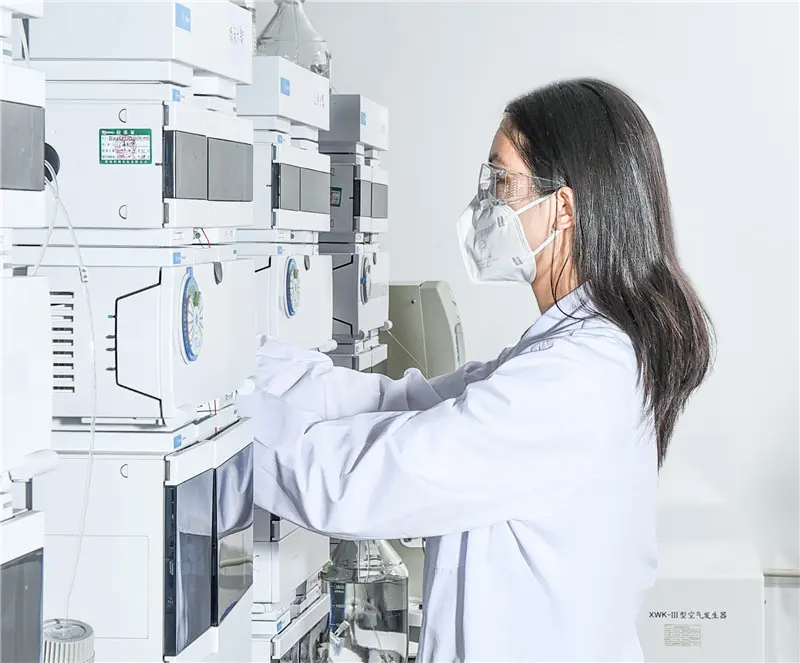
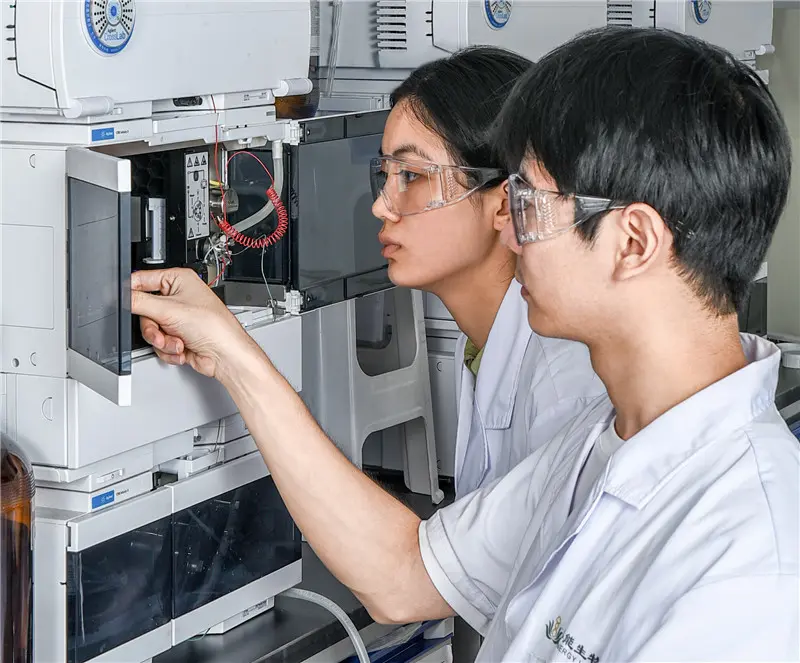
ICH Q14 QbD FrameworkHigh-resolution liquid chromatography coupled with photodiode array (HPLC-DAD) and tandem mass spectrometry (LC-MS/MS) isolates target bioactives from endogenous plant chlorophyll, tannins, and non-target lipids without co-elution bias.
Peak Purity & Mass SpectrometryValidation across multiple analysts, instruments, column lots, and laboratory environments confirms our analytical procedures withstand commercial transfer without Out-Of-Specification (OOS) anomalies during scale-up.
Statistical Inter-Lab FidelityOur ISO/IEC 17025 accredited and cGMP-aligned testing protocols support worldwide registration files across the United States Pharmacopeia (USP), European Pharmacopoeia (Ph. Eur.), and Chinese Pharmacopoeia (ChP).
| Analytical Technology | Primary Target Analytes | ICH Q2(R2) Validation Scope | Instrument Platform | Commercial Utility |
|---|---|---|---|---|
| HPLC-DAD / UHPLC | Polyphenols, Flavonoids, Alkaloids, Anthraquinones | Specificity, Linearity (R² > 0.999), Precision (RSD < 2.0%), Accuracy (Recovery 97-103%) | Agilent 1260/1290 Infinity II, Waters ACQUITY Premier | Finished product assay, stability testing, active marker release |
| HPTLC Fingerprinting | Whole-extract profile, Botanical identity, Adulteration screen | Rf repeatability, Color intensity fidelity, Track resolution, Visual distinction against reference herbs | CAMAG Automatic TLC Sampler 4 & Visualizer 2 | Raw botanical release, TCM identification, species authentication |
| GC-MS / GC-FID | Volatile oils, Terpenes, Residual solvents (ICH Q3C), Fatty acids | Peak resolution (> 1.5), Detection limits (LOD/LOQ < 0.1 ppm), System suitability | Shimadzu GCMS-QP2020 NX, Thermo Trace 1300 | Aromatherapy actives, pesticide residues, residual organic solvents |
| LC-MS/MS (Triple Quad) | Trace metabolites, Mycotoxins (Aflatoxins B1/G1), Pyrrolizidine alkaloids | Signal-to-noise (> 10:1 at LOQ), Matrix suppression factors, Dynamic range (5 orders of magnitude) | AB Sciex Triple Quad 6500+, Waters Xevo TQ-S | Ultra-trace contaminant screening, pharmacokinetic clinical profiling |
| ICP-MS | Heavy metals (Lead, Cadmium, Arsenic, Mercury), Elemental impurities | Elemental recovery (85-115%), Calibration linearity (R² > 0.9999), Carry-over < 0.1% | PerkinElmer NexION 2000, Agilent 7900 | Global safety compliance (USP <232>/<233>, Ph. Eur. 2.4.20) |
| QAMS (Single Marker) | Multi-component saponins, Multi-flavonoid TCM mixtures | Relative conversion factor (RCF) stability, ruggedness across differing temperature and stationary phases | High-throughput UHPLC with multi-wavelength monitoring | Multi-ingredient TCM cost-effective release testing without scarce reference standards |
In conventional manufacturing setups, analytical failures generate substantial cost overheads through Out-of-Specification (OOS) investigations, shipment quarantines, and delayed release dates. Our analytical development team tests method failure points before technology transfer. Using factorial Design of Experiments (DoE), we systematically interrogate critical method parameters (CMPs): mobile phase ionic strength, gradient slope deviations, column oven temperatures (±5°C), detector wavelength drift (±2nm), and solvent evaporation reconstitution ratios. Only methods displaying a robust operating space (design space) are finalized into standard operating procedures (SOPs) for commercial transfer.
Leveraging deep botanical raw material reserves, indigenous phytochemical processing infrastructure, and vertically integrated contract manufacturing to eliminate intermediate markup and supply vulnerabilities.
Direct connectivity to Good Agricultural and Collection Practices (GACP) compliant plantations across China ensures raw botanical batches are monitored for active ingredient density by season, harvest time, and geographic terroir.
Terroir Potency DatabaseMedGence manages proprietary pilot plants and affiliated high-capacity production factories. Research formulas move directly into multi-ton extraction tanks, column chromatography resins, membrane filtration, and vacuum drying.
Integrated CDMO EcosystemAccess to localized high-purity chemical reference substances, domestic synthesis of chromatographic media, and skilled analytical chemistry talent delivers tier-one pharmaceutical data packages at competitive global price points.
Economic EfficiencyWith established quality standards and production processes for nearly 400 single-herb medicines and modern studies on 83 classic TCM formulas, our formulation library accelerates project initiation by months.
400+ Monograph StandardsA verifiable record of success supporting tier-one pharmaceutical groups, university hospitals, and international supplement corporations.
Overcoming the structural hurdles in international botanical trade: Cross-border pharmacopeial synchronization, audit-ready data integrity, and analytical method transfers.
Global procurement teams cannot accept paper-only or disconnected chromatography systems. MedGence laboratories utilize networked CDS software with centralized SQL databases, automated audit trails, multi-level electronic signatures, and zero-deletion policies.
ALCOA+ ComplianceWe tailor analytical methods to satisfy distinct regulatory pathways: FDA New Dietary Ingredient (NDI) and Botanical Drug Guidance (BDG), European Medicines Agency (EMA) Herbal Medicinal Product Committee (HMPC) monographs, and Chinese NMPA botanical drug guidelines.
Multi-Territory DossiersWe execute standard AMT protocols—including Comparative Testing, Co-validation, and Transfer Waivers—complete with detailed transfer plans, predetermined statistical acceptance criteria (F-test, t-test), and full re-qualification at the client's destination lab.
Turnkey Technology TransferGlobal procurement requirements extend far beyond verifying the primary active marker. Leading consumer health conglomerates and pharmaceutical sponsors require definitive proof of clean raw material pedigree. Our ODM analytical packages evaluate potential contaminants with sensitive limit assays: multi-residue pesticide screening covering over 400 agrochemical compounds by LC-MS/MS and GC-MS/MS, aflatoxins and ochratoxin A profiling, residual heavy metals (USP <2232> elemental limits), and mutagenic impurities. Safety is reinforced through in vitro genotoxicity (Ames test, in vitro micronucleus assay) and in vivo LD50 / acute and chronic toxicity packages conducted under GLP environments.
How AI-driven chemometrics, green chromatography, and multi-dimensional spectroscopic deconvolution are redefining the next generation of botanical standardizations.
By pairing multi-wavelength UV and mass spectra with Principal Component Analysis (PCA) and Partial Least Squares Discriminant Analysis (PLS-DA), machine learning algorithms automatically classify herbal origins, identify subtle adulterants, and predict batch therapeutic efficacy before bioassays.
Intelligent Pattern RecognitionTransitioning from toxic chlorinated organic solvents to Supercritical Fluid Chromatography (SFC) utilizing supercritical CO2, alongside miniaturized micro-bore UHPLC columns. This reduces solvent consumption by up to 85% while drastically compressing analysis run times.
Sustainable Eco-TestingQuantitative Analysis of Multi-Components by a Single Marker (QAMS) eliminates the procurement barrier of rare chemical reference standards. A single inexpensive marker establishes relative conversion factors (RCFs) to calculate 8 to 15 concurrent active ingredients reliably.
Multi-Compound Cost BreakthroughFrom botanical drug filings to clean-label cosmetic bioactives, our tailored analytical methods anchor product claims in reproducible analytical chemistry.
Comprehensive chemistry, manufacturing, and control dossiers supporting Investigational New Drug (IND) filings. Includes validated stability-indicating methods for degradation pathway mapping under accelerated ICH Q1A storage conditions.
Pharma Drug Master FilesSubstantiating high-potency structure-function claims for the premium nutraceutical sector. We ensure finished products contain certified active concentrations throughout the entire shelf-life duration, preventing consumer litigation.
Substantiated Health ClaimsScreening and quantification of clean-label bioactives (e.g., glabridin, madecassoside, bakuchiol, and polyphenols) with sensitive trace assays, ensuring batch stability in topical emulsions and absence of skin-sensitizing impurities.
Cosmeceutical PotencyLeveraging our successful track record of 56 hospital preparation approvals, we take clinically established empirical hospital preparations and convert them into scaled, standard-compliant commercial natural formulations.
TCM Hospital Scale-UpOur analytical methods and contract manufacturing workflows support prominent pharmaceutical enterprises and top-tier clinical hospitals across China and overseas markets.
 Tongrentang Group
 CR Sanjiu
 Sunflower Pharma
 Livzon Pharma
 Dihon Pharma
 Golden Throat
 Yangtzi River Pharma
 Humanwell Healthcare
 SCIMYTH Pharma
 Luoxin Pharma
 Zhongsheng Pharma
 Shuguang Hospital
In-depth responses covering method validation criteria, intellectual property covenants, transfer protocols, and contract CDMO governance.
Select your required contract stage or active ingredient development program. Direct supplier engagement with complete regulatory documentation support.
ODM Study and evaluation of the potency of the botanical active ingredient(s) from different seasons and different origins. Manufacturer, Suppliers
Inquire Specifications
China Establishment of analysis methods of active ingredient(s) Supplier, Suppliers
Inquire Specifications
China Screening of the active ingredient(s) of plants Manufacturer, Manufacturers
Inquire SpecificationsConnect directly with our senior analytical development directors. Send your target molecule, pharmacopeial benchmark (USP, Ph. Eur., ChP), or dosage form requirements for a confidential feasibility assessment within 24 business hours.