Discover our specialized laboratory service suites ranging from seasonal active potency screening to full-spectrum clinical trials and regulatory analytical documentation.
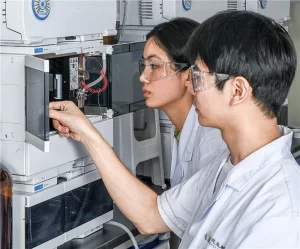
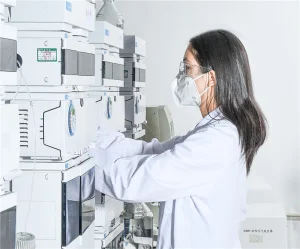
A rigorous examination of why HPTLC has evolved from a simple visual check into a mandatory, data-dense chromatographic standard across international pharmacopeias.
Modern regulatory expectations set forth by the United States Pharmacopeia (USP <203>, USP <1064>) and the European Pharmacopoeia (Ph. Eur. 2.8.25) have transformed HPTLC into a fully validated instrumented science. Unlike traditional manual TLC, HPTLC mandates precise sample deposition via automated spray nozzles, controlled relative humidity conditioning during plate development, and calibrated electronic image acquisition.
Global pharmaceutical auditors require reproducible retardation factors (Rf), standardized optical profiles under white light, UV 254 nm, and UV 366 nm, along with densitometric multi-wavelength scanning for true quantitative batch release.
With natural health products expanding into global clinical therapeutics, combating economic botanical adulteration has become a top priority. Raw materials often suffer from species substitution, unintentional harvesting of morphological twins, or deliberate spiking with low-grade biomaterials.
HPTLC serves as the undisputed gold standard for botanical fingerprinting. It allows qualitative comparison of whole phytochemical matrices side-by-side on the same plate under identical physical conditions, delivering undeniable chemical identification that HPLC single-peak assays frequently overlook.
From an enterprise procurement perspective, HPTLC offers unparalleled screening efficiency. A single 20 × 10 cm silica gel 60 F254 plate can simultaneously separate up to 20 to 30 sample tracks alongside authenticated reference standards, consuming less than 15-20 mL of mobile phase solvent for the entire run.
Compared to column chromatography (HPLC/UHPLC) where each injection demands 20 to 60 minutes of serial elution, HPTLC processes 30 lots simultaneously in under 45 minutes, dramatically slashing quality release costs and QC turnaround bottlenecks.
Technical Consensus: High-Performance Thin-Layer Chromatography (HPTLC) is no longer merely a qualitative visual aid. Supported by modern automated sample applicators, automated development chambers (ADC 2), high-resolution CCD cameras, and spectrodensitometers, HPTLC is a completely validated, 21 CFR Part 11-compliant quantitative analytical tool vital for botanical drug safety.
| Analytical Dimension | Conventional Manual TLC | High-Performance TLC (HPTLC) | High-Performance Liquid Chromatography (HPLC) |
|---|---|---|---|
| Stationary Phase & Particle Size | Silica gel 60, irregular 10–12 µm, layer thickness 250 µm | Optimized silica gel 60 F254, uniform 5–7 µm, layer thickness 100–200 µm | C18 / C8 porous silica particles (1.7–5 µm) packed in stainless steel columns |
| Sample Application Method | Manual capillary glass tubes, uneven spot geometry | Automated spray-on micro-dosage bands (Automated ATS 4) | Automated autosampler valve loop injection |
| Separation Throughput | Low (manual, prone to edge effects and migration distortion) | Extremely High: 20–30 samples parallelly separated per plate | Serial: 1 sample at a time (sequential sequence running 12–24h) |
| Environmental Control | Open glass tanks, uncontrolled chamber saturation & humidity | Automated Development Chamber (ADC 2) with active RH% sensor control | Column oven controlled temperature; solvent degasser |
| Quantitative Reliability | Subjective visual estimation (Rf errors ±0.15) | Instrumental densitometric scanning (Rf repeatability RSD < 1%) | High precision UV/Vis/DAD/MS integration (Peak area RSD < 0.5%) |
| Solvent Consumption | Moderate (~100 mL per glass tank run) | Ultra-Low (~10–20 mL for 30 samples, Green Analytical Chemistry) | High (0.5–2.0 mL/min continuous run; 500–1500 mL per 30-sample sequence) |
How state-of-the-art Chinese centralized research clusters eliminate analytical friction, accelerate time-to-market, and combine lab-scale HPTLC verification with industrial-scale extraction.
MedGence (Yineng Pharma), headquartered in Changsha, Hunan, operates at the heart of one of the world's most concentrated botanical pharmaceutical corridors. Our facility bridges academic botanical taxonomy, GMP extraction factories, and automated instrumental testing laboratories under a singular operational umbrella.
Unlike Western analytical laboratories that charge steep transactional fees for solitary tests and lack access to industrial manufacturing infrastructure, our analytical units seamlessly communicate with our pilot plants and production facilities. When an HPTLC fingerprint identifies peak batch potency or detects a seasonal phytochemical drift, extraction parameters (maceration temperature, hydroalcoholic ratios, resin adsorption kinetics) are recalibrated within 24 hours.
The cost structure of Chinese high-tier analytical CDMOs provides unmatched competitive leverage for international supplement and pharmaceutical brands. By utilizing specialized domestic scientific talent pools (over 300 dedicated in-house researchers and analysts) and high-density instrumentation lines, we achieve operational economies that traditional contract laboratories cannot match.
We routinely run dozens of validated CAMAG instrumentation modules alongside automated Agilent, Shimadzu, and Waters HPLC/GC systems, ensuring every analytical deliverable complies with ICH Q2(R1) guidelines, 21 CFR Part 11 digital signatures, and global pharmacopeial standards.
From discriminating genetically close botanical species to detecting subtle synthetic adulterants, inspect how HPTLC provides incontrovertible analytical evidence.
Differentiating authenticated medicinal herbs from low-cost morphologically identical alternatives is vital. In the case of Panax ginseng vs. Panax quinquefolius (American Ginseng), HPLC ginsenoside assays can easily confuse similar retention times if run on standard gradients.
By employing validated HPTLC with automated derivatization (sulfuric acid-vanillin or p-anisaldehyde reagent followed by thermal activation at 105°C), distinct diagnostic fluorescent bands under UV 366 nm allow immediate, unambiguous distinction of ginsenoside Rf, Rg1, and pseudo-ginsenoside F11 down to 0.5% adulteration thresholds.
Commercial herbal formulations marketed for weight loss, vitality, or joint relief are vulnerable to illicit adulteration with synthetic pharmacophores (e.g., sildenafil, tadalafil, phenolphthalein, sibutramine, dexamethasone).
Our lab establishes specialized multi-band HPTLC screening protocols. By running samples alongside reference standards with dual wavelength densitometry (254 nm absorption and spectral scanning from 200 nm to 400 nm directly on-plate), our analysts rapidly confirm the presence or absence of banned active adulterants with zero ambiguity.
Assessing real-time and accelerated stability (40°C / 75% RH) under ICH Q1A guidelines requires verifying that storage conditions have not generated degraded by-products or disrupted matrix stability.
Because HPTLC captures 100% of the sample on the plate (unlike HPLC where irreversible column binding can hide insoluble breakdown polymers), it reveals baseline precipitation, oxidation zones, and newly emerged degradation spots that remain trapped on an HPLC pre-column filter.
A strategic breakdown of procurement audits, data integrity requirements, and validation dossiers demanded by Fortune 500 procurement executives.
Global enterprise buyers refuse "black-box" testing. MedGence’s digital infrastructure maintains unalterable audit trails, electronic signature logs, user privileges, and original raw image archives (TLC Visualizer visionCATS software), guaranteeing total compliance during FDA or EMA remote audits.
Every analytical project concludes with an ICH-compliant validation dossier covering Specificity (matrix resolution without interfering bands), Precision (repeatability < 1% RSD, intermediate precision), Robustness (relative humidity variance ±5%, tank migration changes), and LOD/LOQ limits.
Procurement teams require comprehensive herb tracing. We pair raw material origin tracking (geo-coordinates, seasonal harvest records, moisture content upon intake) with corresponding HPTLC chromatographic fingerprinted certificates to ensure absolute authenticity before processing.
Client formulations, proprietary marker fractions, and extraction parameters remain protected by ironclad non-disclosure agreements (NDAs). Entrusted research models ensure all generated IP, chromatographic monographs, and process parameters belong exclusively to our client.
The convergence of ambient mass spectrometry coupling, artificial intelligence pattern recognition, and sustainable green chemistry standards.
The definitive breakthrough in contemporary chromatography is the direct extraction interface connecting developed HPTLC plates with electrospray ionization mass spectrometers (ESI-MS/MS). Without tedious manual scraping of silica spots, an automated extraction piston desorbs target analyte bands in seconds, transferring eluates directly into the mass spectrometer for molecular weight identification and structural confirmation.
Modern botanical quality evaluation involves vast data sets. By leveraging convolutional neural networks (CNNs) and principal component analysis (PCA), our laboratory digitizes multi-spectral plate imagery into mathematical matrices. Software algorithms cross-reference sample band profiles against thousands of historical library tracks, instantly outputting botanical purity scores and flagging anomaly peaks.
As international ESG regulations mandate lower carbon footprints and hazardous solvent reductions, HPTLC shines as a pioneer in Green Analytical Chemistry. By replacing chlorinated solvents with eco-friendly alternatives (ethyl acetate, ethanol, water-based micellar mobile phases) and slashing solvent consumption by 85–90% compared to UHPLC, HPTLC helps clients meet rigorous corporate sustainability metrics.
Our analytical dossiers, ODM formulations, and clinical trials underpin the flagship products of China’s most prestigious pharmaceutical conglomerates and university medical centers.
 Beijing Tongrentang Group
 China Resources Sanjiu
 Sunflower Pharma Group
 Livzon Pharmaceutical
 Dihon Pharmaceutical
 Golden Throat Group
 Yangtzi River Pharma
 Beihai Gofar Bio
 Humanwell Healthcare
 SCIMYTH Pharma
 Shandong Hanfang
 Luoxin Pharmaceutical
 Zhongsheng Pharma
 Brilliance & Abundance
 Apeloa Pharmaceutical
 Heng Chang Pharma
 Baotou TCM
 Kamp Medicine
 Guangxi Santo Pharma
 Kangshou Pharma
 Jiangxi Juwang
 Beijing Tcmages
 Guizhou Ruihe Pharma
 CR Jinchan Pharma
 Kangmei Pharmaceutical
 Tianjicaotang Pharma
 Kingstone Unite
 Shuguang Hospital (Shanghai)
 Hunan Affiliated TCM Hosp
 1st Hosp Hunan Univ TCM
 2nd Xiangya Hosp Central South
 2nd Hosp Hunan Univ TCM
 Zhuzhou Orthopedics TCM
Comprehensive technical and regulatory answers prepared by our Senior Analytical Chemist and QA Director for technical sourcing executives.
HPTLC provides a holistic "chemical barcode" or fingerprint of the botanical matrix that cannot be matched by single-target HPLC. In HPLC, compounds that bind permanently to the stationary phase column head or fail to elute within the gradient run time are lost completely. In contrast, HPTLC preserves 100% of the applied sample on the stationary silica bed.
Furthermore, HPTLC allows the simultaneous analysis of 20 to 30 sample lots side-by-side with verified reference botanical materials (RBM) and chemical reference standards (CRS) under identical atmospheric and solvent vapor conditions, providing instant visual, spectral, and numerical verification of botanical identity, batch consistency, and adulterant absence in under 60 minutes.
We execute all standardized HPTLC procedures using calibrated CAMAG automated instrumentation compliant with international pharmacopeias. This includes:
1. Automated Sample Application: Using the Automatic TLC Sampler (ATS 4) to spray exact 8 mm band lengths with micro-liter volume precision, ensuring sharp initial zone resolution.
2. Chamber Saturation & Humidity Control: Utilizing the Automated Developing Chamber (ADC 2) with active saturation timing and relative humidity pre-conditioning via saturated magnesium chloride solutions (33% RH) as specified in USP <203>.
3. Standardized Digital Imaging: Capturing images under strictly calibrated white light, UV 254 nm, and UV 366 nm before and after chemical derivatization using visionCATS software with electronic system suitability tests (SST).
Instrumental HPTLC is fully capable of rigorous quantitative determination. By pairing high-performance silica gel 60 F254 plates with automated densitometers (such as the TLC Scanner 4), our chemists scan separated analyte bands via optical absorption or fluorescence reflection mode.
Multi-level calibration curves (linear or polynomial regression, R > 0.998) allow precise quantification of active marker components (e.g., chlorogenic acid in Lonicera japonica, baicalin in Scutellaria baicalensis, curcuminoids in Curcuma longa) with relative standard deviations (RSD) under 1.5%, meeting all ICH validation acceptance criteria.
We operate automated immersion devices (CAMAG Derivatizer and TLC Immersion Device 3) ensuring uniform, automated reagent spraying or dipping without manual operator bias. Supported derivatization reagents include:
• Natural Products Reagent (NP/PEG): For intensely fluorescent visualization of flavonoids and phenolic acids under UV 366 nm.
• Sulfuric Acid / Vanillin Reagent: For triterpenoid saponins, sterols, and bitter principles.
• p-Anisaldehyde / Sulfuric Acid: For essential oils, terpenes, and sterols yielding diagnostic multi-color bands.
• Ninhydrin: For amino acids, peptides, and alkaloidal precursors.
• Dragendorff's Reagent: For nitrogenous compounds and complex alkaloids.
Every method development engagement includes a turnkey Analytical Method Transfer (AMT) package. This includes standard operating procedures (SOPs), exact chamber saturation parameters, solvent mixture ratios, plate brand specifications, system suitability criteria (SST track markers), and raw calibration files.
We provide cross-validation datasets demonstrating laboratory-to-laboratory precision, alongside optional live video technical transfer sessions with your internal analytical staff to guarantee seamless implementation.
Standard feasibility screening and preliminary chromatographic fingerprint establishment typically take 5 to 7 business days from receipt of reference samples. Complete ICH-compliant method validation (specificity, linearity, range, precision, intermediate precision, recovery, and robustness under varying relative humidities) is generally finalized within 3 to 4 weeks, culminating in a comprehensive audit-ready technical report.
From sample ingestion to global regulatory dossier filing: How our analytical team executes milestone-driven projects.
Definition of target phyto-markers, pharmacopeial targets (USP, Ph. Eur., ChP), and non-disclosure agreement execution.
Screening orthogonal mobile phase solvent systems, vapor phase conditions, and silica gel 60 F254 layer selectivity.
Fine-tuning spray deposition rates, development chamber humidity (ADC 2), and derivatization immersion kinetics.
Executing stress stability, intermediate precision, matrix specificity, LOD/LOQ, and densitometric linearity validation.
Delivering 21 CFR Part 11 electronic files, SOPs, and scaling directly into commercial extraction release testing.
Partner directly with MedGence (Yineng Pharma) for verified botanical ingredients, contract analytical development, and full regulatory dossier preparation.