Engineered for volatile compounds, botanical active ingredient assays, and rigorous pharmacopeia compliance (USP, EP, ChP). Seamless integration between proprietary hardware and validated lab services.
Navigating the paradigm shift toward micro-bore capillary columns, ultra-fast electronic pneumatics control (EPC), AI peak deconvolution, and high-throughput headspace analysis in pharmaceutical CDMO manufacturing.
Gas Chromatography (GC) remains the international benchmark for the separation, identification, and quantification of volatile organic chemicals (VOCs), residual solvents, fatty acid methyl esters (FAME), terpenes, and essential volatile fractions. However, global original equipment buyers face compounding challenges: off-the-shelf catalog GC models often lack modular flexibility, demand exorbitant licensing fees for closed software architectures, and exhibit extended lead times for mission-critical consumables and pneumatic replacement modules.
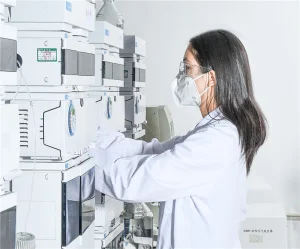
As a seasoned contract research organization (CRO) and contract development and manufacturing organization (CDMO) headquartered in Changsha, Hunan, MedGence (Yineng Pharma) bridges modern chromatographic hardware engineering with decades of empirical analytical research. Over 14+ years, our 300+ scientists and mechanical engineers have modernized 83 classic Traditional Chinese Medicine (TCM) formulas, developed 22 innovative natural medicines, obtained 56 hospital preparation registrations, and standardized near 400 single-herb matrices. This extensive laboratory footprint informs our original design manufacturing (ODM) gas chromatography systems—delivering customized pneumatic architecture, bespoke sample injection interfaces (Headspace, Purge & Trap, SPME), and compliant data systems tailored precisely to industrial client demands.
Combining deep precision machining clusters, electronic engineering synergies, and empirical chromatographic application laboratories under one roof.
China's consolidated high-precision supply network enables micron-level CNC machining of split/splitless injection ports, specialized inert silanized glass liners, and ultra-stable thermal column ovens with ramping rates exceeding 120°C/min. This localization drastically compresses lead times for custom manifold configurations.
Western tier-one instruments carry heavy branding and distribution surcharges. Partnering directly with an ODM supplier provides tier-one analytical performance (signal-to-noise ratio > 15,000:1 via FID) at a fraction of capital cost, allowing contract testing labs and chemical manufacturers to scale testing capacity rapidly.
Unlike isolated machinery fabricators, our engineering team manages an active testing pipeline of 83 classic formulas and hundreds of client products. Every ODM chassis, detector amplifier, and EPC valve manifold undergoes empirical stresses in authentic laboratory workflows before design freeze.
From environmental helium conservation to algorithmic baseline optimization, modern ODM engineering incorporates cutting-edge hardware and embedded firmware.
Global helium supply shortages have accelerated the shift toward on-demand electrolytic hydrogen and nitrogen carrier options. Our ODM instruments feature built-in hardware hydrogen sensors, automated leak check shutdowns, and flow restrictors ensuring total workplace safety without compromising chromatographic resolution.
Modern chromatography data systems (CDS) embed machine learning models capable of deconvoluting co-eluting peaks in complex natural matrices. The software automatically corrects retention time drifts caused by column aging, reducing manual integration interventions by analytical technicians by up to 70%.
The demand for at-line and process analytical technology (PAT) is pushing chromatography out of central testing suites and onto factory floors. Micro-machined silicon pre-concentrators, MEMS injectors, and low thermal mass (LTM) capillary column cassettes reduce analysis runtimes from 45 minutes to under 180 seconds.
Data integrity remains paramount for pharmaceutical manufacturers. Our customizable embedded controllers and desktop software come pre-architected with dual audit trails, automated electronic signatures, hierarchical user privilege rings, and secure SQL storage preventing chromatographic tampering.
| Hardware Subsystem | Standard Engineering Parameter | ODM Customizable Configuration | Regulatory / Pharmacopeia Standard |
|---|---|---|---|
| Column Oven Thermal Chamber | Ambient +4°C to 450°C; 20-ramp programming; Ramping speed up to 120°C/min; Cool down from 450°C to 50°C in <5 mins | Dual-column independent oven zones, Cryogenic LN2 / CO2 cooling down to -80°C | USP <621> Chromatography, EP 2.2.28 |
| Electronic Pneumatics Control (EPC) | Pressure control accuracy: 0.001 psi; Flow stability: ±0.01 mL/min; Split ratio up to 12,500:1 | Custom manifold channels (up to 8 channels), Carrier Gas Saver auto-switching mode | ICH Q2(R1/R2) Validation Protocol |
| Flame Ionization Detector (FID) | Detection limit: <1.2 pg C/s (tridecane); Dynamic linear range: >107; 500 Hz acquisition rate | Ceramic non-conductive flame jet, Automated hydrogen ignition & thermocouple flame-out alert | USP <467> Class 1, 2, 3 Residual Solvents |
| Thermal Conductivity Detector (TCD) | Sensitivity: >10,000 mV·mL/mg (toluene); Filament protection logic; Low dead volume cell (<3.5 μL) | Semi-micro cell design for capillary column compatibility, Hastelloy corrosion-resistant cell | ASTM D1945 / D1946 Fixed Gas Assays |
| Mass Spectrometry Detector (GC-MS) | Single Quadrupole (EI / Positive-Negative CI); Mass range: 1.5 to 1050 amu; Scan speed: up to 20,000 Da/s | High-vacuum turbomolecular pumping (250 L/s), Pre-filter hyperbolic quadrupole assembly | FDA 21 CFR Part 11, EU Annex 11 |
Translating high-performance separation hardware into tangible, compliant analytical workflows across pharmaceutical, nutraceutical, petrochemical, and environmental sectors.
Botanical matrices exhibit tremendous variance based on harvest geography, elevation, and post-harvest drying. Our customized GC-FID and GC-MS systems, combined with DB-WAX and HP-5MS capillary columns, deliver complete volatile organic profiles, confirming cultivar authenticity and detecting economic adulteration.
Pharmaceutical finished goods and active pharmaceutical ingredients (APIs) require strict limit testing for Class 1 (carcinogens like benzene), Class 2 (neurotoxins like methanol, acetonitrile), and Class 3 solvents. Our automated Static Headspace GC systems deliver precise equilibrium partitioning and sub-ppm quantitation.
Herbal exports entering European and North American markets face rigorous multi-residue pesticide limits. Equipped with selective Flame Photometric Detectors (FPD) and Electron Capture Detectors (ECD), our custom chromatography instruments detect organochlorine and organophosphate pesticides below regulatory threshold limits.
In analytical chemistry, precision hardware represents only one side of the coin. The true barrier for global enterprises lies in analytical method establishment and validation under ICH Q2(R2) guidelines. At MedGence (Yineng Pharma), our service architecture combines dedicated instrumentation manufacturing with end-to-end scientific laboratory support:
1. Target Extraction & Screening: Identification of bioactive substances (saponins, volatile terpenes, flavonoids) using high-resolution GC and HPLC to pinpoint maximal therapeutic yield.
2. Method Development & Specificity Testing: Selection of stationary phases (e.g., cross-linked polyethylene glycol vs. 5% phenyl polysiloxane), inlet liner geometry, split velocity, and oven ramp gradients to ensure complete resolution of critical pairs.
3. Method Validation Deliverables: Execution of ICH-compliant validation protocols evaluating specificity, linearity (R² > 0.999), precision (intra-day and intermediate repeatability RSD < 2.0%), accuracy (recovery rates between 98.0% - 102.0%), limit of detection (LOD, S/N = 3:1), and limit of quantitation (LOQ, S/N = 10:1).
4. Technology Transfer & Production Pilot: Transfer of validated parameters directly into contract OEM manufacturing runs for active ingredients (volatile oils, concentrates, pastes) and finished pharmaceutical/supplement dosage forms (softgels, oral liquids, tablets, capsules).
A strategic audit checklist for instrument distributors, contract laboratories, and pharmaceutical procurement directors seeking an overseas manufacturing partnership.
Distributors and OEM brands require flexibility in sheet metal chassis design, anti-corrosive powder coating colors, tailored touchscreen GUI interfaces, and localized language packs (English, Spanish, German, Japanese). Factory firmware must allow custom OEM boot screens and specialized diagnostic telemetry for field service engineers.
Regulated buyers cannot afford operational downtime during installation. Comprehensive installation qualification (IQ), operational qualification (OQ), and performance qualification (PQ) documentation binders, complete with traceable NIST calibration standards and step-by-step verification protocols, must accompany every exported chassis.
Entrusting both chromatography development and contract manufacturing requires strict contractual safeguards. At MedGence, proprietary column configurations, custom detector designs, herbal formulations, and production parameters are protected under enforceable mutual Non-Disclosure Agreements (NDA).
Clear, authoritative insights addressing hardware engineering specifications, custom manufacturing timelines, validation support, and international logistical transfers.
Engage our interdisciplinary engineering and biochemical departments for stand-alone analytical instrumentation or complete end-to-end pharmaceutical development programs.