From phytochemical active isolation to human clinical pharmacokinetic validation, our core service capabilities ensure strict batch-to-batch posological consistency and full regulatory documentation.

High-throughput isolation and bioactivity confirmation across botanical matrices to identify primary therapeutic compounds and target concentration profiles.
View Service Details
Cellular toxicity, metabolic response, and target enzymatic binding assays (IC50) establishing early empirical boundaries for therapeutic dosage thresholds.
View Service Details
GCP-compliant human trials, pharmacokinetic tolerance studies, and clinical endpoint validation supporting pharmaceutical NDA filings and functional claims.
View Service Details
Multi-origin and multi-harvest seasonal assay mapping to eliminate geographical raw variance and establish baseline extract standardization coefficients.
View Service Details
Precision HPLC, GC, HPTLC, and chromatographic fingerprinting methodologies validated to ICH Q2(R1) standards for multi-constituent batch release.
View Service Details
Pharmacodynamic validation, sub-chronic toxicity, and pharmacokinetic absorption profiling in rodent models to determine in vivo NOAEL indices.
View Service Details
Targeted bio-guided fractionation designed to separate complex polysaccharides, flavonoids, and alkaloids for targeted dosage formulation.
View Service Details
Ecological provenance verification, heavy-metal background screening, and marker quantification ensuring premium grade inputs for CDMO scaling.
View Service DetailsFrom empirical traditional decoctions to data-substantiated molecular posology: Addressing the global challenges of bioavailability, therapeutic indices, and phytochemical variability in ODM manufacturing.
In the contemporary landscape of pharmaceutical development, nutraceutical commercialization, and botanical medicine, the science of establishing defensible, reproducible, and clinically validated dosage recommendations constitutes the primary barrier between a conceptual formulation and a globally compliant, commercial-grade product. Historically, botanical extracts and Traditional Chinese Medicine (TCM) derivatives suffered from systemic skepticism within Western regulatory regimes due to inconsistencies in raw phytochemical concentrations, non-standardized extraction methodologies, and the absence of rigorous pharmacokinetic (PK) and pharmacodynamic (PD) modeling.
As an elite ODM (Original Design Manufacturer) and specialized contract research organization (CRO/CDMO), MedGence (Yineng Pharma) operates at the convergence of multi-constituent ethnopharmacology and cutting-edge pharmaceutical chemistry. Developing an evidence-grounded dosage recommendation demands far more than nominal compound blending; it requires an exhaustive exploration of the Therapeutic Window, the Therapeutic Index ($TI = TD_{50} / ED_{50}$), compound clearance rates ($CL$), absorption barriers across the intestinal epithelium, and multi-component synergistic interactions commonly termed the "entourage effect".
The Core Challenge of Botanical Standardization: Unlike synthetic single-molecule active pharmaceutical ingredients (APIs), botanical extracts possess polyvalent chemical signatures. Variations in soil mineralogy, harvest seasonality, post-harvest drying kinetics, and solvent extraction polarity cause secondary metabolite fluctuations exceeding 300% across uncontrolled batches. MedGence resolves this challenge through chromatographic fingerprinting and rigorous allometric scaling to establish standardized dosage recommendations backed by reproducible biological endpoints.
By pairing analytical verification via High-Performance Liquid Chromatography (HPLC) and High-Performance Thin-Layer Chromatography (HPTLC) with preclinical toxicological boundaries (No Observed Adverse Effect Level - NOAEL, and Lowest Observed Adverse Effect Level - LOAEL), our scientific framework empowers global brand owners, healthcare institutions, and pharmaceutical innovators to introduce high-potency finished dosage formats with unquestioned safety, optimized bioavailability, and total international compliance.
Navigating regional health authorities requires nuanced dosage recalibration. We align therapeutic daily intake values with specific regional statutory classifications and toxicology tolerances.
In the United States, dietary supplements operate under 21 CFR Part 111. Establishing dosage recommendations requires navigating New Dietary Ingredient (NDI) notifications or Generally Recognized as Safe (GRAS) toxicological dossiers. Our data packages establish explicit safety margins against standard Dietary Reference Intakes (DRIs) and Upper Intake Levels (UL), preventing regulatory pushback on functional botanical compounds.
European regulatory pathways bifurcate into Food Supplements (EFSA guidance) and Traditional Herbal Medicinal Products (THMPD under Directive 2004/24/EC). MedGence provides the critical chromatographic fingerprinting and posological rationale required by the European Medicines Agency (EMA) Committee on Herbal Medicinal Products (HMPC), distinguishing between "Well-Established Use" and "Traditional Use" daily doses.
Operating in mainland China and the broader APAC region demands mastery of the National Medical Products Administration (NMPA) "Blue Hat" functional health food dossiers and Hospital Preparation Registrations. In Australia, the TGA mandates strict evidence hierarchies for Listed vs. Registered medicines. MedGence's dual CRO/CDMO platform ensures posology documentation complies with localized pharmacopoeial monographs (ChP, BP).
| Jurisdiction / Agency | Primary Statutory Framework | Dosage Justification Basis | Safety Factor Margin Required | MedGence CRO Deliverable |
|---|---|---|---|---|
| United States (US FDA) | 21 CFR Part 111 / DSHEA / NDI | Sub-chronic 90-day rodent NOAEL + Genotoxicity | 100x – 1000x Safety Factor | Comprehensive Safety Dossier & Allometric HED Conversion |
| European Union (EMA / EFSA) | Directive 2004/24/EC / EC 1924/2006 | HMPC Monographs or 30-year documented use (15 in EU) | Established Upper Limits (UL) | Chromatographic Fingerprint & Posological Rationale |
| China (NMPA) | Health Food Registration & Hospital Prep Rules | Traditional formula lineage + Phase I-III clinicals | Empirical & Pharmacodynamic Validation | Full CTD Registration Dossier & Multi-Batch Assay QC |
| Australia (TGA) | Therapeutic Goods Act 1989 (ARGCM) | Permissible Ingredients List & Clinical Trials | Pharmacopoeial Monograph Match | Certificate of Analysis (CoA) with Quantitative Active Limits |
How MedGence converts in vitro cell viability and rodent toxicity thresholds into exact, human-equivalent clinical dosage schedules.
A fatal error made by low-tier contract manufacturers is the direct linear extrapolation of animal milligrams to human body mass (e.g., multiplying a rat dose by a weight factor). In professional pharmacological design, body surface area (BSA) normalization must be implemented. Interspecies metabolic rates scale allometrically relative to body mass according to the standard power function:
Where $K_m$ factors represent the body weight to surface area ratio (e.g., $K_m = 6$ for standard 150g rats; $K_m = 37$ for a standard 60kg adult human). Consequently, a rat NOAEL dose of 120 mg/kg converts to an adult human equivalent dose (HED) of approximately 19.45 mg/kg, which must subsequently be divided by an additional safety coefficient (typically 10x for inter-individual variation) to define the initial human clinical trial ceiling.
Our in-house clinical study team further models Area Under the Curve (AUC), peak plasma concentration ($C_{max}$), time to reach peak concentration ($T_{max}$), and half-life elimination ($t_{1/2}$) to determine whether a once-daily, twice-daily, or sustained-release delivery architecture is biologically indicated.
From empirical batch formulation to algorithmic AI-driven pharmacokinetics and bio-responsive delivery platforms.
Deployment of multi-wavelength HPLC-DAD, LC-MS/MS, and high-performance thin-layer chromatography (HPTLC) to establish digital reference fingerprints for all raw botanical species. Quantifying individual active marker percentages across seasonal harvest variations to guarantee fixed drug-to-extract ratios (DER) and unwavering posological reproducibility across metric-ton output batches.
Integrating machine learning computational models and quantitative structure-activity relationship (QSAR) algorithms to forecast multi-constituent receptor binding affinities before preclinical trials. Leveraging virtual human PBPK models to predict intestinal absorption and organ clearance, cutting down empirical formulation iteration cycles by over 60% while accelerating regulatory dossier validation.
Engineering smart oral dosage forms including sublingual liposomal delivery systems, self-emulsifying drug delivery systems (SEDDS), and enteric-coated nanoparticle complexes designed for targeted gastrointestinal release. Adapting natural medicine posology to chronobiological patient profiles and gut microbiome metabolomic variants for bespoke therapeutic efficacy.
How our Changsha central R&D hub and partner extraction facilities combine centuries of herbal heritage with modern pharmaceutical megascale advantages.
Uncompromising dosage consistency begins at the soil level. MedGence maintains direct provenance monitoring across certified Good Agricultural Practice (GAP) botanical cultivation centers in Hunan, Yunnan, Sichuan, and northeast China. By isolating altitude, harvest season, and post-harvest thermal treatment, we secure multi-ton raw material pipelines with known secondary metabolite densities.
Our collaborative industrial base integrates automated counter-current continuous extraction units, industrial-scale macroporous adsorption resin columns, supercritical $CO_2$ extraction, and low-temperature vacuum spray drying. This infrastructure eliminates thermal degradation of fragile thermolabile compounds, achieving over 98% batch-to-batch chemical assay uniformity.
The traditional split between analytical laboratories and commercial contract factories introduces costly formulation errors and knowledge leakage. MedGence bridges this gap: our research scientists directly oversee pilot-scale (50kg–500kg) scale-up and commercial 10,000-liter reactor campaigns, ensuring seamless transfer of verified critical process parameters (CPPs).
The Strategic China Cost & Scalability Advantage: Leveraging localized botanical supply chains, complete domestic pharmaceutical excipient infrastructure, and round-the-clock technical operations, MedGence delivers 40% to 60% lead-time reductions and major unit cost efficiencies over Western CDMOs—enabling commercial partners to allocate higher capital budgets directly toward clinical substantiation and market expansion.
Matching targeted therapeutic posology to appropriate pharmacotechnical delivery formats to maximize compound stability and consumer compliance.
| Dosage Format | Bioavailability Profile | Posological Precision | Target Chemical Class | Ideal Application Scenario |
|---|---|---|---|---|
| Softgel & Liquid-Filled Hard Capsules | Ultra-High (Lipid-solubilized) | Maximum (±1.5% filling variance) | Hydrophobic terpenes, carotenoids, essential oils | High-potency nutraceuticals, lipophilic drug candidates |
| Standardized Two-Piece Hard Capsules | Moderate to Fast Disintegration | High (±3% target dose) | Purified extract powders, standardized polyphenol blends | Clean-label dietary supplements, classic herbal formulas |
| Film-Coated & Enteric Tablets | Controlled / Delayed Release | Exceptional (±2% weight tolerance) | Acid-sensitive polysaccharides, bitter alkaloids | Pharmaceutical natural drugs, hospital preparation formulations |
| Oral Liquids & Concentrated Tinctures | Immediate Mucosal Absorption | Moderate (Volumetric dropper dependent) | Water-soluble flavonoids, glycosides, peptide fractions | Pediatric, geriatric, and rapid-onset functional health drinks |
| Soluble Granules & Effervescent Powders | Rapid Gastrointestinal Ingestion | High (Sealed sachet packaging) | Bulk TCM extracts, adaptogenic herbal tonics | High-volume institutional dispensing, modern TCM prescriptions |
MedGence has powered complex natural drug programs and hospital preparation registrations for over 100 distinguished pharmaceutical leaders and academic medical centers.
 China Beijing Tongrentang Group
 China Resources Sanjiu (CR Sanjiu)
 Sunflower Pharmaceutical Group
 Livzon Pharmaceutical Group
 Dihon Pharmaceutical Group
 Golden Throat Holdings Group
 Yangtzi River Pharmaceutical
 Humanwell Healthcare Group
Deploy our validated research monographs directly into pilot or full commercial manufacturing campaigns with guaranteed IP security and non-disclosure guarantees.
Identifying high-potency molecules within complex plant species. Comprehensive target compound mapping to inform initial active dosage parameters.
Inquire Service
Determining safety windows and biological thresholds via cell culture studies. Establishing cellular EC50 and IC50 indices for dosage substantiation.
Inquire Service
Phase I tolerability and Phase II–IV efficacy trials verifying clinical dosage recommendations in human cohorts for international regulatory filings.
Inquire Service
Quantifying fluctuations in botanical compounds across seasonal harvest periods to secure stable, uniform raw supply for commercial formulation.
Inquire Service
Developing and validating HPTLC and HPLC testing protocols to verify that each manufactured batch precisely matches established dosage specifications.
Inquire Service
Robust animal testing assessing systemic toxicity, LD50, and acute physiological tolerance to confirm safe starting doses prior to clinical trials.
Inquire Service
Full spectrum chemical fingerprinting ensuring multi-constituent batch uniformity and safeguarding finished products against adulteration.
Inquire Service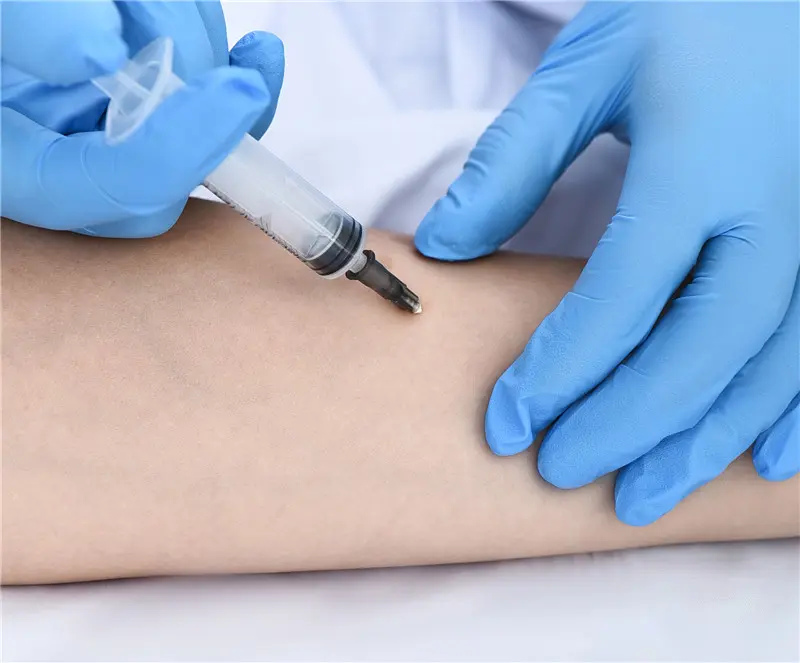
End-to-end CDMO manufacturing of standardized finished tablets, softgels, capsules, and liquids under stringent cGMP conditions.
Inquire ServiceExhaustive technical, clinical, and commercial answers for Chief Scientific Officers, R&D directors, and procurement executives.
