

Bioassay Screening
China Screening of the active ingredient(s) of plants Manufacturer, Manufacturers
View Specifications
High-yield active screening, preclinical characterization, and analytical method verification manufactured under rigorous regulatory guidelines.





The international botanical substances market has evolved beyond simple extraction ratios to rigorous, compound-specific quantification and multi-target fingerprinting.
Traditional metrics like "10:1 extract ratios" are no longer accepted by global tier-one pharmaceutical and functional food brands. The modern standard demands High-Performance Thin-Layer Chromatography (HPTLC) identification, HPLC-DAD fingerprinting, and UHPLC-MS/MS marker qualification to prevent adulteration, species confusion, and intentional spiking.
Global procurement requires harmonization across USP, Ph. Eur., and ChP. Validated analytical methods must prove linearity, precision, repeatability, intermediate precision, robustness, and limits of detection (LOD) and quantification (LOQ) in accordance with ICH Q2(R1) guidelines.
Procurement criteria have tightened on residual solvents, heavy metals (Pb, Cd, As, Hg), polycyclic aromatic hydrocarbons (PAHs), and over 500 pesticide multi-residue panels via GC-MS/MS and LC-MS/MS, alongside mycotoxin screenings (Aflatoxins B1, B2, G1, G2 and Ochratoxin A).
Leading nutraceutical, pharmaceutical, and cosmeceutical developers face regulatory scrutiny. Here is how specialized analytical method development mitigates critical business risks.
Botanical substances like Ginkgo biloba, Panax ginseng, and Rhodiola rosea are vulnerable to synthetic adulteration or botanical substitution. Advanced chromatographic profiling preserves product integrity and brand reputation.
Comprehensive analytical documentation—including Certificate of Analysis (CoA), validation protocols, and stability reports—streamlines regulatory submissions for US FDA NDIN, EU Novel Food, and TGA listings.
Variations in sunlight, rainfall, soil chemistry, and harvest times cause active ingredient fluctuations. Validated methods ensure standardized extracts stay within narrow therapeutic and active concentration tolerances.
In-house method development eliminates months of trial and error. Transferring turn-key analytical methods directly into your factory QC pipeline slashes time-to-market for finished dosage forms.
Integrating automated extraction networks, automated chromatography, and digital quality monitoring to deliver continuous botanical consistency.
Operating out of Changsha, Hunan—a historic epicenter for Traditional Chinese Medicine (TCM) cultivation and botanical active research—MedGence bridges agricultural precision with Industry 4.0 standards. Our extraction loops employ continuous countercurrent extraction, supercritical CO2 fluid extraction, ceramic membrane filtration, and automated resin column purification monitored via online PLC systems.
By standardizing critical process parameters (CPPs) such as thermal exposure time, solvent polarity, and vacuum evaporation thresholds, we convert variable wildcrafted or farm-sourced herbs into uniform chemical constituents. Every production batch is paired with pilot-scale validation data, ensuring seamless commercial transition with zero analytical discrepancy.
Formulation and validation strategies customized to meet distinct regional pharmacopeial standards and consumer safety laws.
Validation frameworks tailored to 21 CFR Part 111 cGMP regulations, AOAC International standards, and AHPA identity guidelines. Focus on non-targeted fingerprinting to defend label claims and prove pure botanical identity in retail settings.
Analytical quantification conforming to Ph. Eur. monographs and HMPC assessment reports. We build multi-compound quantitation for complex multi-herb formulas, providing full documentation on degradation products and stability curves.
Active substance assays for transdermal penetration, anti-oxidation stability assays, and skin barrier soothing validation via cellular assays. Rigorous screening verifies the complete absence of parabens, phthalates, and banned residual solvents.
From single plant screening to commercial Phase IV trials and large-scale industrial contract manufacturing.
Target active identification across alkaloids, polysaccharides, flavonoids, and saponins. High-throughput bioassays match target health indications with the most efficient botanical sources.
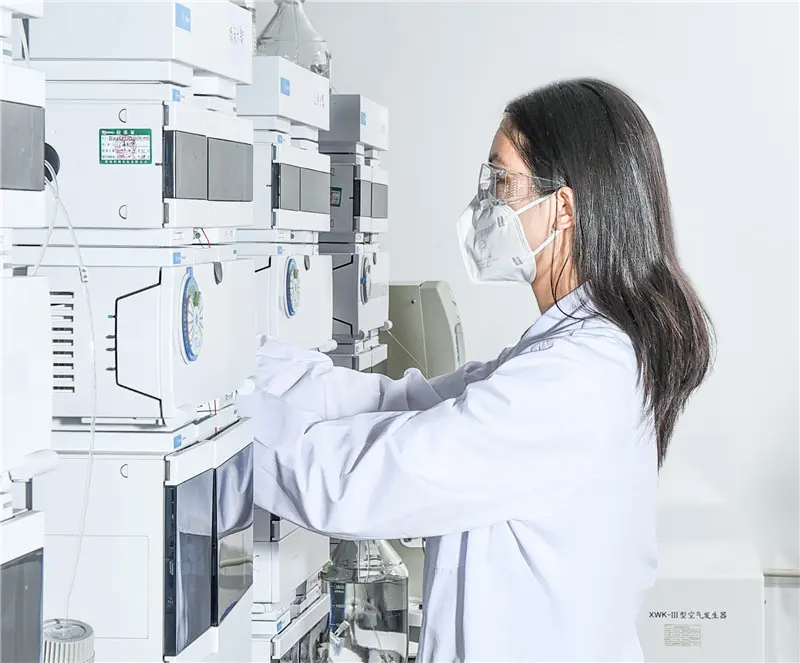
Development and validation of HPLC, GC, LC-MS/MS, and HPTLC methods. Full testing covers specificity, linearity, repeatability, intermediate precision, LOD, LOQ, and stability.
In vitro bioactivity profiling and animal pharmacology. Safety verification via acute oral toxicity (LD50), Ames bacterial reverse mutation, chromosome aberration, and chronic toxicity studies.
Human efficacy validation (Phase I-IV trials) paired with cleanroom cGMP contract manufacturing for extracts, softgels, capsules, tablets, sachets, and oral liquids.
Our validated analytical standards and OEM formulations support China's preeminent healthcare institutions and top-tier pharmaceutical conglomerates.








Connect directly with our analytical labs and pilot manufacturing facilities to license methods, commission safety screening, or initiate turnkey commercial production.
Clear, technically rigorous answers regarding intellectual property protection, regulatory documentation, pharmacopeial transfers, and cGMP compliance.
Speak directly with our senior analytical chemists and natural product formulation specialists. Submit your project requirements to receive a customized study design, methodology proposal, and pilot production timeline.