Fully compliant with ICH Q2(R2) & Q14 guidelines. Explore our validated assays, discovery pipelines, and GLP-certified analytical platforms for global contract manufacture.

High-throughput screening pipelines identifying high-density phytosterols, polyphenols, and active fractions with empirical bioactivity assays.
View Validated Service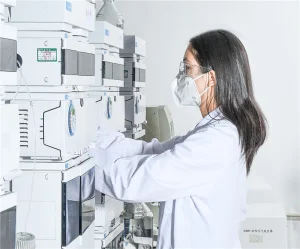
HPLC, GC-MS, and HPTLC method development following ICH Q2 validation protocols: specificity, linearity, repeatability, LOD, and LOQ.
View Validated Service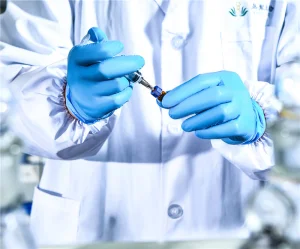
Target-specific cell line screening, cytotoxicity, enzymatic inhibition, and molecular mechanism confirmation under strict GLP standard operating procedures.
View Validated Service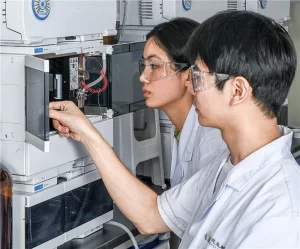
Quantitative chemical fingerprinting across geographical harvesting coordinates to substantiate supply chain raw material batch consistency.
View Validated Service
AAALAC-aligned animal testing for acute toxicity (LD50), chronic pathology, genotoxicity, and pharmacokinetic validation profiles.
View Validated Service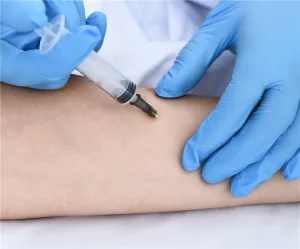
Comprehensive clinical validation dossiers for botanical drug IND/NDA submissions and dietary supplement structure-function claims substantiation.
View Validated Service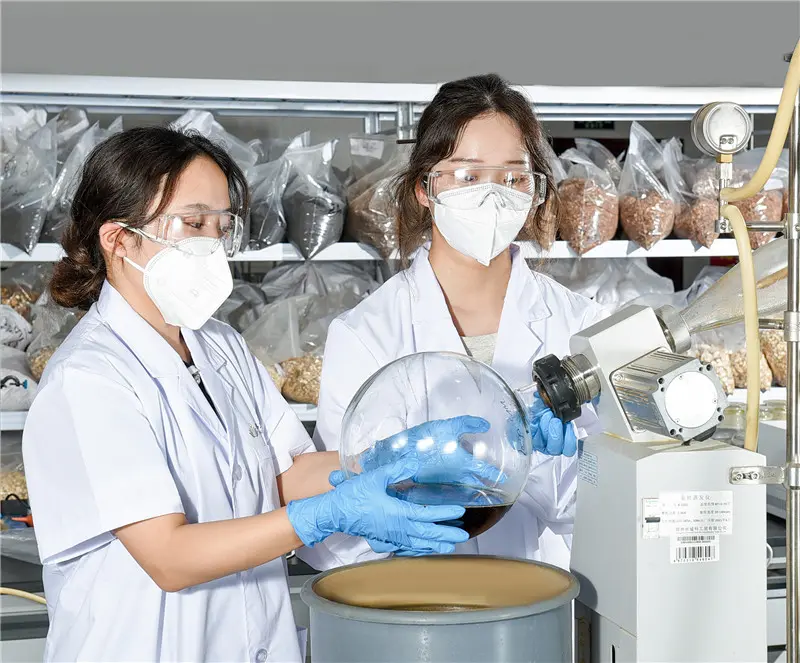
Bioavailability enhancement, micro-encapsulation, and dissolution validation for tablets, softgels, granules, and oral solution systems.
View Validated Service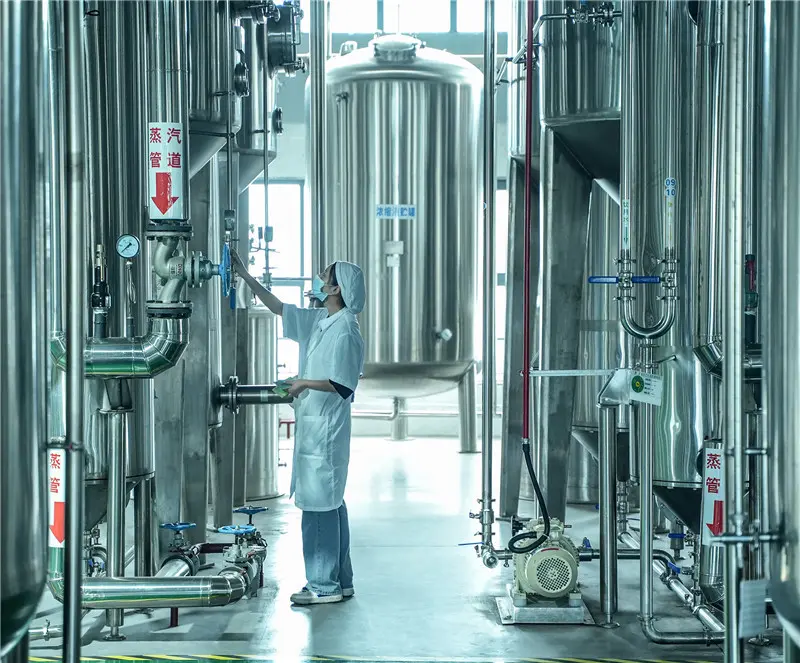
cGMP pilot and full-scale extraction, chromatographic resin purification, spray-drying, and commercial release testing under full chain-of-custody.
View Validated ServiceIn modern biopharmaceutical and nutraceutical supply chains, validation is no longer a static checklist—it is an ongoing, data-intensive lifecycle requirement that bridges raw nature with stringent pharmacopeial standards.
Analytical procedure lifecycle management demands sound method development principles, defined Analytical Target Profiles (ATP), and empirical demonstration of robustness, specificity, intermediate precision, and quantitative limits across international regulatory authorities.
Translating benchtop solvent partitioning to multi-ton continuous extractors requires Stage 2 Process Validation. We benchmark critical process parameters (CPPs) such as fluid dynamics, thermal gradient decay, and drying kinetics against critical quality attributes (CQAs).
Global pharmaceutical audits require non-negotiable audit trails in chromatography data systems (CDS). Every single baseline integration, injection sequence, and calibration curve is immutably logged, preventing data anomalies and ensuring inspection readiness.
Real-world validation demands tailored engineering frameworks that respect matrix complexity, cross-contamination hazards, and regional regulatory filings.
Botanical extracts present hundreds of secondary metabolites. Our chromatographic validation builds fingerprint similarity indices (>0.98), resolving co-eluting peaks, identifying marker molecules (e.g., ginsenosides, artemisinin derivatives, baicalin), and proving method ruggedness across column batches.
Validation of active polyphenol and polysaccharide titers under stress conditions (elevated humidity, temperature, and UV exposure). We quantify accelerated stability according to ICH Q1A(R2), validating packaging barriers and ensuring potency claims through expiry date.
Skin penetration, barrier function validation, and cellular anti-inflammatory responses evaluated via in vitro human skin equivalents (EpiDerm models) coupled with LC-MS/MS quantification of transdermal transshipment.
Ensuring multi-product facility integrity requires calculating Maximum Allowable Carryover (MAC) and evaluating total organic carbon (TOC) swab recoveries, preventing residual botanical active carryover between distinct production campaigns.
A rigorous examination of documentation overhead, analytical method validation demands, and inspection protocols between major international authorities.
| Validation Dimension | US FDA (21 CFR Part 11/211) | European Medicines Agency (EMA) | China NMPA / MedGence Standard | Strategic Impact on Overseas Buyers |
|---|---|---|---|---|
| Analytical Method Validation | Focus on ICH Q2(R2) & USP <1225> with rigorous system suitability and computerized audit logs. | Annex 15 verification, emphasis on robust lifecycle qualification, and environmental cross-checks. | Full ICH Q2 alignment, comprehensive botanical fingerprinting, and pharmacopeial compliance (ChP 2020/2025). | Enables dual or triple submission filings without duplicative lab testing costs. |
| Process Validation Lifecycle | 3-Stage model: Process Design, Process Qualification (PPQ), and Continued Verification. | Traditional, continuous, or hybrid approaches; rigorous risk assessment (FMEA). | End-to-end integration from raw herb origin to standardized API extract with complete traceability. | Mitigates batch rejection risks during commercial customs clearance. |
| Traceability & Sourcing | DSHEA / cGMP supplier qualification with identity testing for every raw batch. | Good Agricultural and Collection Practice (GACP) certification required. | Provincial botanical database tracking geo-climate potency variance across 400+ single herbs. | Ensures phytochemical continuity regardless of global climate disruptions. |
| Data Integrity Protocols | Strict ALCOA+ enforcement, multi-tier user logins, and immutable metadata. | EudraLex Vol 4 Chapter 4 & Data Integrity guidance from inspectorates. | Fully validated enterprise CDS & LIMS architecture with native audit trail capabilities. | Guarantees unimpeachable audit trails during third-party or regulatory audits. |
Vertical integration across domestic botanical harvest clusters coupled with immense chemical engineering capacity creates unmatched supply chain continuity.
By establishing long-term collection cooperatives directly across genuine geographical production regions (Daodi regions) in Hunan, Guizhou, Yunnan, and Sichuan, we eliminate multi-tier broker markup and secure complete raw material traceability from soil conditions to extract drum.
Iterative method optimization is performed in tandem with process development. Our pilot facilities can validate extraction parameters, resin elution curves, and spray-drying temperature profiles in 2 to 4 weeks—cutting timeline benchmarks by 60% relative to Western contract peers.
Substantial domestic glass-lined reactor, chromatographic column, and cleanroom hardware manufacturing lowers facility capital expenditure. Clients benefit from up to 45% lower analytical validation and production costs with zero compromise on analytical precision.
The next decade of pharmaceutical and natural product manufacturing will replace discrete batch verification with continuous, algorithmic quality assurance.
Machine learning algorithms trained on over 100,000 historical chromatography injections forecast elution windows, column temperature shifts, and stationary phase degradation, reducing analytical method development cycles from months to days.
Replacing manual offline QC with Process Analytical Technology (PAT). Real-time fiber-optic probes mounted inside continuous extraction columns monitor active compound dissolution and residual solvent dissipation continuously.
Hydrodynamic, mass transfer, and thermal shear simulation models mirror full-scale industrial batch processing. Scale-up issues are identified and resolved in digital space prior to committing expensive botanical biomass.
A successful contract relationship requires comprehensive documentation, transparent facility access, and bilingual technical support ready for rigorous regulatory audits.
We provide complete chemistry, manufacturing, and controls (CMC) documentation packages. This includes validated batch analyses, process flow diagrams, impurity profiles, degradation path matrices, and stability reports formatted for instant regulatory filing.
All automated infrastructure operates under GAMP 5 principles. Software lifecycle documentation, User Requirement Specifications (URS), Functional Specifications (FS), and IQ/OQ/PQ protocols protect system compliance across all operating software.
Strict non-disclosure terms, isolated formulation production cells, segregated cleanrooms, and partitioned data servers safeguard proprietary manufacturing know-how, client extraction formulations, and therapeutic patent rights.
Authoritative answers covering regulatory scope, method transfer protocols, analytical validation limits, and overseas commercial shipments.
Routine testing executes established protocols to verify if a sample meets known acceptance criteria. Analytical validation, under ICH Q2(R2), proves scientifically that the analytical procedure itself is robust, accurate, reproducible, and fit for purpose. It requires experimentally establishing Specificity, Linearity, Range, Accuracy, Precision (repeatability and intermediate precision), Limit of Detection (LOD), Limit of Quantitation (LOQ), and Robustness against intentional parameter variations.
We execute formal Method Transfer Protocols (MTP) under ICH guidelines. This includes comparative testing between laboratories, standardizing chromatographic columns and reagents, pre-defining inter-laboratory acceptance criteria (e.g., %RSD < 2.0% for major active assays), and compiling comprehensive Method Transfer Reports (MTR) co-signed by lead analytical chemists.
Yes. Utilizing dual-detection HPLC (UV/Vis and Charged Aerosol Detector / CAD), GC-MS/MS, and high-performance thin-layer chromatography (HPTLC), we construct multi-compound chromatographic fingerprints. For complex formulas, we validate marker retention time ratios and peak area distribution patterns, ensuring consistent biological efficacy despite seasonal botanical variability.
We provide full-lifecycle documentation packages: Calibration Certificates, Method Validation Protocols & Reports, Raw Chromatograms with electronic metadata, Forced Degradation Studies (acid, base, peroxide, heat, photolysis), Impurity Profiles (including elemental impurities per ICH Q3D and residual solvents per ICH Q3C), and Certificate of Analysis (CoA) sets from 3 consecutive qualification batches.
We validate cleaning procedures according to the European Medicines Agency's Health-Based Exposure Limits (HBEL) and Permitted Daily Exposure (PDE) values. Critical surfaces are swabbed and evaluated via TOC analyzers and highly sensitive targeted HPLC methods to demonstrate that carryover remains below 1/1000th of the minimum clinical therapeutic dose or below the 10 ppm default threshold.
We validate and manufacture bulk active botanical liquids, concentrated pastes, crystallized isolate powders, and finished dosage forms including softgels, two-piece hard gelatin/HPMC capsules, micro-tablets, enteric-coated tablets, effervescent powders, and sterile oral liquids.
Select any validated platform below to initiate specification transfers, audit dossier reviews, or request pilot batch quotations directly with our scientific team.
Target-oriented phytochemical isolation, bioactivity validation, and chemical fingerprint characterization.
Launch Sourcing Project
ICH-grade chromatography validation, LOD/LOQ calibration, and multi-component assay standardization.
Launch Sourcing Project
High-precision receptor binding, cytotoxicity curves, and pathway elucidations in GLP-certified facilities.
Launch Sourcing Project
Comparative chromatographic mapping across origins, optimizing raw biomass yields and active purity.
Launch Sourcing Project
Standardized animal model assays, acute LD50 determination, and comprehensive histopathology reports.
Launch Sourcing Project
Full clinical dossier generation, GCP monitoring, human PK/PD studies, and statistical trial documentation.
Launch Sourcing Project
Stability-optimized formulation design, excipient compatibility testing, and pilot tablet/softgel scale-up.
Launch Sourcing Project
Multi-ton industrial extraction, vacuum drying, particulate crystallization, and validated batch packaging.
Launch Sourcing ProjectWhether you require single-assay method qualification under ICH Q2(R2) or end-to-end CDMO commercial supply from Changsha, China, our 300+ research scientists and technicians ensure seamless regulatory alignment and bulletproof data integrity.