Explore our foundational pre-clinical evaluation modules, analytical method development suites, and end-to-end translational research frameworks.


Translational biotechnology has reached an inflection point where conventional chemical libraries are rapidly intersecting with complex phytochemical matrices and computer-aided drug discovery.
Western biopharma faces escalating R&D burn rates exceeding $2.6 billion per approved molecular entity. China’s preclinical trial infrastructure delivers a 35% to 55% economic delta without sacrificing GLP adherence or statistical validity, allowing emerging biotechs to de-risk candidate pipelines earlier.
The accession of China’s NMPA to the International Council for Harmonisation (ICH) ensures preclinical data generated in certified Chinese facilities meets the stringent validation matrices required by the US FDA (21 CFR Part 58), the European EMA, and the Japanese PMDA.
Evaluating multi-target botanical fractions requires specialized chromatographic finger-mapping and metabolomic pharmacology. Chinese contract research organizations combine centuries of ethnopharmacological data with multi-omics phenotyping to convert empirical herbal therapies into reproducible NCEs.
From initial high-content cellular cytotoxicity assays through GLP-grade chronic in vivo toxicology and pharmacokinetic modeling.
High-throughput target engagement assays, enzyme kinetics, receptor-binding affinities, membrane permeability (Caco-2), and 3D organoid platforms to evaluate target selectivity prior to animal initiation.
Core battery evaluations encompassing central nervous system (Irwin test), cardiovascular profiling (hERG patch-clamp and telemetry in non-rodents), and respiratory functional mechanics under Good Laboratory Practice.
Single-dose acute toxicity (LD50), repeated-dose sub-chronic (28-day) and chronic (90/180-day) evaluations, carcinogenicity profiling, reproductive toxicology, and complete OECD-compliant genotoxicity batteries (Ames, Micronucleus, Comet).
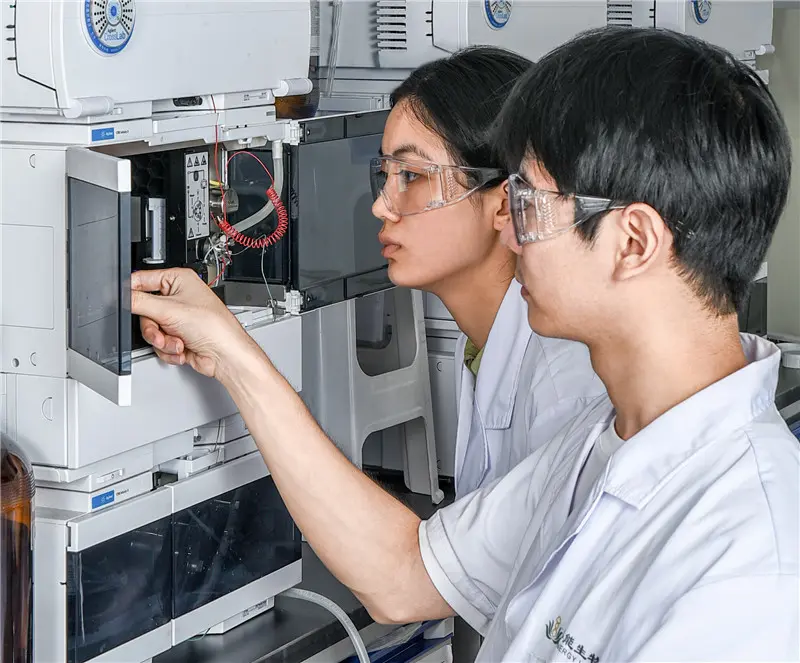
Ultra-trace quantification through hyphenated LC-MS/MS, GC-MS/MS, and high-resolution Q-TOF systems. Validated biomarker assay development and chromatographic fingerprinting of single-herb fractions and multi-component mixtures.
Our infrastructure delivers reproducible data backed by a 14-year operating history across hospital networks and leading pharmaceutical enterprises.
Bridging Chinese pilot scale execution with FDA IND, EMA CTA, and OECD GLP dossier requirements.
Our preclinical study dossiers adhere strictly to the OECD Principles of Good Laboratory Practice. By maintaining absolute data provenance and audit trails, safety studies performed in Changsha are directly acceptable for foreign IND filings across 40+ OECD and non-member adherent countries.
We operate on an entrusted contractual model governed by strict non-disclosure structures. Dedicated research suites, air-gapped laboratory information management systems (LIMS), and client-isolated computational networks guarantee proprietary synthesis pathways remain protected.
Raw preclinical findings must translate seamlessly into regulatory documentation. Our scientific writing division produces complete Module 4 (Nonclinical Study Reports) in standard electronic Common Technical Document (eCTD) formats, complete with validated tables, listings, and figures (TLFs).
Tailored preclinical experimental designs addressing distinct commercial goals, regulatory barriers, and payload mechanisms.
For biopharmaceutical enterprises targeting complex botanical active fractions, we establish reproducible cultivation profiles, characterize batch variations across harvest cycles, and execute comprehensive GLP animal safety packages sufficient for US FDA Botanical Drug Guidance clearance.
Dietary supplement brand owners need clinical substantiation to support labeling claims. We conduct targeted in vitro metabolic assays and in vivo metabolic disease models (e.g., lipid clearance, glycemic regulation) paired with pilot human safety assessments to defend claims against regulatory scrutiny.
Accelerating premium skin barrier actives through non-animal alternatives and dermatological testing matrices. Capabilities include 3D reconstructed human epidermis (RhE) phototoxicity, skin sensitization (LLNA), ocular irritation (BCOP), and transdermal penetration kinetics.
Anticipating the technological disruptions reshaping drug screening, translational biology, and contract research workflows.
Integrating deep learning molecular docking engines with empirical botanical metabolomics libraries. This accelerates phenotypic screening, identifies off-target toxicities prior to wet-lab commitment, and compresses active hit-to-lead schedules from 18 months to under 12 weeks.
Scaling microfluidic human liver- and gut-on-a-chip technologies to align with FDA Modernization Act 2.0 mandates. These platforms replicate human multi-organ pharmacokinetics, minimizing reliance on animal cohorts while providing superior human-predictive metabolic clearance profiles.
Merging real-time spectroscopic analytical process monitoring (PAT) with automated pilot CDMO facilities. Ensuring every preclinically validated extraction parameter directly transitions into closed-loop commercial GMP manufacturing with zero batch divergence.
Clear, definitive technical guidance on protocol design, data integrity, international filings, and IP governance.
Commission research programs across our core operational services or secure direct OEM/CDMO active substance supply agreements.