Precision In Vitro ADME Profiling, In Vivo PK/PD Modeling, and High-Throughput Botanical Active Bioavailability Optimization for Global Biopharma & Nutraceutical Innovators.
Explore our turnkey CRO and CDMO solutions covering molecular extraction, chromatographic quantification, bioavailability screening, and regulatory dossier support.






Transitioning from empirical observation to mechanistic, AI-augmented biological modeling: how China's CDMO ecosystem is reshaping global drug and nutraceutical bioavailability.
Modern preclinical research relies heavily on Physiologically Based Pharmacokinetic (PBPK) modeling. By integrating in silico organ simulation with micro-sampling LC-MS/MS, researchers map systemic absorption, tissue redistribution, and metabolic clearance pathways well before entering early-phase human trials.
Traditional single-molecule PK models fall short when evaluating complex plant matrixes. Current breakthroughs deploy multi-component pharmacokinetic tracking, identifying how minor saponins, polyphenols, and flavonoids act as biological permeation enhancers to dramatically elevate overall target efficacy.
The gut microbiome serves as a key metabolic organ. Advanced PK testing now integrates in vitro anaerobic microbial fermentation chambers to trace post-ingestion secondary metabolites, unveiling previously hidden bioavailable aglycones critical for regulatory therapeutic clearances.
Addressing compliance stringency, reproducible assay parameters, and cross-border regulatory harmonization across FDA, EMA, and NMPA frameworks.
Tier-one sponsors require complete ALCOA+ data integrity, validated LIMS workflows, full audit trails, and GLP-certified vivarium environments to avoid IND/NDA filing delays.
Analytical methods must withstand inter-laboratory validation. Standardized transfers for HPLC-MS/MS, GC-MS, and HPTLC ensure consistent results across global testing centers.
Assay integrity depends on raw input purity. Traceability down to plantation GPS coordinates, harvest intervals, and drying curves eliminates variations in active fractions.
Contractual, compartmentalized data security, encrypted instrument logs, and strict NDA protocols prevent unauthorized formula leaks across both CDMO and testing stages.
Combining automated chromatography, high-speed bio-crystallization, and continuous flow engineering to reduce lead times by up to 55%.
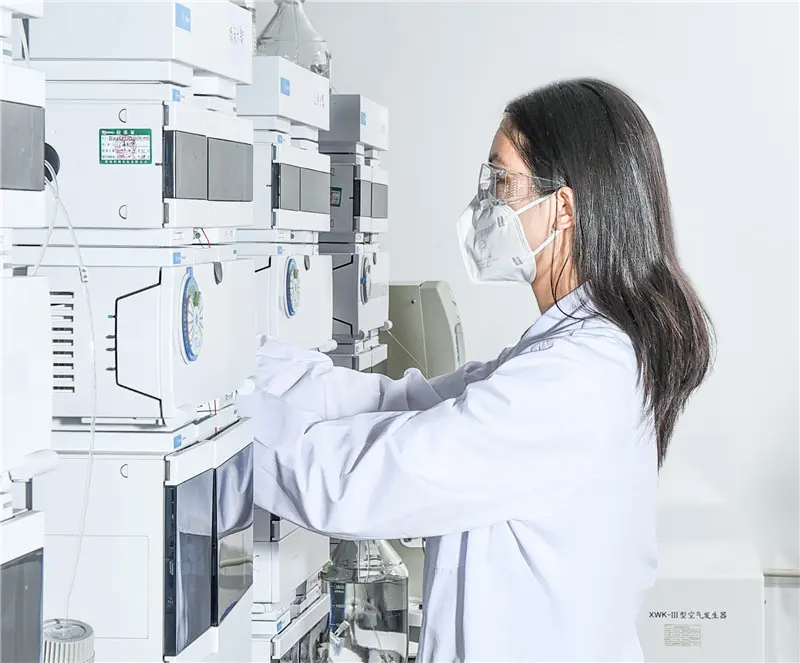
Robotic sample injectors, dual-column parallel elution, and real-time spectrophotometric analysis allow processing of over 1,200 serum or tissue samples daily with zero manual transshipment error.
Supercritical CO2 and dynamic column continuous countercurrent extraction recover upwards of 95% of industrial solvents, minimizing batch costs while maintaining ESG-compliant carbon footprints.
Direct integration between analytical laboratories and commercial processing plants ensures seamless scaling, moving seamlessly from milligrams for cell models to multi-metric-ton output for commercial batches.
A side-by-side technical comparison of primary analytical tools deployed by MedGence across various pharmacokinetic discovery and manufacturing stages.
| Methodology | Primary Target Scope | Sensitivity / Limit of Detection | Key Strengths in PK Testing | Typical Research Deliverable |
|---|---|---|---|---|
| UHPLC-MS/MS (Triple Quad) | Trace active metabolites, biological fluids (plasma, urine, bile) | Sub-picogram (pg/mL) resolution | Ultra-low limit of quantitation (LLOQ), rapid throughput for in vivo pharmacokinetic profiling | Mean Plasma Concentration-Time Curve (AUC, Cmax, Tmax, t1/2) |
| HPLC-DAD / UV | Bulk botanicals, raw materials, finished dosage forms | Microgram (µg/mL) detection threshold | High reproducibility, cost-efficient assay runs, baseline qualification standard | Assay Content Report & Batch Homogeneity Verification |
| High-Performance TLC (HPTLC) | Multi-component botanical fingerprinting, adulterant screening | Semi-quantitative visual & densitometric limits | Parallel multi-sample screening without extensive pre-treatment, verifies origin | Rf Chromatographic Fingerprint Profile Map |
| GC-MS / Headspace GC | Volatile terpenes, essential oils, residual extraction solvents | Nanogram (ng/mL) precision | Excellent separation of low-boiling thermolabile active compounds | Terpenoid Profile & Residual Solvent Safety Certificate |
| Caco-2 Monolayer Permeation | In vitro intestinal transport, efflux ratio (P-gp interaction) | Apparent Permeability (Papp x 10^-6 cm/s) | Predicts human intestinal absorption and active transporter liabilities | BCS Classification & Absorption Risk Assessment Report |
Bridging laboratory assays and real-world market entry across pharmaceuticals, nutraceuticals, functional beverages, and clinical personal care.
Overcoming the poor oral bioavailability of polyphenols like curcumin, berberine, and resveratrol. We employ nano-emulsion, liposomal encapsulation, and co-crystallization techniques to boost AUC curves by 300% to 800% in human pharmacokinetic panels, generating defensible marketing claims.
For biopharma innovators targeting botanical drug application pathways under FDA 505(b)(2) or NMPA Class 1/2 classifications, our GLP laboratories produce validated absorption, distribution, metabolism, and excretion (ADME) profiles alongside Phase I–IV clinical study execution.
Topical efficacy depends on epidermal penetration. Using automated Franz diffusion cell arrays and 3D reconstructed human skin tissue, we map the transdermal flux, dermal retention time, and local metabolic clearance of anti-aging and anti-inflammatory botanical actives.
Combining traditional knowledge with rigorous chromatographic validation, safety assays, and reproducible industrial processing.
Potency shifts dramatically depending on harvest timing and regional soil chemistry. We build dynamic potency charts across 400+ botanical species, helping clients lock in high-yield raw materials before scaling up production runs.
True efficacy requires verified safety margins. Our preclinical suites run concurrent LD50, acute systemic toxicity, sub-chronic repeated dose, Ames bacterial reverse mutation, and in vivo chromosomal aberration assays to support risk-free human deployment.
Transferring bioavailable materials into stable delivery systems. Our direct-controlled facilities manufacture finished products as oral solutions, softgels, micro-encapsulated powders, two-piece hard capsules, effervescent tablets, and extended-release granules.
Direct answers for Chief Scientific Officers, R&D Directors, and Procurement Officers evaluating MedGence as an outsourced partner in China.
Access our validated methodologies, bioassays, and manufacturing infrastructure to accelerate your product's timeline from compound discovery to commercialization.
