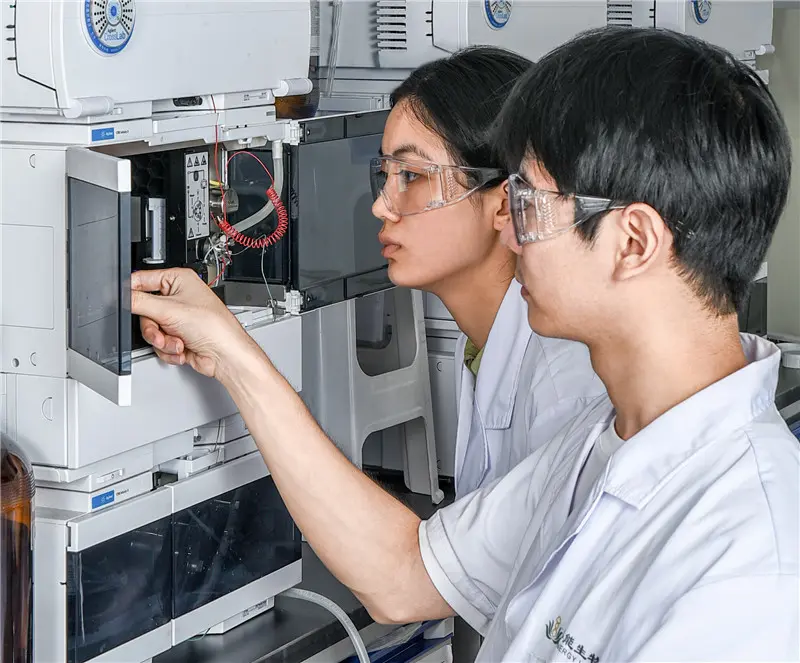
Standardized chemical profiling, potency isolation, and regulated evaluation services engineered for pharmaceutical, functional nutraceutical, and clinical applications.
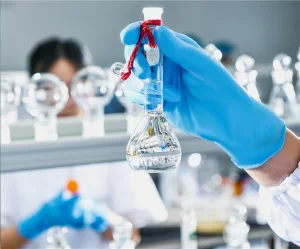
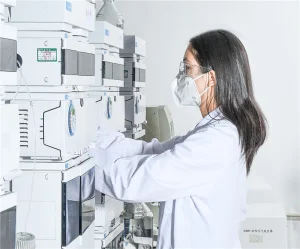
Why manufacturing know-how has evolved from an empirical craft into an indispensable strategic asset for multinational pharmaceutical and nutraceutical innovators.
Across North America and the European Union, regulatory authorities such as the US FDA and the European Medicines Agency (EMA) have dramatically heightened the threshold for natural product approvals. Unsubstantiated claims are obsolete; modern market entry demands explicit molecular targets, documented dose-response curves, and verified mechanistic validation. Phytochemical manufacturing know-how acts as the primary translator converting raw ethnobotanical history into standardized, defensible chemistry capable of clearing stringent IND/NDA dossiers.
The botanical industry historically suffered from volatile secondary metabolite yields caused by soil shifts, rainfall variations, and divergent harvesting methodologies. Know-how in extraction engineering solves this vulnerability through chromatography profiling, continuous multi-stage countercurrent extraction, and specialized resin desorption kinetics. This transition provides global enterprises with reproducible batch yields, ensuring that clinical performance precisely mirrors industrial-scale releases.
Decoupling early discovery research from large-scale manufacturing inevitably leads to technical friction, lost tech transfers, and delayed product launch timelines. By selecting an integrated CRO/CDMO partner possessing embedded process knowledge, global enterprises bypass the operational friction of onboarding multiple regional contract laboratories, reducing R&D cycle duration by as much as 40% while preserving institutional know-how under single-source accountability.
Analyzing the compounding economic, logistical, and technical infrastructure that establishes Chinese advanced manufacturing hubs as global benchmarks for contract extraction and formulation.
China houses over 12,000 medicinal plant species with distinct geographic indications (Daodi). By locating research and primary extraction near domestic agricultural source points, transport costs drop by over 60%, botanical degradation is eliminated through direct field stabilization, and traceability matrices remain unbroken from farm to finished certificate of analysis (COA).
Transitioning a compound from 5-gram bench assays to 10-metric-ton industrial bioreactors typically introduces yield decay. Chinese CDMO facilities feature in-house pilot demonstration plants directly managed by analytical research teams, guaranteeing that thermodynamics, crystallization mechanics, and solvent recycling loops transfer flawlessly into scalable output.
China graduates tens of thousands of specialized bio-engineers and analytical chemists annually. This deep talent pool enables round-the-clock shift monitoring of complex chromatographic columns, mass spectrometry assays, and automated fermentation controls at operational budgets unachievable in Western European or North American contract facilities.
State-of-the-art Chinese extraction complexes operate in full alignment with international pharmacopeias including USP, EP, and ChP. Validated HPTLC fingerprinting, residual solvent chromatography, and heavy metal ICP-MS screening operate continuously, ensuring immediate regulatory compliance for cross-border export into strictly monitored jurisdictions.
Data-driven outcomes established through multi-year scientific engagements across top-tier pharmaceutical manufacturers, hospital systems, and global biopharma brands.
An end-to-end framework transforming ambiguous biological raw materials into fully registered, commercially viable medicinal and nutraceutical solutions.
Exploiting deep phytochemical metabolomic databases to isolate target saponins, alkaloids, flavonoids, and polysaccharides. We identify high-affinity molecules delivering clear therapeutic signals while determining optimal botanical species to minimize raw material resource strain.
The pharmacological density of plants fluctuates heavily by altitude, climate, and micro-climate conditions. We execute rigorous batch comparisons to lock in the optimal terroir, annual harvest windows, and plant anatomical fractions (root, rhizome, bark, leaf) for consistent therapeutic concentration.
Developing robust, validated chromatographic methods (HPLC, HPTLC, GC-MS, LC-MS/MS) and multi-wavelength chemical fingerprints. These analytical assays provide your QC laboratory with validated protocols to defend against adulteration and prove strict batch reproducibility.
Fine-tuning the thermo-sensitive thermodynamics of countercurrent extraction, macroporous resin adsorption, nanofiltration, and low-temperature vacuum crystallization. These calibrated engineering parameters lower overall energetic costs while elevating active compound purity.
Establishing safety windows and early efficacy indicators via targeted cellular models, enzyme-inhibition assays, and rodent pharmacokinetic/pharmacodynamic (PK/PD) studies. Includes acute oral LD50, repeated-dose sub-chronic toxicity, and mutagenic Ames test verification.
Coordinating structured human trials, dietary supplement pilot studies, and comprehensive Phase I through Phase IV clinical drug trials for new botanical entities. Completed protocols transfer seamlessly to GMP production suites for final dosage form manufacturing.
Translating advanced extraction know-how across three core global life-science verticals, delivering tailored physical forms optimized for stability and bioavailability.
Developing standardized botanical candidates destined for regulatory registration under CDER botanical drug development guidance. Our facilities ensure that compound synergy is retained while individual active markers remain within 95–105% of labeled concentrations across multi-year stability evaluations.
Assisting direct-to-consumer and retail wellness brands in transitioning away from commoditized powders toward clinically backed, high-potency branded formulations. Supported by small-group double-blind human pilot data demonstrating measurable biomarkers (e.g., glycemic response, lipid support, oxidative stress suppression).
Isolating highly refined plant polyphenols, terpenoids, and natural pigments tailored for transdermal penetration without triggering cutaneous irritation. Evaluated through 3D skin model testing, tyrosinase inhibition assays, and photoprotection evaluations to substantiate clean-label beauty claims.
Engineered for maximum flowability, non-caking properties, and sustained compound stability under global transit:
Fully compliant with international GMP standards, packaged for retail shelf-life and biological availability:
Key developments shaping the next decade of botanical manufacturing, and the criteria global procurement executives use to qualify CDMO partners.
Traditional batch extraction is rapidly being replaced by continuous closed-loop systems embedded with near-infrared (NIR) inline sensors. This know-how enables real-time adjustments of temperature, vacuum pressure, and reflux ratios, eliminating intra-batch variance and providing total visibility to quality teams.
International buyers prioritize rigorous intellectual property protection above basic cost differentials. An entrusted CDMO partnership governed by binding international NDAs, ring-fenced proprietary data pipelines, and isolated cleanroom manufacturing ensures proprietary formulations remain safe against commercial leakage.
Compliance with California Proposition 65 and European Commission Food Safety standards requires testing beyond basic active assay potency. CDMO procurement contracts now dictate verified low-temperature decontamination methodologies (eliminating forbidden ionizing radiation or EtO residues) and parts-per-billion residue screening.
Our R&D pipelines and contract manufacturing know-how directly support premier pharmaceutical conglomerates, university laboratories, and top-tier clinical hospitals across Asia.
 China Beijing Tongrentang Group
 China Resources Sanjiu Medical
 Sunflower Pharmaceutical Group
 Livzon Pharmaceutical Group
 Dihon Pharmaceutical Group
 Golden Throat Holdings Group
 Yangtzi River Pharmaceutical Group
 Beihai Gofar Chuanshan Biological
 Humanwell Healthcare Group
 SCIMYTH Pharmaceutical Group
 Shandong Hanfang Pharmaceutical
 Luoxin Pharmaceutical Group
 Guangdong Zhongsheng Pharmaceutical
 Brilliance & Abundance Herbal
 Apeloa Pharmaceutical
 Hunan Heng Chang Pharmaceutical
 Baotou Traditional Chinese Medicine
 Kamp Medicine
 Guangxi Santo Pharmaceutical
 Hunan Kangshou Pharmaceutical
 Jiangxi Juwang Pharmaceutical
 Beijing Tcmages Pharmaceutical
 Guizhou Ruihe Pharmaceutical
 Anhui CR Jinchan Pharmaceutical
 Kangmei Pharmaceutical
 Hunan Tianjicaotang Pharmaceutical
 Jiangxi Kingstone Unite
 Shuguang Hospital, Shanghai TCM
 Hunan Directly Affiliated TCM Hospital
 First Hospital of Hunan Univ TCM
 Second Xiangya Hospital of CSU
 Second Hospital of Hunan Univ TCM
 The Orthopedics of Traditional Chinese Medicine of Zhuzhou City
Addressing critical scientific, operational, and commercial questions for procurement executives and R&D directors.
MedGence delivers complete value-chain contract research: raw-material botanical screening, potency evaluation by origin/season, validated chromatographic analytical method establishment, process optimization, in vitro cellular testing, animal efficacy and GLP-aligned toxicology, small-scale human trials, and full-spectrum CDMO supply for both bulk active pharmaceutical ingredients (APIs) and finished consumer forms.
Yes. We directly manage our proprietary pilot plant and dedicated collaborative factory networks. Because our central analytical chemistry team supervises both initial bench optimization and industrial production lines, process parameters transfer without knowledge gaps, yield drop-offs, or regulatory re-validation friction.
We employ a multi-layered analytical battery adapted to each target compound: High-Performance Thin-Layer Chromatography (HPTLC) for visual identity profiling, HPLC-DAD and GC-MS for precise quantification of active biomarkers, LC-MS/MS for ultra-trace impurity verification, and overall chromatographic fingerprinting to verify batch-to-batch chemical integrity.
All client projects operate strictly under bilateral Non-Disclosure Agreements (NDAs). Research datasets, chromatography parameters, and proprietary ratios are housed on isolated internal networks. We operate under an entrusted contract model; we never commercialize, license, or disclose client formulations, preserving your market differentiation.
Active ingredients can be provided as concentrated liquids, spray-dried extract powders, standardized pastes, and volatile essential oils. Finished product lines encompass oral solutions/suspensions, hard-shell HPMC/gelatin capsules, softgel capsules, immediate and extended-release tablets, and effervescent or soluble granular formulations.
Yes. In addition to exploratory human efficacy trials for dietary supplements, our clinical operations group designs, registers, monitors, and analyzes regulated Phase I, II, III, and IV clinical studies conforming to GCP standards, generating the validated safety and efficacy dossiers required by regulatory agencies for botanical new drugs.
Select a specialized CRO/CDMO program below to initiate direct technical review with our senior scientists and production engineering directors.