

Empowering Global Pharma, Botanical CDMOs, and Biotech Enterprises with OECD/ICH GLP Long-Term Safety Profiling, Carcinogenicity Assessment, and Deep-Epitope Mechanistic Toxicology.
Explore our validated testing systems, phytochemical standard methods, and full-spectrum preclinical capabilities engineered for international IND/NDA dossier filings.







Navigating stringent multinational regulatory mandates, accelerating botanical drug discovery, and mitigating attrition rates through strategic outsourced toxicological intelligence.
Years Dedicated Natural Medicine & Preclinical R&D
Full-Time Toxicologists, Chemists & Senior Scientists
Tier-1 Pharma Conglomerates & Academic Medical Centers
Single-Herb Analytical Profiles & Safety Formulations
Cross-border biopharmaceutical sponsors face uncompromised demand for repeatable, continuous repeat-dose chronic toxicity testing (26-week rodent and 39-week non-rodent programs). International authorities, including the US FDA, EMA, and China NMPA, necessitate non-clinical proof-of-concept dossiers showing definitive NOAEL (No Observed Adverse Effect Level), Target Organ Toxicity (TOT), and toxicokinetic exposure thresholds before advancing into long-term clinical trials.
Unlike single synthetic chemical entities, natural botanical medicines and active TCM extracts exhibit dynamic multi-target synergy and batch variance. Global nutraceutical and pharmaceutical brands partner with specialized Chinese suppliers to establish continuous fingerprinting and repeat-dose chronic toxicology. This addresses phytochemical herb-drug interactions, secondary metabolite accumulation, and organ-specific toxicity across prolonged therapeutic horizons.
Rising capital expenditure across North American and European in-house vivarium assets has driven procurement teams toward qualified contract research partners in China. MedGence pairs fully accredited barrier housing facilities, standardized animal husbandry, and automated high-throughput clinical pathology analyzers with competitive fee architectures, slashing toxicological evaluation cycle-times by up to 40% without compromising audit-readiness.
From target molecular discovery to multi-species long-term animal observation, our synchronized CRO-CDMO platform accelerates safe market commercialization.
Execution of OECD 452/453 compliant regimens assessing cumulative physiological impact, histopathological lesions, hematological profiles, and metabolic clearance pathways across SPF rodent models.
Lifelong neoplastic transformation analysis, combined chronic toxicity-carcinogenicity assays, and multi-generational reproductive-developmental toxicology evaluating teratogenicity and embryotoxicity.
High-resolution LC-MS/MS bioanalytical method development tracking non-linear metabolic accumulation, steady-state plasma concentrations, systemic bio-distribution, and organ target affinity.
Rigorous eCTD Module 4 non-clinical study summary drafting, incorporating audited toxicological reports, peer-reviewed pathology peer reviews, and full SEND (Standard for Exchange of Nonclinical Data) conversion.
Harmonizing classical toxicological pathology with AI predictive models, cellular multi-omics, and organoid bioengineering for next-generation hazard detection.
Before commencing animal exposures, target botanical molecules undergo quantitative structure-activity relationship (QSAR) simulation and computational docking to scan against human off-target receptors, CYP450 inhibition profiles, and DNA reactive substructures.
Deliverable: In Silico Tox Hazard MatrixValidating cellular toxicity using microfluidic liver-on-a-chip, renal proximal tubule models, and stem-cell-derived cardiac micro-tissues to identify early mechanistic apoptosis, mitochondrial respiratory chain inhibition, and transaminase elevation.
Deliverable: Mechanistic Cellular ProfileDetermining maximum tolerated dose (MTD) and biological saturation points through 14 to 28-day repeated gavage regimens in synchronized rodent cohorts, monitoring baseline behavioral abnormalities, bodyweight curves, and urinalysis.
Deliverable: MTD & Dose Selection ProtocolControlled 180 to 365-day systemic exposure regimens across low, mid, and high dose cohorts, alongside recovery satellite groups. Routine ophthalmic evaluation, automated clinical biochemistry panels, and continuous telemetry monitoring are integrated.
Deliverable: Blinded In Vivo Raw Data LedgerComprehensive 40+ organ gross necropsy, microtome sectioning, and computerized digital slide evaluation by board-certified toxicologic pathologists. Incorporates immunohistochemistry and genomic biomarker quantification for sublethal lesions.
Deliverable: Certified Pathological AssessmentCalculation of statistical benchmark dose (BMD), NOAEL, and human equivalent dose (HED) safety factors. Synthesis of compliant eCTD Module 4 non-clinical safety packages validated against FDA, EMA, and NMPA filing standards.
Deliverable: Audited IND Safety PackageHarnessing China’s central position in raw natural sourcing, world-scale laboratory infrastructure, and verified multi-national GLP harmonization.
China houses over 12,000 recorded medicinal plant taxa. MedGence's strategic location in Changsha, Hunan, provides direct supply-chain provenance back to Geo-authentic botanical terroirs across southwestern and central China. This botanical proximity ensures absolute botanical identity authenticity, trace-level pesticide/heavy metal control, and uninterrupted continuity from raw harvest through extracted active substance batches.
To safeguard global IP investments, studies run under rigorous Good Laboratory Practice (GLP) environments adhering strictly to OECD guidelines, with ongoing animal welfare governance aligned with AAALAC International standards. Data produced under our testing umbrellas qualifies under the OECD MAD framework, enabling seamless dossier recognition across Europe, North America, Japan, and Asia-Pacific regulatory bodies.
Our dedicated project management groups integrate PhD toxicologists and regulatory affair specialists fluent in English and Chinese. Global sponsors benefit from milestone-driven communication cadences, live digital vivarium monitoring portals, encrypted cloud data transfers, and strict non-disclosure legal firewalls shielding proprietary botanical formulas and chemical extraction IP from the earliest bench assay.
Our chronic toxicity and natural product formulation research supports China's most demanding healthcare brands and research universities.














In-depth answers resolving technical, regulatory, and procurement questions encountered by global directors and scientists.
Acute toxicity evaluation assesses severe biological harm or mortality (such as LD50) following single or fractional doses administered within 24 hours. Subchronic toxicity typically spans 28 to 90 continuous days to uncover cumulative organ damage and physiological changes. Chronic toxicity programs span 6 to 12 months (or up to 2 years for rodent carcinogenicity studies), revealing latent carcinogenic, fibrotic, or progressive organ toxicities that cannot be detected within abbreviated timelines.
We employ an integrated botanical standardization approach. Prior to toxicological administration, batches undergo multi-dimensional analytical fingerprinting using high-performance thin-layer chromatography (HPTLC), HPLC-DAD, and GC-MS. This ensures quantitative profiling of known marker constituents, verification of consistency across harvest seasons and geographic origins, and stringent exclusion of heavy metals, residual solvents, mycotoxins, and organophosphates.
Yes. In full accordance with the OECD Mutual Acceptance of Data (MAD) agreement, FDA 21 CFR Part 58, and ICH S4 guidelines, toxicological data generated within our partner accredited GLP facilities is directly eligible for inclusion in US FDA Investigational New Drug (IND) applications, European Clinical Trial Applications (CTA), and global Common Technical Documents (CTD Module 4).
We execute bilingual, legally enforceable Non-Disclosure Agreements (NDAs) subject to global or local jurisdictional governance prior to any scientific disclosure. In-lab protocols, extraction parameters, batch yield records, and assay readouts remain entirely blinded and firewalled. Clients retain 100% intellectual property ownership over all derived data, developed assay methods, and scale-up parameters.
Following successful safety and toxicity clearance, our integrated CDMO scale-up facilities formulate active substances into commercial presentation forms. Active raw ingredients are manufactured as concentrated liquids, spray-dried powders, stabilized pastes, and volatile essential oils. Finished product capabilities span oral liquid solutions, enteric capsules, softgels, micro-tablets, soluble powders, and effervescent granules.
Yes. We orchestrate human clinical trials across all phases: from small-cohort randomized double-blind pilot trials for health foods and dietary supplements, up to full Phase I First-in-Human (FIH), Phase II dose-response, Phase III multi-center pivotal trials, and Phase IV post-market epidemiological surveillance for new drug applications (NDA).
Select a specific research service or analytical evaluation discipline below to initiate a structured study design with our scientific study directors.

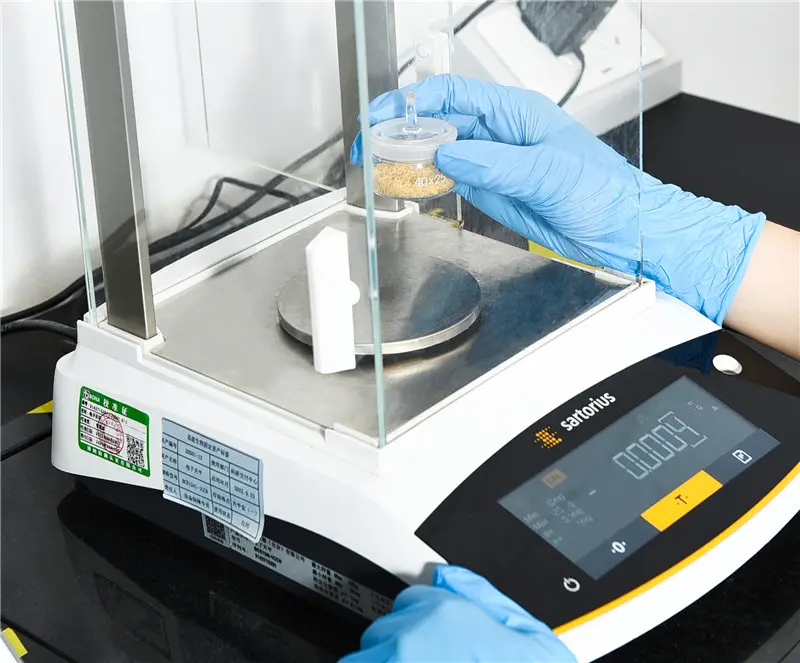
Submit your molecular target, botanical extract batch, or study protocol for a confidential quote within 24 business hours.