OEM In Vitro Test / Research Service Solutions
Explore Service Details →
Direct lab-to-commercial solutions matching international pharmacopoeia standards (USP, Ph. Eur., ChP) for preclinical and commercial phase integration.
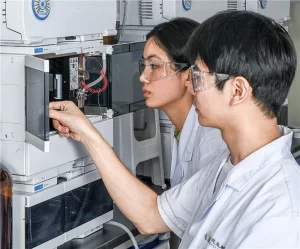
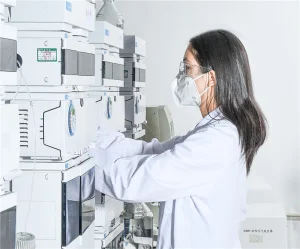
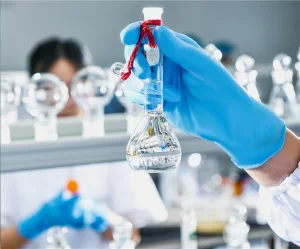

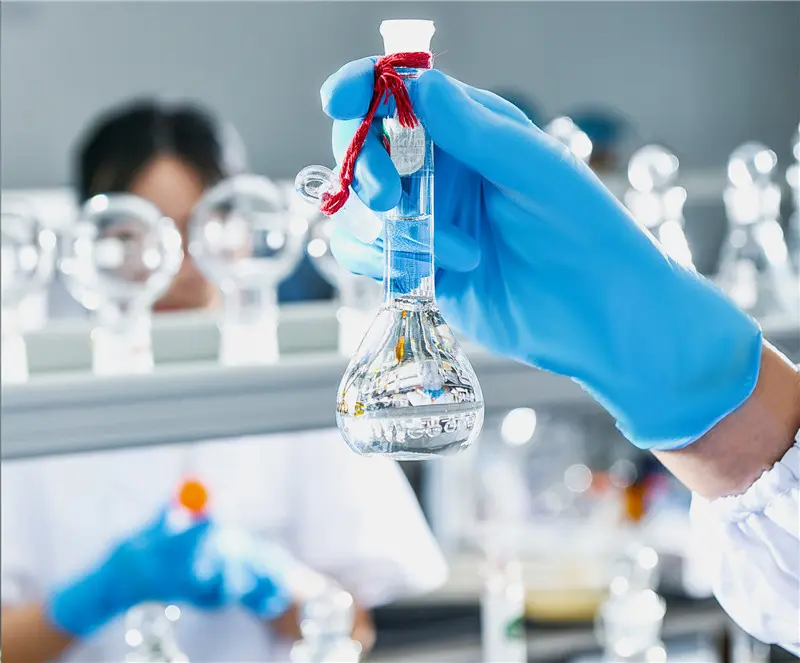
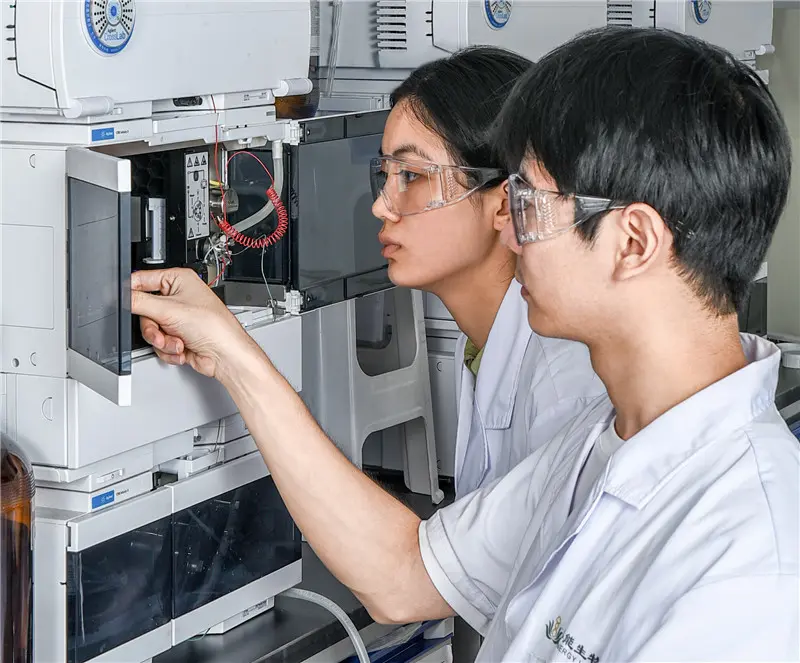
Navigating the paradigm shift from crude herb powders to standardized, molecularly profiled, and clinically substantiated botanical drug substances (BDS).
Global pharmaceutical entities procuring from China no longer settle for non-specific UV assays. Sourcing protocols now demand multidimensional fingerprinting (HPLC-MS/GC-MS) ensuring strict batch-to-batch chemical equivalence across complex multi-compound phytocomplexes.
Compliance across FDA Botanical Drug Guidance and European EMA Monographs mandates stringent containment thresholds. Procurement contracts require comprehensive zero-tolerance screening for heavy metals, multi-class pesticide residue matrices, mycotoxins, and residual solvents.
Regulatory frameworks require total transparency from wildcrafting or agricultural cultivation to finished extract. Procurement criteria demand authenticated botanical origin (DNA barcoding), geoclimatic optimization, and audited Good Agricultural and Collection Practices (GACP).
Bridging traditional medical wisdom and empirical biochemical engineering through validated CRO/CDMO integration.
High-throughput screening of complex plant matrices to isolate, identify, and quantify dynamic bioactive fractions, elucidating mechanisms of action (MoA) for targeted clinical applications.
Design of robust separation architectures—supercritical CO2 extraction, macroporous adsorption resin columns, and molecular distillation—optimizing yields while preserving thermolabile structures.
Dual-tiered validation involving cellular in vitro disease models (enzymatic assays, receptor binding) and rigorous in vivo pharmacokinetic (PK) and pharmacodynamic (PD) animal evaluation.
Turnkey clinical design conforming to ICH-GCP standards, managing patient cohorts, multi-center trials, bio-statistical analysis, and regulatory dossier construction for FDA IND/NDA or EU MAA pathways.
A de-risked, sequential workflow ensuring measurable milestones, IP defense, and regulatory certainty across every development tier.
Geographic and seasonal variance evaluation across diverse Chinese biomes. Comparative extraction testing to map alkaloid, flavonoid, and glycoside concentration matrices. Baseline analytical method setup.
Establishment of strict Chemistry, Manufacturing, and Controls (CMC) dossiers. Optimization of chromatographic purity, determination of Critical Process Parameters (CPPs), and execution of initial stability studies.
In-depth genotoxicity, Ames test, acute LD50, and 90-day subchronic toxicity profiles. Investigational New Drug (IND) filing support with the FDA, NMPA, or EMA backed by complete data integrity packages.
Double-blind, placebo-controlled Phase I–III trials. Safety evaluations, dosage escalation studies, biomarker monitoring, and empirical proof of efficacy across well-defined clinical patient cohorts.
Seamless transfer to commercial facilities operating under cGMP conditions. High-volume manufacturing of botanical drug substances into final dosage units: tablets, capsules, softgels, or oral liquids.
Phase IV real-world observational safety surveillance, formulation lifecycle upgrades, patent portfolio defense, and international mutual regulatory compliance maintenance across global regions.
Years of Phytochemical CRO & CDMO Excellence
Specialized Scientists & Analytic Researchers
Classic TCM Formulations Modernized
Single-Herb Validated Quality Monographs
Our translational natural medicine platforms underpin commercial operations for industry-leading healthcare institutions and licensed drug producers.







Overcoming technical trade barriers through rigorous alignment with Western and Asian pharmacopoeial standards.
Our CMC document generation adheres to the FDA's Botanical Drug Development Guidance for Industry. We deliver chromatographic finger-printing, comprehensive raw botanical provenance dossiers, and multi-batch biological assays that account for natural botanical variations.
For European market entry, we ensure full alignment with the Committee on Herbal Medicinal Products (HMPC). We prepare documentation for Well-Established Use (WEU) or Traditional Herbal Medicinal Products (THMPD), establishing quantitative markers and toxicological safety profiles.
Every research initiative runs under strict non-disclosure protections within dedicated, access-controlled physical and digital architectures. Formulation secrets, unique processing run parameters, and proprietary cell-assay outputs remain entirely the client's commercial property.
Critical considerations regarding quality control, extraction scaling, clinical dossiers, and cGMP compliance.
MedGence delivers end-to-end preclinical and clinical execution for botanical therapeutics: high-throughput active compound screening, multi-origin potency quantification, analytical method validation (HPLC, GC, HPTLC), GLP-compliant toxicological assays, Phase I–IV clinical studies, and pilot-to-commercial cGMP contract manufacturing.
We implement multi-wavelength chromatographic fingerprinting alongside quantitative marker analysis. By sourcing herbs under audited GACP standards and regulating Critical Process Parameters (temperature, solvent-to-solid ratio, drying vacuum levels), we keep natural constituent variation within pre-specified, pharmacopoeial margins.
Yes. Our scientific team constructs full Chemistry, Manufacturing, and Controls (CMC) dossiers, environmental impact analyses, nonclinical pharmacology evaluations, and Phase I/II clinical trial designs customized to meet the requirements of the FDA Office of New Drugs (OND).
Active pharmaceutical intermediates are produced as standardized spray-dried powders, concentrated pastes, aqueous syrups, or purified volatile oils. Commercial dosage forms include two-piece hard gelatin/HPMC capsules, softgels, micro-tablets, enteric-coated tablets, and single-dose oral sachets.
Client research operates under legally binding non-disclosure agreements with clear contractual assignation of all IP deliverables. Development pipelines take place in isolated laboratory cleanrooms with segregated network segments, ensuring client formulas and protocols remain strictly confidential.
Secondary metabolite concentrations (e.g., ginsenosides, artemisinin, tanshinones) vary considerably across elevations, soil mineral profiles, and harvest periods. Our potency screening maps these geoclimatic variances to establish sourcing models that maximize yields and improve clinical batch uniformity.
Transfer validated laboratory methods directly into high-yield cGMP commercial manufacturing with audited global documentation.