Direct access to state-of-the-art analytical chemistry assays, high-throughput botanical screening systems, and certified preclinical testing matrices developed by leading Chinese specialists.






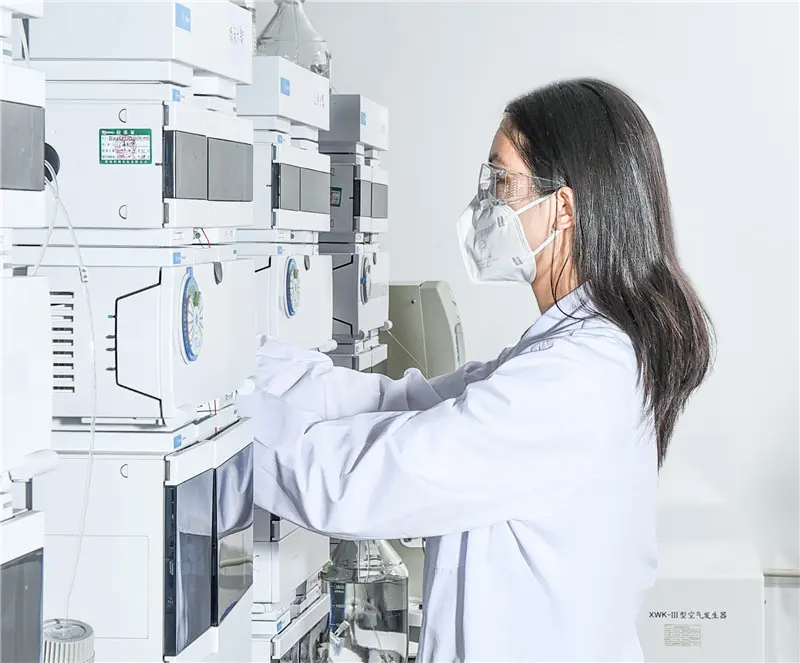

The intersection of classical pharmacognosy and advanced chromatographic validation establishes unprecedented rigor in plant medicine commercialization.
In global phytopharmaceutical and functional health markets, the historical bottleneck has never been the discovery of botanical efficacy, but rather the chemical non-uniformity and batch-to-batch fluctuation inherent to natural flora. As international regulatory bodies such as the US FDA (21 CFR Part 314 & Botanical Drug Guidance), EMA (Committee on Herbal Medicinal Products - HMPC), and NMPA align around rigorous multi-component characterization, relying on single-marker assays is no longer sufficient. Chinese analytical manufacturing facilities and CRO/CDMO powerhouses have re-engineered this paradigm by pioneering comprehensive chemical fingerprinting coupled with multi-targeted bioactive quantitation.
MedGence (Yineng Pharma), centered in Changsha, Hunan, operates at the vanguard of this scientific evolution. Over 14+ years of dedicated empirical natural medicine research, our technical team of more than 300 dedicated scientists and analysts has transformed traditional empirical knowledge into mathematically verifiable analytical dossiers. Having executed comprehensive research programs for over 100 premier pharmaceutical groups, research hospitals, and academic centers, MedGence has pioneered the modernization of 83 classic Traditional Chinese Medicine (TCM) formulas, developed 22 innovative natural medicines, achieved 56 hospital preparation registrations, and engineered exhaustive quality standards for nearly 400 single-herb raw materials.
Our collaborative infrastructure bridges high-throughput in vitro bioassays, high-resolution mass spectrometry (LC-HRMS, GC-MS/MS), high-performance thin-layer chromatography (HPTLC), and validated animal toxicological models. Under an entrusted research and manufacturing model safeguarded by ironclad confidentiality, we provide global contract partners with complete transparency, uncompromised traceability, and defendable intellectual property protection.
Analyzing the strategic drivers compelling Western and multinational pharmaceutical enterprises to contract analysis and extraction method development to China.
Global nutraceutical and pharmaceutical formulators face severe analytical interferences when dealing with complex herbal poly-extracts. Enterprise buyers demand specialized manufacturers capable of separating structurally analogous saponins, polysaccharides, flavonoids, and volatile terpenoids without signal cross-suppression.
Multi-Component LC-MS/MSProducts destined for multinational distribution must satisfy concurrent, often divergent testing criteria across the United States Pharmacopeia (USP), European Pharmacopoeia (Ph. Eur.), and Chinese Pharmacopoeia (ChP). Procurement heads require turnkey validation packages harmonized under ICH Q2(R2) guidelines.
ICH Q2(R2) & cGMP DossiersBecause environmental terroir significantly impacts secondary metabolites, procurement teams cannot afford raw materials with unpredictable potencies. Tier-1 manufacturers must provide robust quantitative correlation models that evaluate seasonal variation, geographic origin, and drying pre-treatment.
Origin-Season Potency ProfilingDelivering bespoke analytical, pharmacological, and process development methodologies tailored to specific product categories and global regulatory jurisdictions.
Comprehensive preclinical and CMC analytical dossiers for FDA Botanical Drug Guidance and NMPA Class 1.1/2.3 innovative natural medicines. Includes structural elucidation via 2D NMR, high-resolution mass spec, validated degradation kinetics, impurity profiling, and GLP-certified tox assays.
Rapid quantitative validation of marker compounds (such as ginsenosides, curcuminoids, berberine, and polyphenols). We guarantee clean chromatographic separation from common adulterants, synthetic spikes, pesticide residues, and heavy metals with high-throughput turnaround.
Cellular efficacy screening and transdermal penetration analytics for bio-active botanical cosmetic compounds. Focuses on tyrosinase inhibition, elastase inhibition, ROS scavenging capacities, and trans-epidermal flux rates verified via Franz cell diffusion testing.
Modernizing centuries-old multi-herb decoctions into high-stability oral solutions, granules, tablets, and softgel dosage forms. We identify synergistic molecular cross-reactions, mitigate precipitate formation, and ensure uniform bioavailability across batch runs.
Every contract research and manufacturing program follows an ironclad stage-gate methodology to eliminate scale-up risks and guarantee regulatory compliance.
Target indication alignment utilizing phytochemical mass spectral libraries. High-throughput identification of candidate plant families, geographic provenances, and harvest periods displaying peak bioactive concentrations.
Developing robust chromatographic assays (HPTLC fingerprinting, HPLC-DAD, GC-FID/MS, LC-MS/MS). Execution of strict ICH Q2(R2) parameter validation: Linearity, Specificity, Precision, Intermediate Precision, LOD/LOQ, and Robustness.
Optimization of primary solid-liquid extraction kinetics, macroporous resin adsorption, ultrafiltration, chromatography column fractionation, low-temperature vacuum concentration, and spray/freeze-drying regimes.
Verification of cellular pharmacodynamics via enzyme target inhibition and cellular metabolic assays. Execution of formal toxicology panels: Acute oral LD50, 28/90-day sub-chronic toxicity, Ames bacterial reverse mutation, and micronucleus testing.
Design and execution of double-blind, randomized, placebo-controlled human trials. Small-cohort efficacy substantiation for premium nutraceutical claims, or GCP-compliant Phase I through IV clinical trials for registration.
Direct technology transfer into our pilot facilities and manufacturing plants. Commercial production of concentrated liquids, microencapsulated powders, pastes, volatile oils, capsules, softgels, granules, or tablets under strict NDA safeguards.
How next-generation analytical manufacturers in China are incorporating artificial intelligence, spatial metabolomics, and green micro-fluidic testing into commercial contract analytics.
Integrating machine learning neural networks trained on hundreds of thousands of historical botanical chromatographic runs. Algorithms predict optimal stationary and mobile phase combinations, reducing HPLC/UPLC method development timelines from 6 weeks to 72 hours while preventing peak co-elution.
Deep Learning Retention IndexTransitioning from targeted quantification of 1-3 markers toward untargeted metabolomic profiling via quadrupole time-of-flight (Q-TOF) mass spectrometry. Captures hundreds of secondary metabolites simultaneously, ensuring total traceability and zero adulteration across complex botanical mixtures.
HR-QTOF Full Spectrum MappingImplementing supercritical fluid chromatography (SFC) using recycled carbon dioxide in place of hazardous hydrocarbon solvents like hexane and chloroform. Minimizes hazardous waste generation while increasing separation efficiency for non-polar lipids, carotenoids, and lipophilic triterpenoids.
SFC Carbon-Neutral AnalyticsGuaranteeing cross-border regulatory audit acceptance through uncompromised audit trails, computerized system validation, and rigorous IP shielding.
All chromatographic workstations and spectrophotometers operate on validated CDS systems (Empower, Chromeleon) with strict adherence to US FDA 21 CFR Part 11 and EU Annex 11. Time-stamped electronic signatures, disabled raw-data overwriting, and secure metadata archival eliminate regulatory friction.
ALCOA+ Principle ComplianceEntrusted analytical and CDMO partnerships are governed by bilateral non-disclosure agreements with strict information segregation. Specialized synthesis, isolation fractions, extraction formulas, and custom chromatography columns are coded to prevent unauthorized reverse engineering.
Bilateral Non-Disclosure ShieldOur dedicated regulatory affairs team prepares bilingual Common Technical Document (CTD) Module 3 (Quality) analytical dossiers. We support our global clients through on-site FDA/EMA sponsor audits, video-streamed laboratory verifications, and cross-border method transfer protocols.
Bilingual CTD Module 3 SupportSelect a specialized research module below to review testing parameters, typical instrument lines, turnaround schedules, and pilot-to-commercial manufacturing capacities.
In-depth technical answers addressing regulatory compliance, analytical method transfer, intellectual property protection, and scale-up economics.
Consult directly with our scientific directors to review study protocols, request detailed chromatograms, scope toxicology packages, or arrange an on-site laboratory audit in Changsha, China.
