Sourcing Various Herbal Formulations globally requires more than comparing prices or requesting attractive product photographs. It demands botanical knowledge, documented quality systems, and careful supplier verification. Herbal teas, tinctures, powders, capsules, and standardized extracts may look similar, yet their risks can differ sharply. Plant species, growing region, harvest timing, extraction solvents, and storage conditions all influence the final product.
The World Health Organization’s Global Report on Traditional and Complementary Medicine 2019 states that 170 of 194 Member States reported using traditional medicine. Its Global Traditional Medicine Strategy 2025–2034 also emphasizes evidence, safety, quality, and responsible integration. These findings show substantial demand, but demand alone does not prove reliability. Dr. Tedros Adhanom Ghebreyesus has stated, “Traditional medicine is an important part of health care and has been used for centuries.” That heritage deserves respect, not careless marketing.
Reliable global sourcing should include verified botanical names, Good Manufacturing Practice records, certificates of analysis, pesticide testing, heavy-metal screening, and microbiological results. Suppliers should also explain traceability from farm to finished batch. Local labeling, import rules, permitted claims, and dosage requirements must be checked before commercial decisions are made. Rules vary widely.
The process is rarely neat. A polished certificate can still hide weak sampling. A low price may conceal inconsistent raw materials. Even experienced buyers miss details sometimes. That is why audits, retained samples, laboratory confirmation, and written specifications matter. This guide examines practical methods for evaluating suppliers and building safer, more transparent sourcing relationships across markets. Reliable evidence should lead. Not assumptions.
Sources: World Health Organization, Global Report on Traditional and Complementary Medicine 2019; World Health Organization, Global Traditional Medicine Strategy 2025–2034.
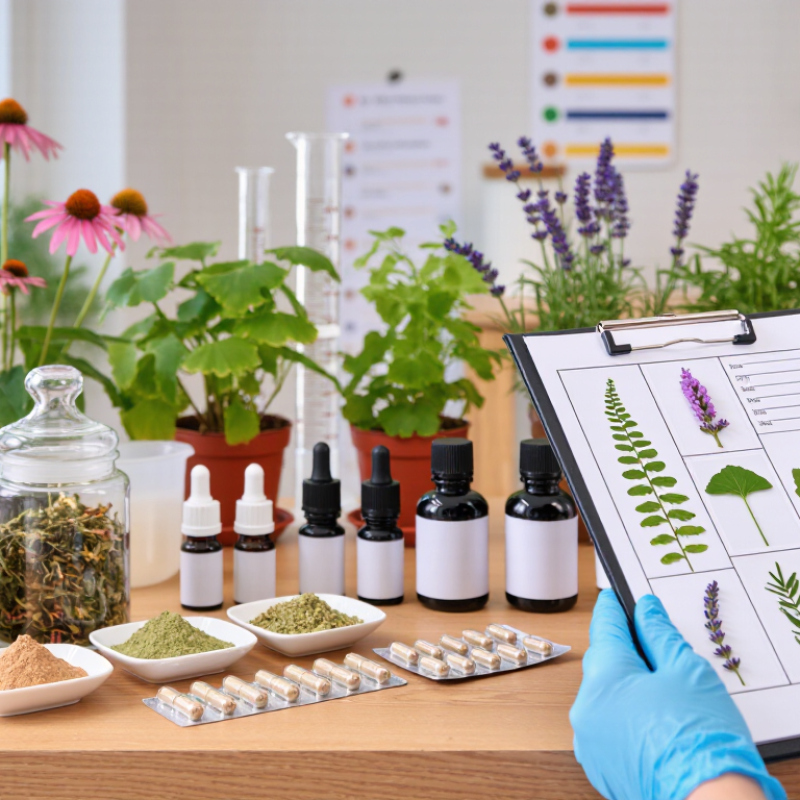
Herbal formulations are finished products made from whole plants, extracts, powders, oils, or blended botanical ingredients. Common forms include teas, tinctures, capsules, tablets, syrups, creams, and standardized extracts. Their categories often depend on dosage form, preparation method, intended use, and local regulation. A powdered root and a concentrated extract are not equivalent, even when they share the same plant.
The World Health Organization’s Global Report on Traditional and Complementary Medicine 2019 recorded traditional medicine use in 170 of 194 Member States. This figure shows why global sourcing requires cultural and regulatory awareness. In Asia, botanical preparations may follow established traditional systems. In Europe, some products may be assessed as traditional herbal medicinal products. In other markets, similar items may be classified as foods or supplements. The label does not tell the whole story.
A practical sourcing file should include botanical identity, plant part, extraction ratio, origin, harvest season, contaminant testing, and stability data. It should also confirm whether the supplier follows Good Agricultural and Collection Practices and Good Manufacturing Practices. The International Organization for Standardization has published botanical terminology standards, yet global terms remain inconsistent. That is a real weakness.
A careful buyer should compare certificates with laboratory results, not trust certificates alone. Small errors can change the entire formulation. And sometimes, the documentation looks complete but lacks traceability to the farm.
Reliable international herbal suppliers should be judged by evidence, not attractive catalogs. Ask for botanical names, plant parts, country of origin, and harvest details. Request recent certificates of analysis for identity, strength, moisture, microbes, pesticides, and heavy metals. Test before trust. A supplier who avoids clear answers creates unnecessary risk.
During supplier screening, review manufacturing controls, batch records, storage conditions, and shipment temperatures. A clean facility matters, but consistent documentation matters more. Check whether laboratories use recognized methods and independent verification. Confirm that labels match the formulation, dosage, allergens, and intended market requirements. Regulatory expectations differ widely, so local legal review remains essential.
Traceability should continue after purchase. Keep sealed retention samples and compare them with delivered batches. Monitor color, aroma, powder texture, and packaging damage, while remembering that appearance cannot prove quality. A common mistake is relying on one successful shipment. Supply chains change, and seasonal crops may vary. Build relationships with suppliers who report problems early, accept corrective actions, and provide realistic lead times. No supplier is flawless. A written audit trail makes weaknesses visible before they become expensive.
Global herbal sourcing requires more than comparing prices. The WHO Global Report on Traditional and Complementary Medicine 2019 states that 170 countries reported using traditional medicine, while 124 had relevant laws or policies. This regulatory variation makes supplier screening essential.
Request botanical identity records, full batch traceability, and recent certificates of analysis. Verify testing for pesticides, heavy metals, microbes, mycotoxins, and undeclared pharmaceuticals.
Follow the European Medicines Agency guideline on quality of herbal medicinal products, especially its expectations for identity, purity, stability, and contaminant control.
Test retained samples independently when risk justifies the cost. A certificate alone is not proof. Sampling can still be weak.
Safety review should include dosage history, contraindications, allergen statements, and interactions with common medicines. Ask whether harvesting, drying, and storage conditions were documented.
Humidity inside a warm shipping container can quietly damage a powder.
Regulatory checks must match the destination market, including permitted ingredients, labeling language, health claims, and import documentation.
WHO data shows widespread traditional-medicine use, but global acceptance does not mean automatic legal acceptance.
I have seen compliance files look complete while one missing supplier change record undermined confidence. That uncomfortable gap deserves attention.
How to Source Various Herbal Formulations Globally?
Global herbal sourcing usually follows three routes: direct growers, specialized processors, or trading intermediaries. Direct buying may reduce margins and improve traceability, but it requires local staff and stronger quality controls. Processors offer standardized extracts and formulation support, often at higher prices. Intermediaries can simplify logistics, yet product history may become less transparent.
Cost comparisons should include more than the quoted ingredient price. Add sampling, identity testing, import documents, temperature control, insurance, and customs delays. A low-cost powder can become expensive after repeated laboratory testing. For each supplier, request batch records, certificates of analysis, harvest details, allergen statements, and contaminant results. Independent testing is wise, especially for heavy metals, pesticides, microbes, and undeclared pharmaceutical substances. Paperwork matters.
Supply risk changes by region and formulation. Drought can reduce a plant’s active compounds, while flooding may interrupt transport. Political changes, port congestion, and seasonal harvesting also affect delivery schedules. Dual sourcing helps, but it is not automatically safer. Two suppliers may use the same farm or processor. I would verify the actual production site, not only the distributor’s address. Small pilot orders reveal packaging weakness, inconsistent color, and delayed communication before a large contract. No method is flawless. Our assumptions can be wrong, particularly when testing covers only one batch. A documented risk review should therefore be updated after every shipment and quality investigation.
Benchmark comparison of common sourcing routes, indicative costs, lead times, documentation requirements, and supply risks for herbal formulations.
| Formulation Type | Typical Global Sourcing Route | Indicative MOQ | Indicative FOB Cost | Typical Lead Time | Required Quality Documents | Main Supply Risks | Recommended Risk Controls |
|---|---|---|---|---|---|---|---|
| Whole or Cut-Dried Herbs | Direct grower, agricultural cooperative, or specialist raw-material trader | 100–500 kg | US$2–12 per kg | 4–12 weeks | Botanical identity, moisture, foreign matter, pesticide residue, heavy metals, microbiological test | Medium: weather variability, incorrect species, contamination, inconsistent drying | Pre-shipment testing, approved botanical specification, dual-region sourcing, moisture-controlled storage |
| Herbal Powders | Processor or cooperative with milling and sieving capability | 250–1,000 kg | US$4–25 per kg | 6–14 weeks | Particle-size profile, botanical identity, microbial limits, pesticide residue, heavy metals, aflatoxins where relevant | Medium: adulteration, cross-contamination, oxidation, variable potency | Identity testing by microscopy or DNA where suitable, validated cleaning controls, sealed packaging, batch retention samples |
| Dry Standardized Extracts | Specialized extraction processor or contract manufacturer | 50–250 kg | US$20–180 per kg | 8–18 weeks | Extract ratio, solvent declaration, marker-compound assay, residual solvents, microbiology, heavy metals, stability data | High: inconsistent active-marker levels, solvent residues, limited qualified capacity, regulatory variation | Approved master specification, assay range, process validation, supplier audit, multi-lot qualification |
| Liquid Extracts and Tinctures | Botanical extractor or finished-product contract manufacturer | 100–500 kg or 500–2,000 L | US$8–60 per kg or L | 8–16 weeks | Solvent concentration, alcohol content where applicable, marker assay, microbial testing, preservative system, stability data | Medium: microbial growth, leakage, alcohol restrictions, oxidation, transport weight | Validated preservation, light- and oxygen-resistant packaging, temperature monitoring, transport classification review |
| Capsules and Tablets | Contract manufacturer using approved bulk powders or extracts | 50,000–250,000 units | US$0.08–0.60 per unit | 10–20 weeks | Master manufacturing record, finished-product assay, weight variation, disintegration, microbiology, packaging specification | Medium: compression problems, formulation incompatibility, production scheduling, packaging delays | Pilot batch, validated process parameters, incoming raw-material approval, secondary manufacturing capacity |
| Powdered Sachets or Drink Mixes | Blending and packing facility supplied with standardized ingredients | 25,000–100,000 sachets | US$0.12–0.85 per sachet | 10–18 weeks | Blend uniformity, moisture activity, microbiology, allergen statement, sweetener and flavor specifications, packaging barrier data | Medium: hygroscopicity, caking, flavor variability, sachet seal failure | Low-moisture formulation, desiccant or high-barrier film where required, seal-integrity testing, humidity-controlled production |
| Softgels with Herbal Oils | Specialist softgel manufacturer with qualified oil and botanical suppliers | 100,000–500,000 units | US$0.15–0.90 per unit | 12–24 weeks | Fatty-acid or marker assay, peroxide value, oxidation stability, capsule-shell specification, microbiology, heavy metals | High: oxidation, rancidity, shell leakage, temperature sensitivity, limited manufacturing capacity | Nitrogen flushing, antioxidant strategy, oxygen-barrier packaging, cold-chain assessment, accelerated stability testing |
| Herbal Gummies | Specialized confectionery or nutraceutical contract manufacturer | 100,000–500,000 units | US$0.18–1.20 per unit | 14–26 weeks | Active assay, water activity, texture profile, microbiology, allergen control, preservative and stability data | High: heat and humidity sensitivity, active degradation, texture changes, high minimum order quantities | Use heat-tolerant extracts, control water activity, perform shelf-life studies, use climate-suitable logistics and packaging |
| Ready-to-Use Herbal Tea Blends | Blender or packer sourcing multiple dried botanicals from approved suppliers | 10,000–50,000 retail units | US$0.10–0.70 per tea bag | 8–16 weeks | Botanical identity, pesticide residue, heavy metals, microbiology, flavor profile, tea-bag material declaration | Medium: seasonal quality differences, blend uniformity, infestation, aroma loss | Pre-blend sampling plan, humidity-controlled storage, volatile-aroma protection, supplier scorecards |
| Custom Multi-Herb Formulations | End-to-end contract manufacturer with formulation, sourcing, testing, and packaging services | 25,000–250,000 finished units | US$0.35–3.50 per unit | 16–32 weeks | Full product specification, formula approval, stability protocol, certificate of analysis, traceability records, manufacturing audit | High: complex qualification, ingredient interaction, regulatory claims, long development cycle | Stage-gate development, documented change control, three-lot validation, regulatory review in each destination market |
How to Source Various Herbal Formulations Globally?
Importing herbal formulations requires more than finding a capable supplier. Each destination may classify the same product as a food, supplement, cosmetic, or medicine. That classification controls permits, claims, testing, and labeling. The WHO Global Report on Traditional and Complementary Medicine found that 170 of 194 Member States reported using traditional medicine. Demand is broad, but regulatory treatment remains highly uneven. Ask suppliers for botanical names, plant parts, extraction ratios, allergen statements, certificates of analysis, and batch-level contaminant results. Generic paperwork is not enough.
Documentation should match the shipment, not just the product catalog. Check the correct HS code, certificate of origin, manufacturing license, GMP evidence, stability data, and label translations. Customs authorities may question undeclared solvents, pesticide residues, heavy metals, or unsupported health claims. Distribution also needs planning. UNCTAD’s Review of Maritime Transport 2024 states that over 80% of global merchandise trade by volume moves by sea. Moisture, heat, and port delays can damage powders, capsules, and liquid extracts. A temperature logger may reveal problems that visual inspection misses. I would not treat a successful first shipment as proof of a reliable process.
Tips: Build a country-specific compliance checklist before ordering. Use independent laboratory testing for high-risk botanicals. Confirm storage conditions at every handoff. Keep digital and paper records. Recheck requirements before each shipment, because regulations and customs practices can change. A spreadsheet helps, but it can still hide missing evidence.
Managing import, documentation, and distribution requirements requires evaluating both regulatory readiness and logistics performance. The 2023 World Bank Logistics Performance Index provides a comparable distribution benchmark for selected sourcing and destination markets.
Higher scores indicate stronger overall logistics performance across customs, infrastructure, international shipments, logistics competence, tracking and tracing, and timeliness. LPI scores are a distribution-planning indicator and do not replace country-specific herbal product registration, labeling, certificates of analysis, certificates of origin, or import permits.
Source: World Bank, Logistics Performance Index 2023. Selected economies shown for comparison.
Ask for botanical names, plant parts, origin, harvest dates, and extraction details. Clear answers matter.
Request recent certificates of analysis for identity, strength, moisture, microbes, pesticides, and heavy metals. Generic paperwork is insufficient.
Yes. Independent testing can confirm the batch before purchase. Test before trust. One successful shipment proves little.
Direct growers may improve traceability but need local oversight. Specialized processors offer standardized extracts and technical support. Intermediaries simplify logistics, but product history may become unclear.
Include sampling, laboratory testing, import documents, insurance, temperature control, and customs delays. A cheap powder can become expensive.
Use pilot orders to inspect packaging, color, texture, communication, and delivery timing. Verify actual production sites. Two suppliers may share one source.
Check the HS code, origin certificate, manufacturing license, quality evidence, stability data, and translated labels. Requirements differ by destination. Local legal review remains essential.
Confirm storage conditions at every handoff. Use temperature loggers for heat-sensitive goods. Moisture and port delays can damage powders, capsules, and liquid extracts.
Keep sealed retention samples and compare them with delivered batches. Record color, aroma, texture, and packaging damage. Appearance alone cannot prove quality. Our assumptions may be wrong.
Sourcing Various Herbal Formulations globally requires a structured approach that balances product diversity, quality, safety, and supply reliability. Herbal formulations may include teas, powders, extracts, capsules, topical preparations, and other products made from botanical ingredients. Buyers should first define their intended use, ingredient requirements, dosage format, packaging needs, and target market before evaluating international suppliers. Reliable suppliers should be assessed through their production capabilities, quality-control systems, documentation, communication, and ability to provide consistent batches.
Quality and regulatory compliance are essential throughout the sourcing process. Buyers should review certificates of analysis, ingredient specifications, testing procedures, labeling information, and applicable import requirements. Different sourcing methods, such as direct purchasing, distributors, or specialized procurement partners, may vary in cost, lead time, flexibility, and supply risk. Careful planning is also needed for customs documents, product registration, transportation, storage conditions, and final distribution. By comparing suppliers systematically and maintaining clear records, businesses can build a more secure, transparent, and efficient global sourcing strategy.

